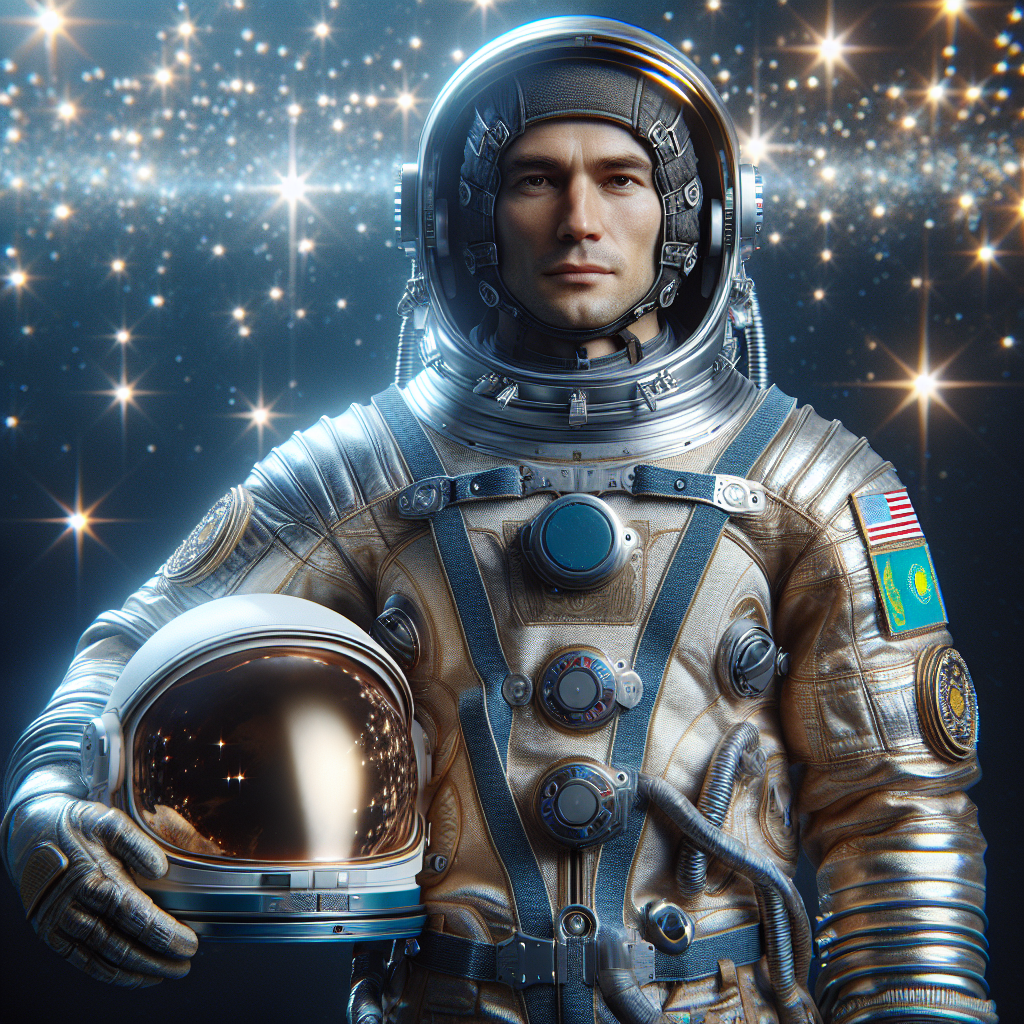

Imagine a story where a pilot becomes a space traveler and a modern-day explorer of the cosmos. That's the life of Talgat Musabayev, a Kazakhstani cosmonaut who has substantially contributed to space exploration. Born in the Soviet era, Musabayev ventured into the skies as a pilot before setting his sights on space. His journeys included touching the stars on numerous missions from the Baikonur Cosmodrome in Kazakhstan. With over 341 days spent in the vastness of space, Musabayev's life is a testament to human curiosity and perseverance.
Talgat Musabayev, born on January 7, 1951, in Kargaly, Kazakhstan, was initially drawn to the skies through aviation. Before his space odyssey, he honed his flying skills as a military pilot, later becoming a test pilot. His flying prowess and mechanical knowledge made him an impeccable candidate for the cosmonaut program. Musabayev’s dreams took a tangible shape when he was selected as a cosmonaut in 1990.
He embarked on his first mission in July 1994 aboard the Soyuz TM-19. This wasn't just a personal milestone; it was also a pivotal moment for Kazakhstan, a relatively new country asserting its identity post-Soviet Union. Talgat became a national hero, showcasing Kazakhstan’s potential to reach beyond the Earth. His second mission, aboard the Soyuz TM-27 in 1998, further cemented his status as a pioneer.
One of Musabayev's most significant contributions was his command over the Mir space station. Under his leadership, complex experiments and spacewalks were conducted. His expertise and experience greatly aided in the advancement of space technology and international collaboration. The world watched as Kazakhstan, through Talgat, became a notable player in space exploration.
Musabayev's third and final space journey occurred in 2001, aboard Soyuz TM-32, where he spent nearly a week on a commercial mission with Dennis Tito, the first ever space tourist. This mission exemplified a paradigm shift in space travel, hinting at a future where space exploration might become accessible to more than just trained astronauts. His role was pivotal in bridging traditional space missions with a burgeoning industry of commercial space travel.
The narrative isn’t all celestial paths and achievements. The arduous journey of preparation, the rigorous training, and the grueling demands of space missions highlight the resilience required. Musabayev faced challenges—technical, physical, and emotional. Yet, his steadfast commitment portrays a blend of pioneering spirit and scientific inquiry. His career reflects broader themes in space exploration: the move from Cold War competitiveness toward international cooperation, especially with NASA and Russian space programs working together.
Musabayev’s narrative is more than solely about outer space adventures, it's also deeply intertwined with Kazakhstan’s story. For many in Kazakhstan, his success embodied national pride and hope for scientific advancement. However, discussions about space exploration sometimes bring up contrasting viewpoints about the necessity and ethical concerns of investing heavily in these ventures.
Supporters argue space exploration leads to technological breakthroughs that benefit life on Earth, from improved satellite communication to climate monitoring. They view figures like Musabayev as ambassadors for human progress, inspiring future generations to pursue science and discovery. Critics, however, question the prioritization of budget allocations, especially when pressing issues like poverty and environmental degradation persist at home.
Notwithstanding differing opinions, Talgat Musabayev stands as a symbol of perseverance. His work bridges cultures, connecting diverse backgrounds through shared goals of exploration and understanding the universe. For young people today, his story might spark interest in space, science, and international cooperation.
Cosmonauts like Musabayev remind us of the enduring allure of space. Seeing Earth from orbit, witnessing the fragile beauty and interconnectedness, might just be the perspective shift humanity needs. Even for those who are physically earthbound, the idea that our species continues to explore the great unknown is compelling—a testament to human spirit and ambition, qualities that Musabayev personifies.
Talgat Musabayev's cosmic journey offers a space for dialogue. It invites young thinkers to consider the roles of science, collaboration, and courage in shaping our future. As the world becomes increasingly connected, remembering the tales of those who venture into the final frontier gives us all a glimpse into what might be possible.