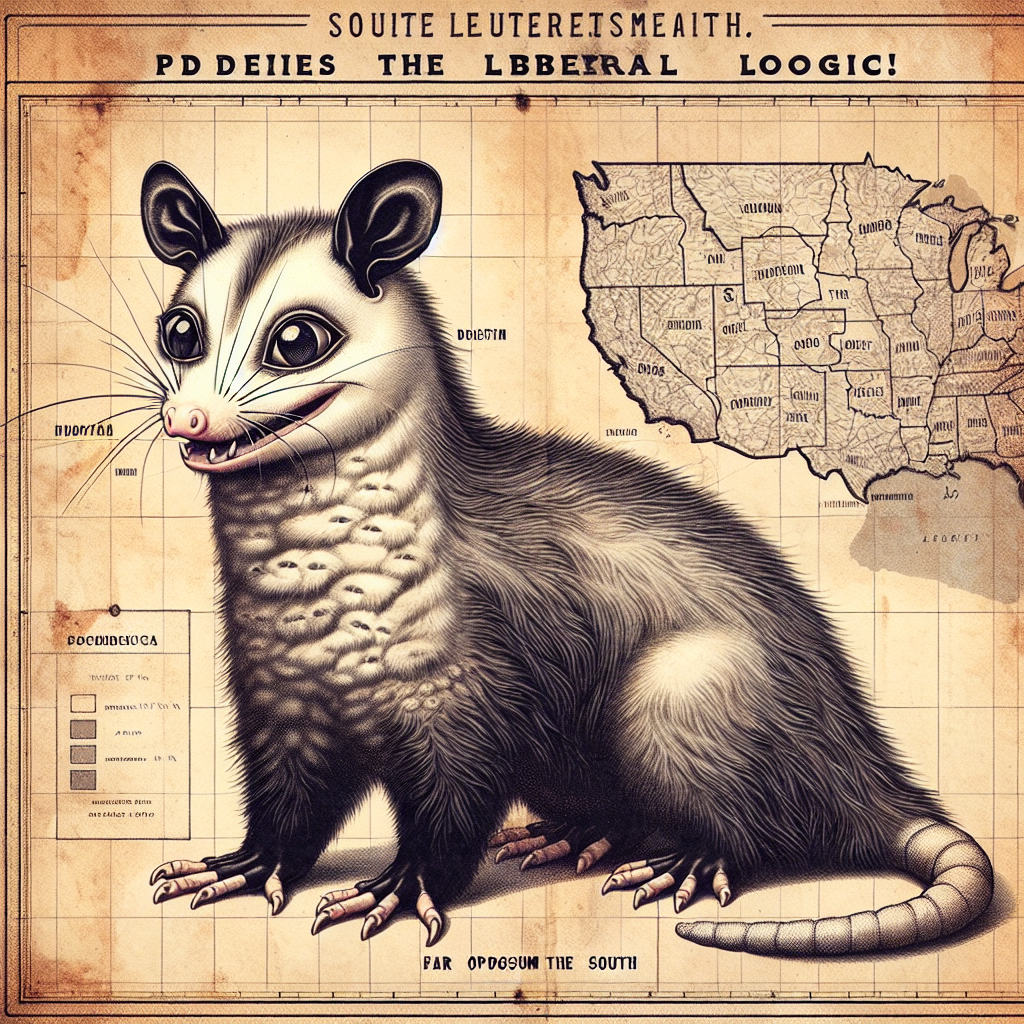

What if I were to tell you there's an animal with an impossible sight—a kind of mystical critter named the Southern four-eyed opossum? Hold your horses, because it's not some mythical beast with an extended vision, but rather, a unique creature with fascinating white spots above its eyes that mimic the appearance of four eyes. This charming animal, known scientifically as Philander frenatus, lives in the tropical and subtropical forests of Brazil and surrounding countries. As its name might imply, it's no stranger to the scientific community; it’s been observed and documented since the time of the early explorers.
Residing in the dense forests and marshes of South America, it's a fascinating example of nature’s adaptability. Known for being nocturnal, the Southern four-eyed opossum maneuvers through the night, navigating with sly agility on the forest floor. Natural camouflage aids its survival, but the intricate dance with predators is ever persistent. Why, though, should we care about this creature? Because its existence is a reminder of how diverse life can be. It prompts us to consider how even the seemingly mundane creatures contribute to the intriguing patchwork of biodiversity.
The Southern four-eyed opossum isn’t just an interesting name; its lifestyle challenges our often short-sighted views on ecological importance. Despite their niche existence, they play a significant role in their ecosystems, gobbling up pests and being prey to larger predators, thus keeping the delicate balance we often overlook. Whether you’re an animal enthusiast or someone who’s indifferent to wildlife, the existence of such unique creatures challenges us to acknowledge the ecosystems cradling them. It brings a conversation about conservation efforts to the forefront.
Not everyone, however, sees these creatures as keystone species worth protecting. Some argue that resources focused on obscure animals could instead go to more 'beneficial' projects like improving human infrastructure or medical research. Whilst it's true that not everyone can or will care for every creature, fostering biodiversity ultimately supports the broader goal of ecological health which, in a roundabout way, keeps our planet viable even for humans. Isn't that a pragmatic standpoint to consider in these times of escalating climate crises?
To break it down, the Southern four-eyed opossum looks like it’s coming straight out of a fantasy book but plays a very grounded role in reality. Its omnivorous diet includes fruits and insects, helping pest control and seed dispersion. A single opossum won’t reform forests or resurrect endangered species, but its role, as small as it seems, is part of a grander design that ensures the environment functions smoothly. It can even inspire greater empathy and responsibility towards our planet.
Yet, conflicted views exist. Some consider this small creature less of a priority. What's the point in focusing on an obscure opossum, when we can channel resources to more pressing concerns? Doubts spiral about resource allocation and the immediate communal benefit to humans, potentially leaving behind the interconnectedness that biodiversity speaks to. Counterarguments suggest that by preserving all creatures, big and small, we sustain systems that may yield discoveries which could benefit humanity, from new medicines to scientific understanding of evolution and endurance.
Southern four-eyed opossum populations aren’t currently threatened, allowing a unique opportunity. We can proactively conserve a stable population rather than embarking on emergency interventions when they near extinction. This perspective fosters a more sustainable long-term strategy since preventive conservation costs less and often involves less human interference than emergency actions.
Aware of their ecological roles and unique aesthetic mystique, younger generations, particularly Gen Z, often express strong enthusiasm for preserving such wildlife. Platforms like TikTok and Instagram are abuzz with content that sheds light on these tiny dwellers of shadows. This digital wave brings visibility and engagement from a group that values authenticity and action over inertia for issues that matter.
The Southern four-eyed opossum might be a tiny narrative thread in a big and bustling ecosystem, yet it exemplifies how our planet's tapestry is woven together. The presence of such creatures and our curiosity toward them shape our understanding and compassion for the battles being fought outside concrete walls and digital screens. This isn't just about love for a curious animal but fostering a mindset that appreciates and protects the fragile-yet-resilient fabric of life that supports us all.