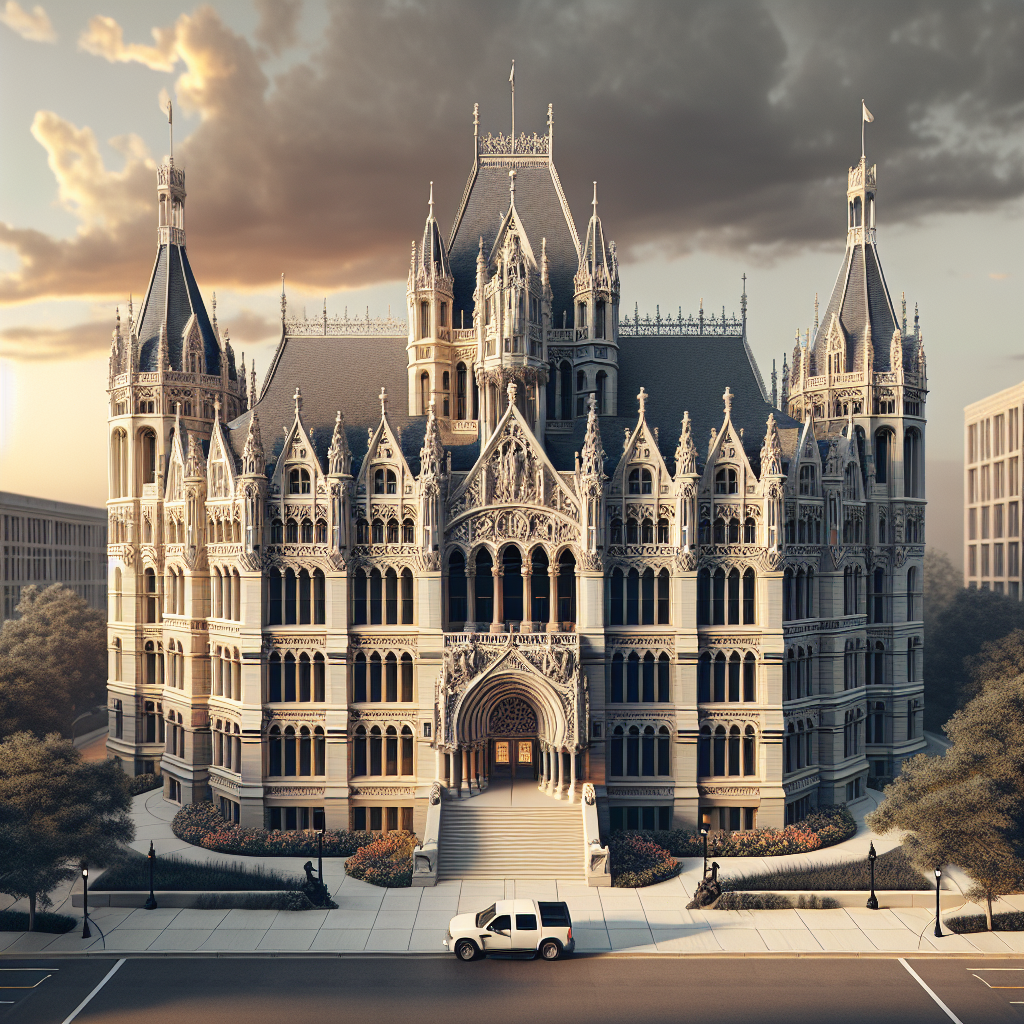

Ever wondered if a building could speak its mind? You might just find the answer by strolling through the hallowed halls of Sever Hall at Harvard University in Cambridge, Massachusetts. Constructed between 1878 and 1880, this red-bricked masterpiece was designed by the famous architect H.H. Richardson, known for his distinct approach that spanned functionality and aesthetics. Sever Hall holds stories of academic achievements and whispers of protest, reflecting its place in both educational history and socio-political discussions. The building is an architectural marvel, but also a living campus hub where past meets present, challenging us to rethink the spaces we often take for granted.
While not immense in size, Sever Hall is colossal in its impact. Recognizable by its deep red bricks and robust Romanesque arches, it effortlessly combines elegance with strength. This design wasn't just an aesthetic choice—it served practical purposes, like improved acoustics and natural lighting, before the common use of electricity. Such pragmatic artistry represents a blend that H.H. Richardson championed, a reminder that good design serves both form and function.
Yet, beyond architecture, Sever Hall stands as a testament to the evolving academic traditions. It's a space where countless students have experienced the thrill of intellectual discovery. Think of the generations of budding scholars who sat in its lecture halls, eager to transform our understanding of literature, science, and the humanities. Each brick seems imbued with curiosity and knowledge, innovations borne out of time-honored questions and bold visions.
Of course, Sever Hall has been more than just a backdrop for student enlightenment. It's seen its share of activism, contributing to Harvard's storied involvement in political and social movement history. During turbulent times, from the civil rights era to modern advocacy for climate change and diversity, Sever Hall has been a gathering place for voices of change. It reminds us that while knowledge is uplifting, it also carries the power to push for progress beyond the academic confines.
For those captivated by the tales Sever Hall could narrate, there's another layer—how it stands as a metaphor for broader discussions. Architectural spaces like Sever offer a dialogue between tradition and modernity. It's crucial to question how these dialogues should unfold as we challenge which historical treasures to preserve and which voices to amplify in present contexts. The building may represent elite education to some, a symbol of social inequality from which Harvard isn't immune. To others, it's a sanctuary of learning, testament to striving for knowledge irrespective of backgrounds.
A politically liberal perspective might argue for more inclusive access to this renowned institution, ensuring that such environments reflect a diverse demographic participating equally in academic growth. Opposing viewpoints worry about diluting rigorous standards. There's an ongoing tug between inclusion and excellence, each side asking us how spaces like Sever Hall cater to and challenge our society. Perhaps it's the very tension at Sever's core that invites dialogue, making it even more relevant in today's discussions.
Sever Hall, timeless as it might seem, constantly pushes us to confront what we seek from academic institutions. Is it just about imparting knowledge, or is it about fostering critical thinking that drives societal advancement? Its lasting beauty lies in its potential to underscore the vibrancy and complexity of educational spaces in their many roles. We may come to different conclusions about the building's place in these debates, but it's hard to deny its role as a constant in the narrative of education and social consciousness.
As we consider Sever Hall from various angles, we find that it's not just about bricks and mortar. It's an emblem of educational ideals in an ever-pressing need to balance heritage with progress. Harvard's Sever Hall is a call to think beyond perspectives of privilege and towards a broader vision of shared academic futures, where every voice has its place within these storied walls.