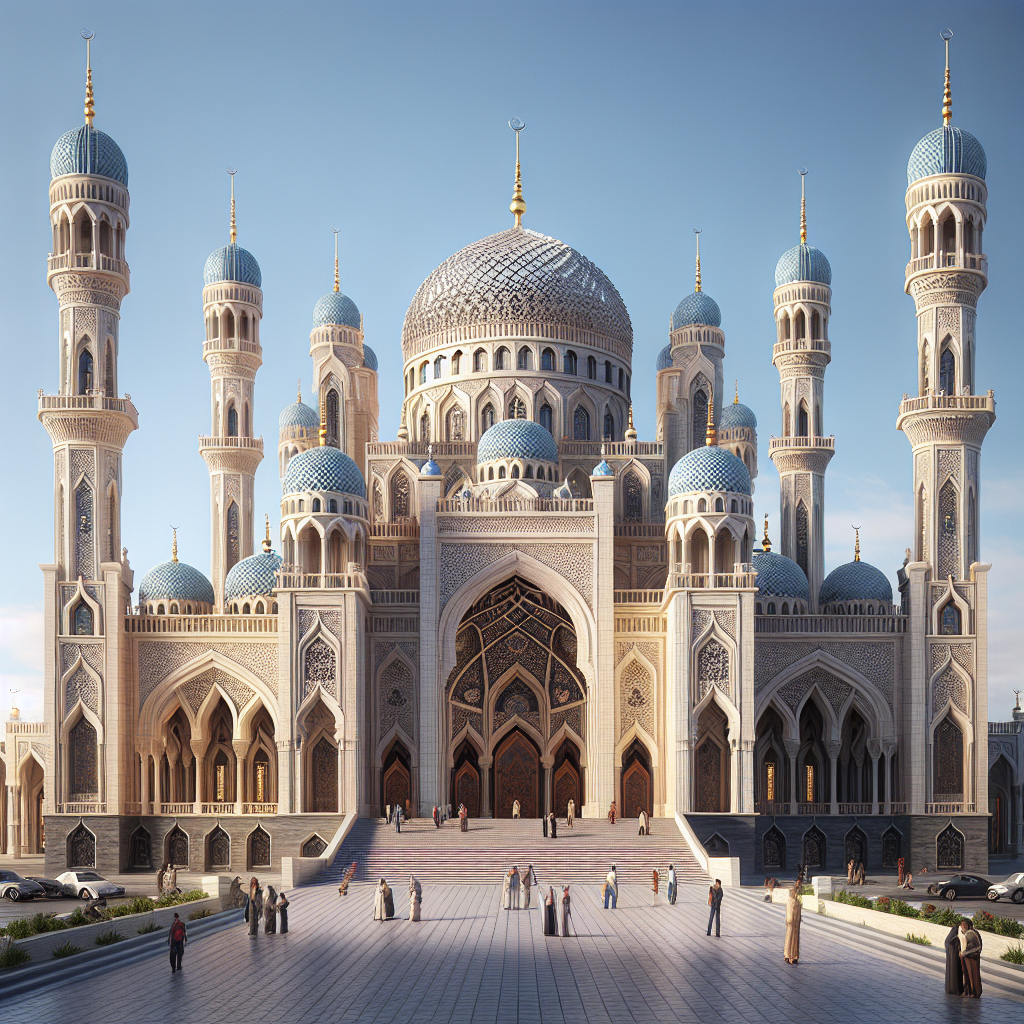

The Samara Mosque: A Symbol of Unity and History
Imagine a structure so grand and unique that it stands as a testament to human ingenuity and cultural unity. The Samara Mosque, also known as the Great Mosque of Samarra, is one such marvel. Built in the 9th century, around 848-851 AD, it is located in Samarra, Iraq. This mosque was commissioned by the Abbasid caliph Al-Mutawakkil, who wanted to create a place of worship that would reflect the grandeur of his empire. The mosque is renowned for its distinctive spiral minaret, the Malwiya Tower, which rises majestically from the desert landscape. This architectural wonder was not just a place for prayer but a symbol of the Abbasid dynasty's power and the Islamic Golden Age's cultural and scientific advancements.
The Samara Mosque was once the largest mosque in the world, covering an area of 17 hectares. Its design was revolutionary, featuring a vast courtyard surrounded by a brick wall with 44 semi-circular towers. The mosque's most iconic feature, the Malwiya Minaret, stands at 52 meters high and is accessible via a spiraling ramp. This unique design has fascinated architects and historians alike, as it deviates from the traditional minaret structures of the time. The mosque's construction utilized local materials, primarily baked bricks, which were abundant in the region. This choice of material not only reflects the practical considerations of the builders but also the aesthetic preferences of the era.
The mosque's historical significance extends beyond its architectural achievements. It was a center for learning and cultural exchange during the Islamic Golden Age, a period marked by significant advancements in science, mathematics, medicine, and philosophy. Scholars from various parts of the world would gather in Samarra, contributing to a vibrant intellectual community. The mosque served as a hub for these activities, embodying the spirit of inquiry and knowledge that defined the era. This aspect of the mosque's history highlights the importance of cultural and intellectual exchange in fostering progress and understanding.
However, the Samara Mosque has not been immune to the ravages of time and conflict. Over the centuries, it has suffered damage from natural disasters and human actions. The Mongol invasion in the 13th century led to significant destruction, and more recently, the Iraq War and ongoing regional instability have posed threats to its preservation. Despite these challenges, efforts have been made to restore and protect this invaluable piece of cultural heritage. Organizations like UNESCO have recognized the mosque's historical and cultural significance, advocating for its conservation as part of the Samarra Archaeological City, a UNESCO World Heritage site.
The mosque's story is not just one of architectural brilliance and historical importance; it is also a reminder of the resilience of cultural heritage in the face of adversity. The ongoing efforts to preserve the Samara Mosque underscore the importance of protecting our shared history, even amidst conflict and change. This resonates with the broader global conversation about the preservation of cultural sites and the role they play in fostering understanding and unity among diverse communities.
While some may argue that resources could be better spent on addressing immediate human needs, the preservation of cultural heritage sites like the Samara Mosque is crucial for maintaining a connection to our past. These sites serve as tangible links to history, offering insights into the values, beliefs, and achievements of previous generations. They remind us of the shared human experience and the potential for unity and progress when diverse cultures come together.
The Samara Mosque stands as a testament to the enduring power of cultural heritage. Its history and architecture continue to inspire and educate, offering a glimpse into a time when the Islamic world was at the forefront of intellectual and cultural development. As we navigate the complexities of the modern world, the lessons of the past, embodied in structures like the Samara Mosque, remain as relevant as ever.