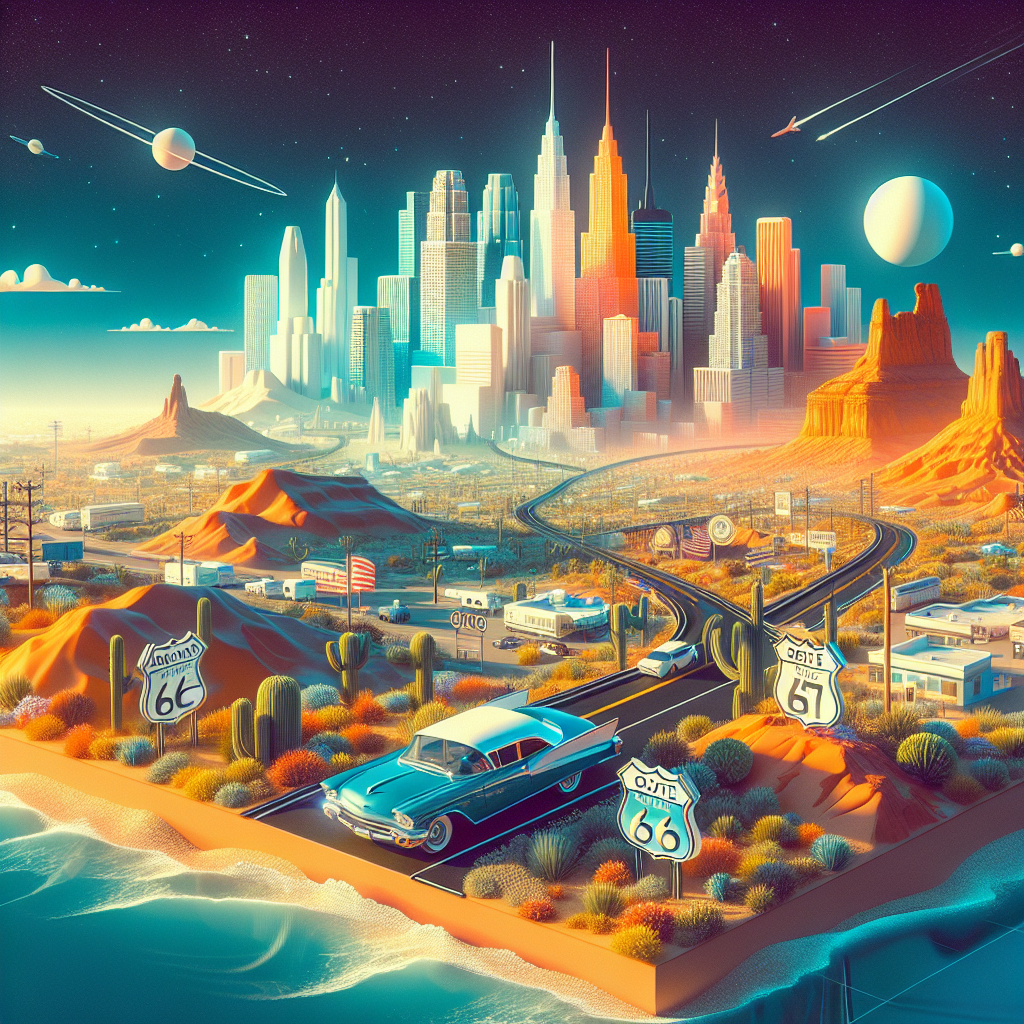

In the vibrant tapestry of 1960s American pop culture, few shows traveled as far, or with as sincere a heart, as "Route 66." Picture this: two young men, a slick Chevrolet Corvette, and the infinite horizon of the open road. This setup was more than a TV show; it was a symbol of an era, a moving canvas of the American dream at its most restless and idealistic. Airing on CBS from 1960 to 1964, "Route 66" took viewers on a four-season road trip across America's legendary highway, though ironically, due to logistical challenges, much of the traveling was done beyond the actual Route 66. What made this show really hum was its bold choice to address social issues of the time—issues that still resonate today.
Todd Stiles, played by Martin Milner, and his buddy Buz Murdock, portrayed by George Maharis, were the quintessential odd couple on a journey to everywhere and nowhere. Stiles, the thoughtful and privileged son of a deceased business tycoon, contrasted with Murdock, a streetwise kid from Hell's Kitchen. Their journey wasn’t merely geographical; it was emotional and moral, mirroring the tumult and transition of the United States. Their stories wandered as much as their wheels did—exploring everything from labor strikes to organized crime, racism to mental health issues. It was as if each stop along the way was a new storybook chapter, written to examine the nation's conscience.
"Route 66" broke television norms by frequently shooting on location, adding authenticity and spontaneity to its narratives. This choice was as audacious as the issues it tackled, giving viewers something fresh to chew on every week. The show was an impressive mosaic of urban settings, rural landscapes, and the many shades of American identity. This format allowed it to portray a range of life's complexities far beyond what many other shows of its time dared to explore. If the visual road trips didn't take you someplace unexpected, the narrative definitely did.
Today, we might wonder how relevant a black-and-white TV show from the sixties could be, but the themes "Route 66" dared to touch are evergreen. As a politically liberal young person watching these old segments, you'd appreciate its boldness in addressing social justice issues that were startling at the time. You'd notice how it not only circumnavigated physical streets but also took turns into the darker alleys of societal problems like inequality, which remain painfully relevant.
Common arguments from the conservative side often criticize such shows for being 'too preachy' or 'too far left' in their narrative stance. Yet, "Route 66" found a way to navigate this. Though the show carried liberal themes, it did so with a sense of balance—attempting to portray the nuanced truth of many social challenges without leading the audience by the nose. This ability to provide varied viewpoints adds an interesting layer of complexity and makes the discussions it sparked even more worthwhile.
Despite the show's strengths, it wasn't without bumps in the road. Maharis left the show in the third season, replaced by Glenn Corbett as Linc Case. This casting change reflected real-life issues, reportedly involving health concerns and dissatisfaction with production. It affected the show's chemistry and, subsequently, its popularity started to wane, a challenging detour not uncommon in the television realm. These behind-the-scenes struggles remind us even successful narratives have human elements vulnerable to the unpredictable turns of life.
If "Route 66" teaches us anything, it's that journeys are unpredictable, introspective, and endlessly engaging—much like life itself. In today's digital culture, where entertainment can be consumed in binge-worthy blocks, its episodic reflection on social themes rather than story arcs is refreshing. It dared to go off the beaten path, into territories that could make audiences uncomfortable, prompting collective introspection rather than mindless consumption.
In retrospect, "Route 66" is a relic that carries a classic sheen—representing not merely a particular place or era but the perpetual quest of young people searching for meaning and place in a changing world. Much like contemporary young adults tracking their own routes via social, economic, and political landscapes today. It's a series that, when revisited, encourages viewers not just to see the highways stretched out before them but to bravely encounter the twists and turns that are part of the journey.