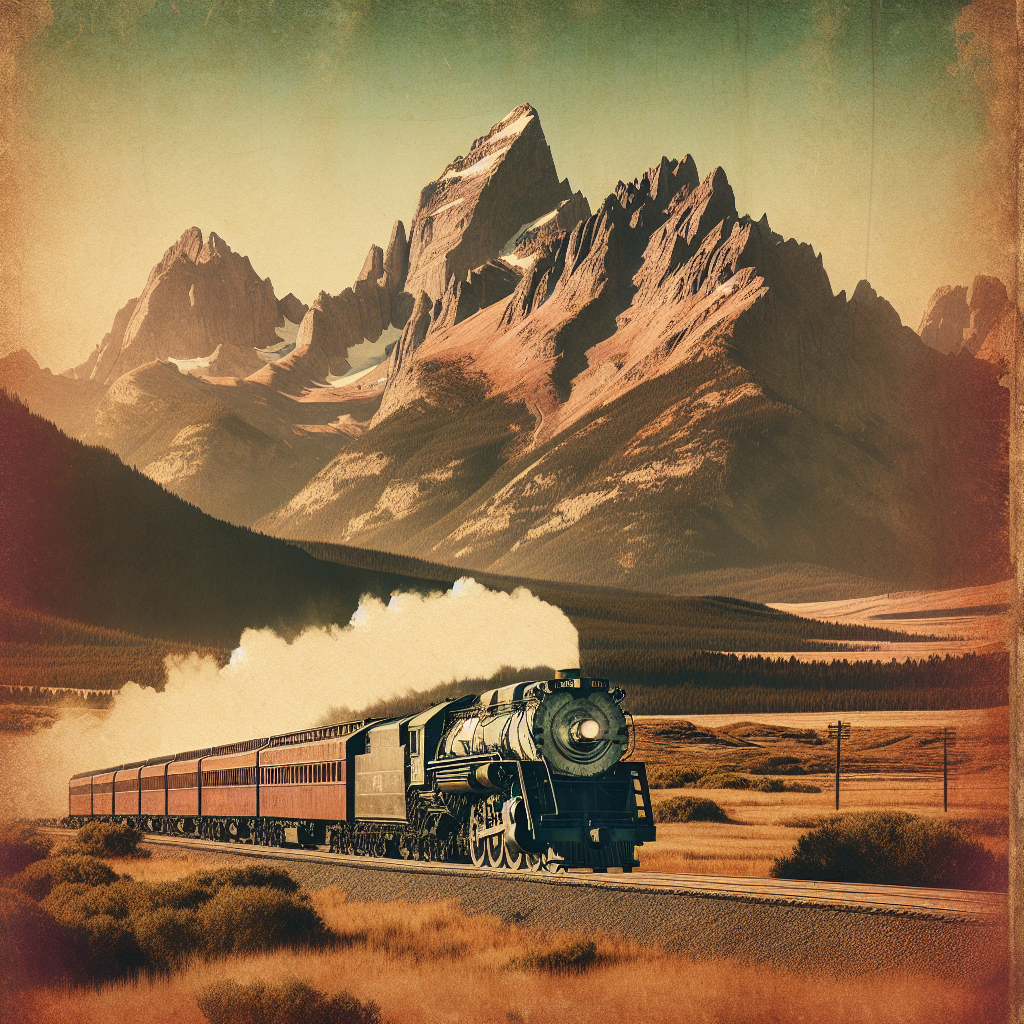

Imagine hopping onto a train named the 'Rocky Mountain Rocket'—an adventurous title that promises excitement—and being whisked away through sprawling landscapes unlike any other. Between 1939 and 1966, this passenger train operated by the Rock Island Railroad was exactly that kind of journey. Stretching from Chicago to the heart of the Rocky Mountains in Colorado, it provided a much-needed escape to travelers seeking either the calm of nature or the thrill of exploration.
This trail of iron rails led passengers through what seemed like an ever-changing painting. Starting from an industrial blitz in Chicago, rolling through the flatlands of Iowa, and ending in the majestic allure of Colorado’s mountainous terrain, the Rocky Mountain Rocket was about more than just locomotion—it was an experience. Especially in an era before budget airlines democratized travel, this line symbolized adventure, relaxation, and all that America had to offer between its coasts. It was a tangible link to a growing nation, showcasing its vast, diverse beauty.
But why was the Rocky Mountain Rocket celebrated beyond just being a means of transport? For one, the train itself was a piece of artwork. Passengers enjoyed plush seats, elegant dining cars, and large viewing windows. The journey catered to those who appreciated comfort as much as curiosity. More importantly, it represented an ideal: a shift towards convenient, scenic travel that could connect urban lives with the serene tranquility of nature.
However, rail travel faced stiff challenges, especially when vehicles and planes took the spotlight. The automobile revolution started providing personal freedom unmatched by train schedules. The air travel industry expanded swiftly post-World War II, becoming a dominant player in long-distance travel. With this societal shift, many of America's scenic railroads struggled to maintain their viability.
This marked a crucial debate in transportation: efficiency versus experience. Cars offered autonomy and they became a symbol of personal freedom—a core value in a country that prides individuality. The aviation industry promised speed, shrinking the country's vast expanse and allowing coast-to-coast travel in hours instead of days. Airplanes thrillingly cut through the clouds, which trains could never do. On the flip side, train journeys like those on the Rocky Mountain Rocket promised a slower, yet richer tapestry of experience than what you’d glimpse from 30,000 feet.
It is here that Gen Z can find parallels to contemporary discussions about sustainability and lifestyle choices. Our generation faces a predicament not unlike those of decades past: in a world driven rapidly by technology, we grapple with the pace of progress and its implications. Public transportation, long side-lined for its counterpart options, is making a determined comeback amidst environmental concerns.
Mass transit systems—especially trains—are being re-evaluated for their lesser environmental footprint compared to cars and planes. Rail travel emits significantly lower greenhouse gases, making it a more sustainable option for intercity commutes. Younger folks are increasingly aware of their environmental footprint and are drawn to solutions that align with sustainable living ideals. As newer rail systems are coming into play with state-of-the-art technology and renewables, the nostalgia-laden journey of the Rocky Mountain Rocket doesn’t seem as quaint.
Take for example high-speed trains that are altering perceptions of time and geography. In regions outside the U.S., such as Europe and China, extensive railway networks are not only efficient but also environmentally friendly. Private sectors have started acknowledging this, pumping investments into revitalizing rail travel stateside and giving birth to projects that could potentially combine luxury with sustainability.
Yet, there is still love for the personal space that vehicles provide, and the allure of slicing hours off travel times in planes. The convenience and efficiency they offer are too crucial to ignore. This ongoing debate isn’t just about transportation—it’s symbolic of how we choose to live intersecting with broader implications like climate change.
Amidst these discussions, the Rocky Mountain Rocket reminds us of a simpler time, when life wasn’t about the rush, but the journey itself. It was a tapestry woven with the stories of travelers from different walks of life, sharing experiences as the world blurred outside vintage panes of glass. It calls us to reflect not only on where we’re headed but also on how we get there. Would you rather speed past landscapes at 500 miles per hour or be immersed in their beauty, sun in your face, and adventure in your heart?
The return of railways as a modern-main mode of transit could mean reviving the values that trains like the Rocky Mountain Rocket stood for—unity through shared experience and observation. Whether or not trains take the driver’s seat in future transportation, the conversations surrounding them ensure that they aren’t just relics but remain persistent symbols of a tug-of-war between progress and reflection. As we debate and decide how to connect our cities, we repeat history, albeit with different stakes. Embracing a future influenced by the knowledge of past experiences may well be our generation's ticket to a sustainable, connected world.