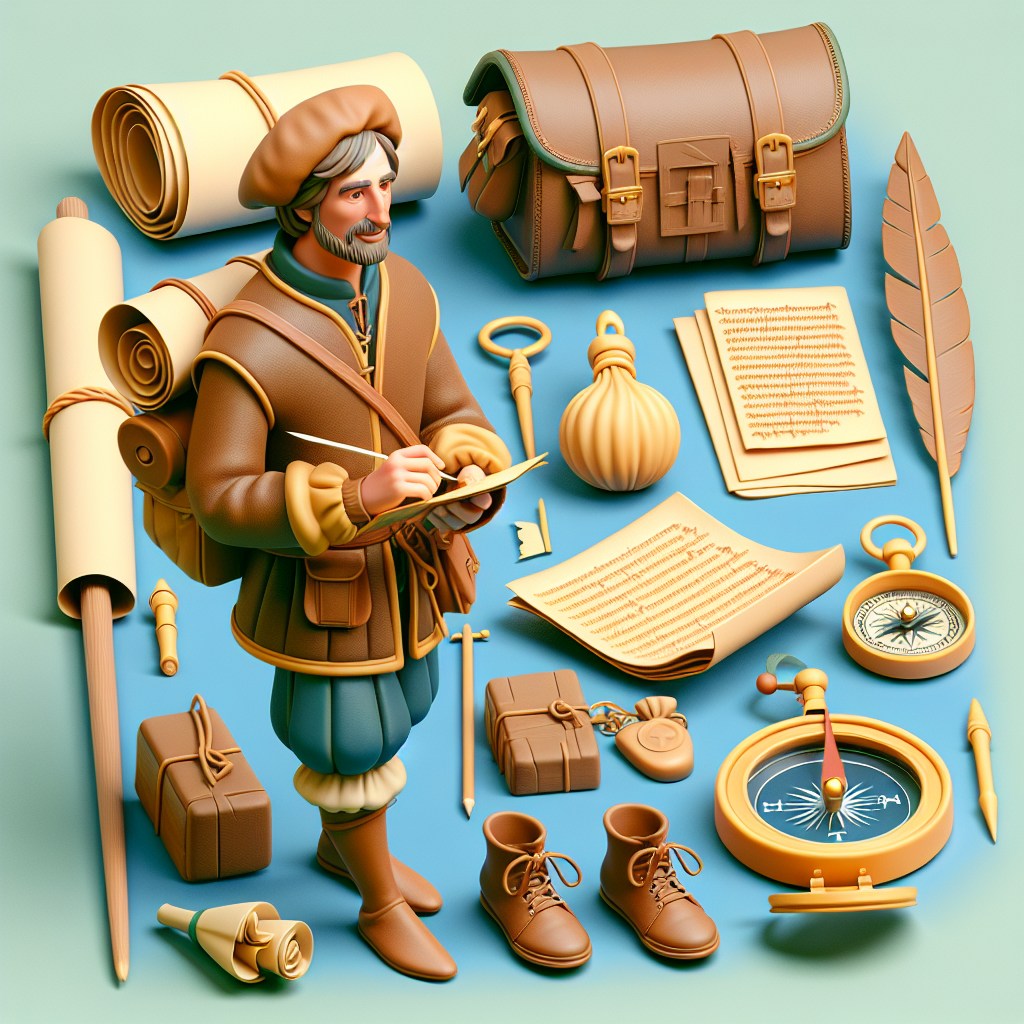

The Adventurous Chronicles of Ramon Muntaner
Imagine a life so full of adventure and intrigue that it demands to be chronicled for future generations. This is the life of Ramon Muntaner, a Catalan soldier and writer born in 1265 in Peralada, a small town in the region of Catalonia, Spain. Muntaner is best known for his vivid and detailed chronicle, "Crònica," which documents the events he witnessed and participated in during the late 13th and early 14th centuries. His work provides a unique perspective on the political and military landscape of the Mediterranean world during this tumultuous period.
Ramon Muntaner's life was anything but ordinary. He was a soldier, a mercenary, and a chronicler, and his experiences took him across the Mediterranean. He served under various rulers, including the King of Aragon and the Byzantine Emperor. Muntaner's chronicle is not just a historical account; it is a personal narrative filled with his observations, opinions, and reflections on the events he witnessed. His writing style is engaging and often humorous, making his chronicle a fascinating read even today.
Muntaner's chronicle covers a wide range of events, from the War of the Sicilian Vespers to the exploits of the Catalan Company, a group of mercenaries who played a significant role in the politics of the Mediterranean. His account provides valuable insights into the complex relationships between different kingdoms and empires during this period. Muntaner's work is particularly notable for its detailed descriptions of battles and political intrigues, as well as its portrayal of the people he encountered.
Despite his adventurous life, Muntaner was also a man of his time, and his chronicle reflects the values and beliefs of medieval Europe. He often emphasizes the importance of loyalty and honor, and he is not shy about expressing his opinions on the events he describes. While his perspective is undoubtedly biased, it offers a glimpse into the mindset of a medieval soldier and the challenges he faced.
Muntaner's chronicle is an important historical document, but it is also a testament to the power of storytelling. His ability to weave together personal anecdotes with historical events makes his work both informative and entertaining. For modern readers, Muntaner's chronicle offers a window into a world that is both familiar and foreign, a world where loyalty and honor were paramount, and where the line between friend and foe was often blurred.
While Muntaner's chronicle is a valuable historical resource, it is also a reminder of the importance of preserving personal narratives. In a world where history is often written by the victors, Muntaner's account provides a different perspective, one that is personal and subjective. His chronicle is a reminder that history is not just a series of events, but a collection of stories, each with its own unique perspective.
Ramon Muntaner's life and work continue to captivate readers today, offering a glimpse into a world that is both distant and familiar. His chronicle is a testament to the power of storytelling and the enduring human desire to make sense of the world through narrative. As we read his account, we are reminded of the importance of preserving our own stories, and the stories of those who came before us.