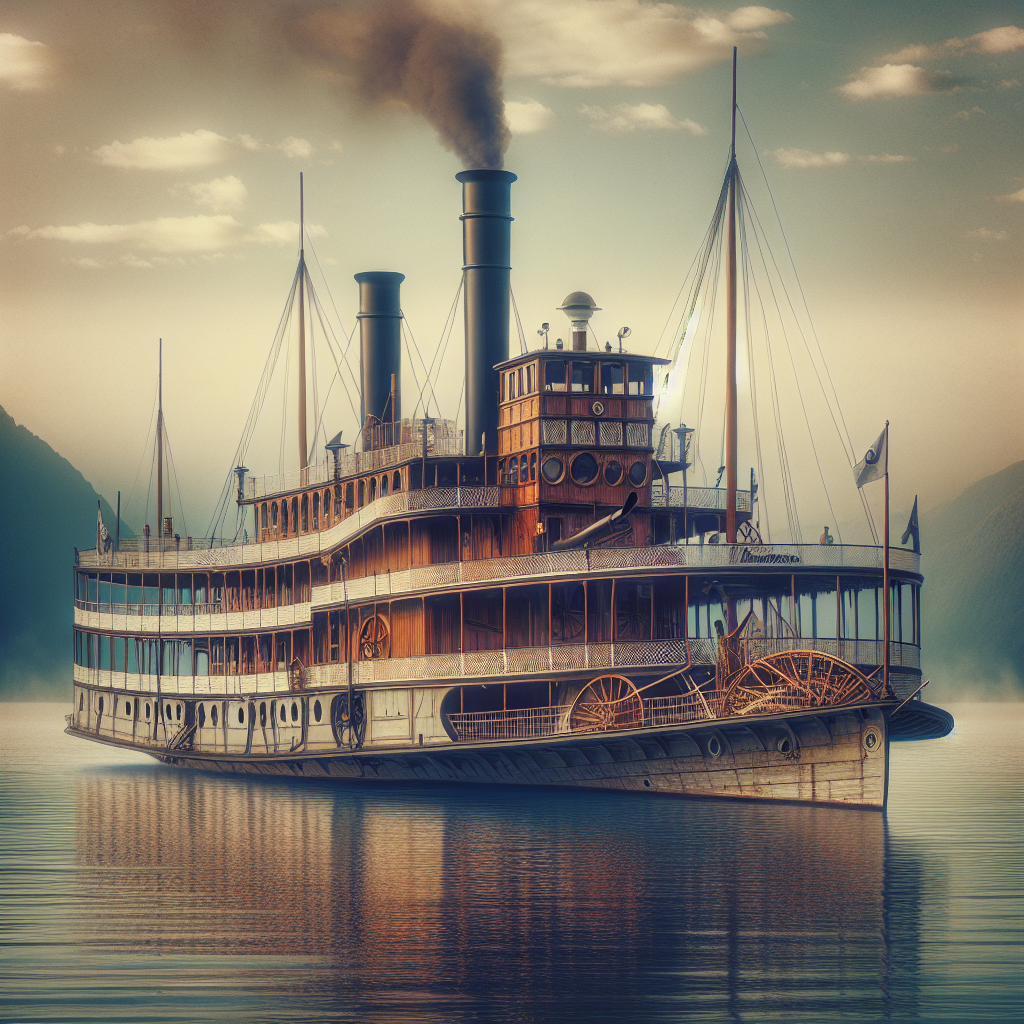

The Tale of the Pomona: A Sternwheeler's Journey Through Time
Imagine a time when rivers were the highways of America, and the Pomona, a sternwheeler, was the queen of the waters. The Pomona was a sternwheel steamboat that operated in the Pacific Northwest during the late 19th and early 20th centuries. Built in 1888, this vessel was a vital part of the transportation network, navigating the Columbia and Willamette Rivers in Oregon. The Pomona was more than just a boat; it was a lifeline for communities, carrying passengers, goods, and mail between towns that were otherwise isolated by the rugged terrain of the region.
The Pomona was constructed during a time when the Pacific Northwest was rapidly developing. The region was experiencing a boom in population and industry, and the need for reliable transportation was critical. The sternwheeler was designed to navigate the challenging river conditions, with its flat-bottomed hull allowing it to travel in shallow waters. This made it an ideal choice for the rivers of Oregon, which were often unpredictable and difficult to traverse.
The Pomona's role in the community was significant. It connected people and places, enabling trade and communication in an era before highways and railroads dominated the landscape. For many, the Pomona was a symbol of progress and opportunity, a vessel that brought the world closer to their doorstep. It was a common sight on the rivers, its paddlewheel churning through the water as it made its way from one port to another.
However, the Pomona's journey was not without challenges. The rivers it navigated were fraught with hazards, from treacherous currents to hidden sandbars. The crew had to be skilled and vigilant, constantly on the lookout for obstacles that could damage the vessel or endanger its passengers. Despite these dangers, the Pomona continued to serve the region faithfully for many years, a testament to the resilience and determination of those who operated it.
As time went on, the advent of railroads and highways began to change the transportation landscape. The Pomona, like many other sternwheelers, found itself facing obsolescence. The once-bustling river routes became less traveled as people and goods moved to faster and more efficient modes of transport. By the early 20th century, the Pomona's days were numbered, and it was eventually retired from service.
The story of the Pomona is a reminder of a bygone era, a time when rivers were the lifeblood of communities and sternwheelers like the Pomona were the vessels that kept them connected. It highlights the importance of innovation and adaptation in the face of changing times. While the Pomona may no longer ply the waters of the Pacific Northwest, its legacy lives on in the history of the region and the memories of those who knew it.
In reflecting on the Pomona's journey, it's important to consider the broader implications of technological progress. The transition from riverboats to railroads and highways was not just a change in transportation; it was a shift in the way people lived and interacted with the world. It brought new opportunities but also challenges, as communities had to adapt to new realities and find ways to preserve their connections in an ever-evolving landscape.
The Pomona's story is one of resilience and change, a narrative that resonates with the challenges we face today. As we navigate our own transitions, whether they be technological, social, or environmental, we can draw inspiration from the past and the lessons it offers. The Pomona may be a relic of history, but its spirit of adventure and perseverance continues to inspire those who seek to chart new courses in an uncertain world.