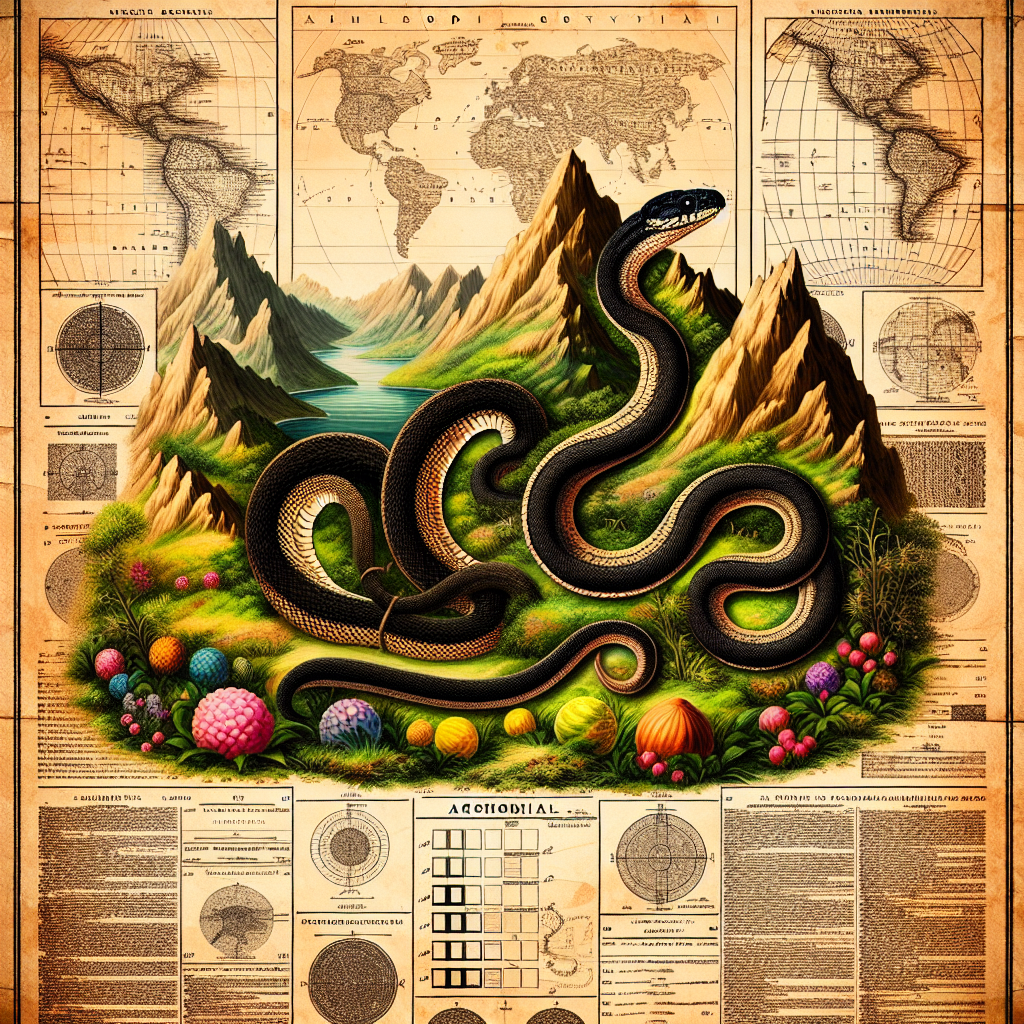

If you've ever dreamt of a green serpent dancing through the forests of South America, you're envisioning the Philodryas olfersii without even knowing it. This leafy-green colubrid snake, found primarily in Brazil, Paraguay, and Argentina, is not just a master of camouflage but also a fascinating creature in its own right. They have been making the world a slightly greener place for millions of years now.
Philodryas olfersii is often referred to as the 'green racer'. This name captures both its primary color and its impressive speed. Weighing in at just a couple of pounds and stretching out anywhere from four to six feet, these snakes are nothing short of a marvel. Unlike other snakes often featured in horror flicks, they rarely seek human interaction, making them a rather shy subject. Despite their reluctance to socialize with humans, they’ve become an incredible testament to the biodiversity of their habitat.
In contemplating the Philodryas olfersii, one might wonder if the "green" metaphor goes beyond its external appearance. These snakes are semi-arboreal, meaning they spend much of their lives in trees when they are not darting around on the forest floor in search of prey. This arboreal lifestyle serves a dual purpose: it provides safety from ground-based predators and offers a prolific hunting ground for small mammals, birds, and lizards.
While snakes often get a bad rap in our culture, it's critical to appreciate them from an ecological standpoint. Philodryas olfersii plays a vital role as both predator and prey. It controls the populations of the creatures it hunts, while also serving as meals for larger predators. This balance keeps the ecosystem healthy, and that’s something even us city dwellers can get behind.
The snake’s venom is another point of fascination, serving as both an evolutionary adaptation and a survival mechanism. They are rear-fanged but are not considered dangerous to humans. Its venom is primarily used to subdue its prey. While a bite might cause swelling and discomfort, it's not known to be life-threatening to humans. This should not trigger panic but rather respect for a creature that has perfected the art of survival.
In the past few decades, the world has seen increasing habitat destruction due to deforestation and agricultural expansion. The Philodryas olfersii is not exempt from these threats. While they're not considered endangered yet, they're feeling the effects of human encroachment on their native habitat. With the Amazon forest facing unprecedented changes, these vibrant green serpents may face challenges in adjusting to the diminished green space, leading to potential conflicts -- like wandering into human-inhabited areas.
However, opposing views often raise the issue of prioritizing human needs, such as agriculture and urban development, over maintaining habitats for snakes like the Philodryas olfersii. It's a complex issue where immediate human needs meet long-term ecological sustainability. Can we find a balance? Growing awareness of the impact of our actions could drive change in policies that seek to protect our biodiverse ecosystems while considering human requirements.
There's a broader societal conversation around conservation. Philodryas olfersii can serve as a symbol for understanding the interconnectedness of life. It prompts us to think about our responsibility toward preserving biodiversity. We need more conversations about sustainable development, where young voices—particularly Gen Z—can play a vital role. You, as part of this generation, inherit a planet that requires both your attention and action.
Whether you find yourself in awe or in avoidance of these green racers, let this be a reminder of the incredible natural world lurking beyond the comfort of urban life. The Philodryas olfersii represents not just the wild beauty of the natural world, but it also challenges us to reconsider our relationship with it. Humans have the power to help preserve the habitats where these and other creatures thrive. This isn't only about saving snakes, but about ensuring a diverse and thriving ecosystem for the future.