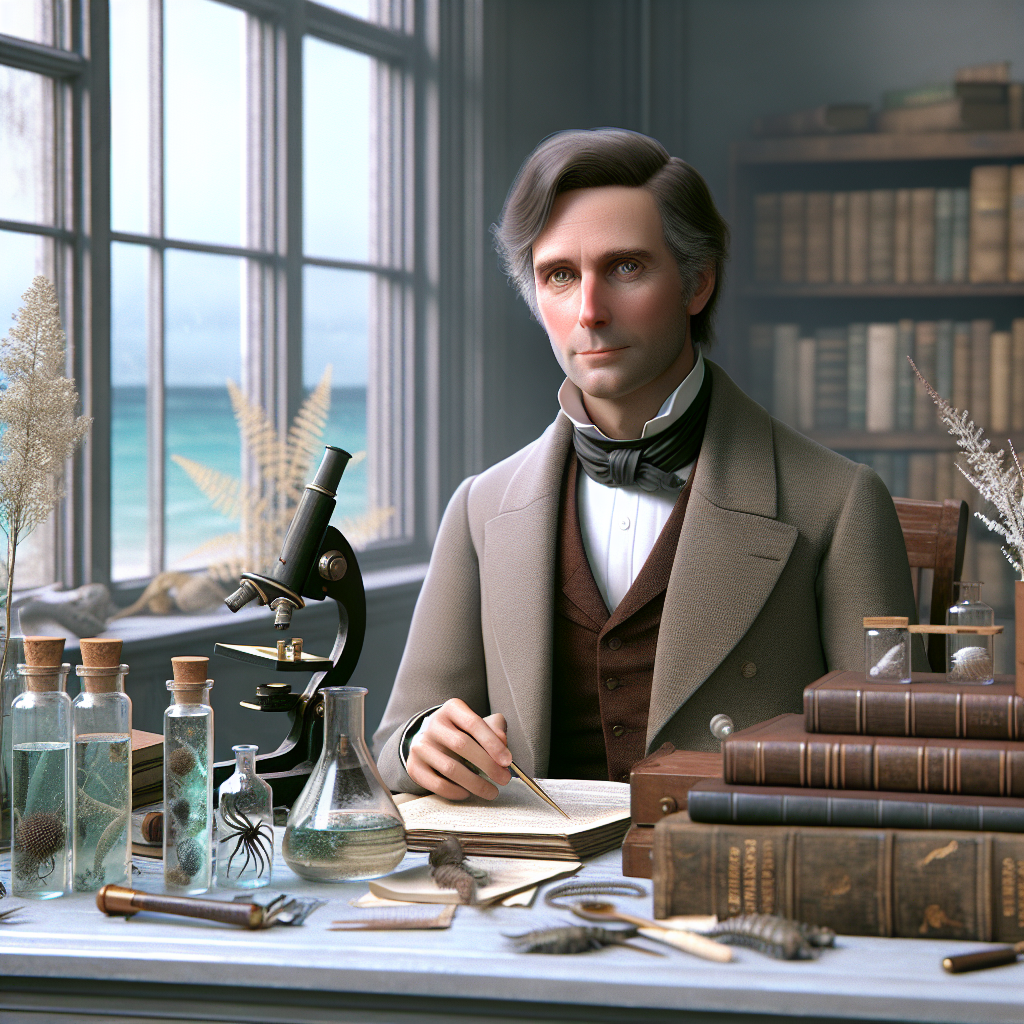

Have you ever wondered how sea urchins make their skeletons so perfectly symmetrical? This peculiar line of questioning led Philip Herbert Carpenter to become one of the most influential figures in 19th-century science. Born in London in 1852, Carpenter was an accomplished scientist whose work primarily focused on the anatomy and classification of echinoderms, particularly crinoids and sea urchins. From an early age, Carpenter was immersed in a world of natural curiosity, as he was the son of renowned naturalist William Benjamin Carpenter. His educational journey took him through various disciplines: he initially pursued studies at University College London and the University of Edinburgh, where he eventually honed his scientific skills.
Carpenter's career blossomed during a time when natural sciences were rapidly evolving, and he contributed significantly to the knowledge of echinoderm biology. In an era when gathering specimens from exotic locales was all the rage, Carpenter painstakingly examined both living creatures and fossils. His expertise earned him widespread acclaim, particularly during an 1883 expedition organized by Charles Wyville Thomson, which discovered a plethora of marine life in the deep sea. Carpenter meticulously cataloged the collected specimens, leading to numerous scientific papers and vital contributions to marine biology journals.
The scientific community revered Carpenter’s eye for detail and dedication to taxonomy. His ability to classify intricate skeletal structures of sea creatures made him stand out. While Victorian society was enamored with glamour and hierarchy, Carpenter’s work transcended societal norms by focusing purely on the natural wonders beneath the ocean. His perspective allowed him to collaborate with scientists across Europe, getting involved in international projects that expanded the scope of marine research.
Carpenter’s diligent efforts illuminate the mindset of a passionate scientist searching for truth in structure and form. Yet, his work was not without its controversies. Some of Carpenter's contemporaries critiqued the elaborate classifications he proposed, claiming they were too detailed to be practical for broader scientific discourse. In a way, this reflects the tension between the need for detailed scientific inquiry and the quest for simplicity in communicating science effectively—a debate still relevant today, especially as we discuss climate change and biodiversity.
During his career, Carpenter advocated for a collaborative and inclusive approach to science, emphasizing the importance of sharing knowledge across borders. He saw value in bringing together different ideas and methodologies to gain a fuller understanding of biological phenomena. This inclusive approach mirrors today's progressive ideals of encouraging diversity in scientific research and development. Like modern-day activists who push for equitable representation, Carpenter believed in the power of collective human endeavor to solve complex problems.
Despite the challenges he faced, Carpenter remained steadfast in his pursuits. In a period where travel was an arduous endeavor, Carpenter’s willingness to traverse the globe in pursuit of scientific data was admirable. His resilience is a testament to the importance of perseverance in scientific inquiry—a trait that resonates with today’s generation passionate about addressing global challenges. Carpenter’s life story inspires those who tirelessly work towards a better understanding of the natural world, reminding us that every small detail contributes to the larger picture.
Philip Herbert Carpenter’s legacy goes beyond his scientific discoveries; it dwells in his methodology and mindset. His work fostered a spirit of curiosity and precision that continues to be a cornerstone of scientific research. By emphasizing meticulous observation and classification, Carpenter provided a foundational model for aspiring scientists. His contributions laid the groundwork for future marine biologists and helped advance the field of echinoderm research, ensuring that our knowledge of these fascinating creatures continues to grow.
Carpenter’s story also encourages us to think critically about how we balance scientific advancement with accessible communication. The complexities of his findings remind us of the ongoing challenge to make specialized knowledge understandable and relevant to everyday people. In today’s digital age, where information rapidly circulates, bridging the gap between complex scientific research and public understanding is more important than ever.
While Carpenter might not be a household name, his work underscores the infinite possibilities that arise from curiosity and commitment to truth. His efforts in research, classification, and collaboration have left an indelible mark on the scientific community. Just as Carpenter delved into the depths of the ocean to unearth hidden secrets, contemporary generations face their own pressing needs for discovery and innovation.
Philip Herbert Carpenter’s life offers a timeless lesson: that exploration, in any form, and commitment to a vision can create lasting change. His journey through the labyrinthine world of marine biology serves as a reminder that every generation of thinkers and dreamers has the potential to shape the future and contribute to the ever-evolving narrative of scientific progress. Let us be inspired by his dedication to science and continue striving for understanding in our quests, whatever they may be.