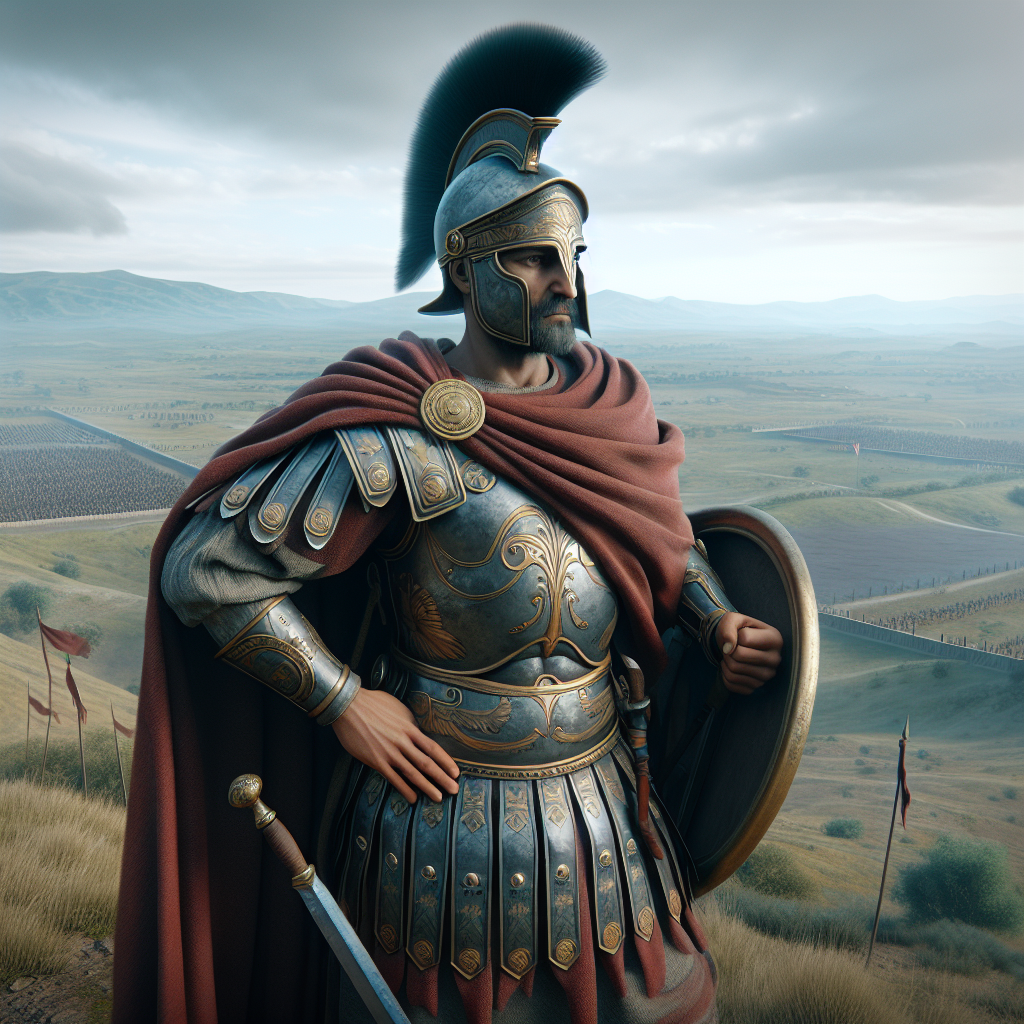

Imagine the drama of Game of Thrones set against the backdrop of ancient Macedonia. That's essentially the life of Perdiccas, a prominent leader whose tale is rich with ambition, betrayal, and complex politics. Who was Perdiccas, you ask? Born around 355 BCE, he's primarily noted as a general under Alexander the Great. His critical role came about following Alexander's death in 323 BCE, at the time when the empire required a steady hand to guide the multitude of factions vying for power.
Perdiccas was more than just a footnote in history. He was one of those pivotal figures whose actions influenced the trajectory of an entire era. When Alexander the Great died, he left behind an empire stretching from Greece to the fringes of modern-day India. However, he didn’t leave a clear successor, an oversight that spelled chaos across the empire. Enter Perdiccas, who was appointed as the 'Regent of the Empire' to govern in the name of Alexander’s half-brother, Philip III, and Alexander’s infant son, Alexander IV. It was a formidable responsibility, with the challenge of holding together a sprawling territory while managing the egos of powerful generals, often with their own ambitions lurking just below the surface.
Understanding Perdiccas' rise involves appreciating the political landscape post-Alexander's era. Wracked by uncertainty, Alexander's generals, known as Diadochi, scrambled for control over various parts of the empire. Unlike many of his peers who opted for immediate territorial control, Perdiccas initially assumed the role of a unifier, perhaps valuing the empire's integrity over personal gain. However, the mantle of power seldom rests easily, and Perdiccas faced immense pressure from those who resented his centralized control.
His strategic mind was evident in early political maneuvers. He solidified alliances through marriage, an age-old tactic even Machiavelli would approve of. He engaged in diplomatic efforts but wasn’t averse to flexing military muscle when required. This was seen when he led an expedition against Ariarathes in Cappadocia, which upon success, bolstered his reputation.
It's crucial to note that Perdiccas’ actions inspired both commendation and criticism. While he strove to maintain unity, his methods became increasingly authoritarian. Power has a peculiar way of warping intentions, and for many of the other generals, Perdiccas’ desire for control turned into a point of contention. One understands the skepticism; his decisions were viewed as overreaching by some, including Antipater and Craterus, who were influential leaders in their own rights.
Perdiccas’ tenure was tumultuous, demonstrating the complexities of wielding power without the unifying charisma or brute force that Alexander commanded. He initiated campaigns that were as audacious as they were controversial. His plans included an expedition to the Mediterranean to secure territories still loyal to the late Alexander. This ambition, however, sowed seeds of discontent, leading to the infamous mutiny of his troops on the Nile. Soldiers weary of endless campaigns eventually turned against him, a poignant reminder of how power, once unchecked, can lead to one's downfall.
It's easy, in hindsight, to paint Perdiccas as a would-be tyrant. Yet, we have to empathize with the almost impossible task he faced. Trying to keep an empire as vast and diverse as Alexander's intact would test even the savviest of politicians. His efforts to consolidate power were perhaps driven as much by self-preservation as by ambition. His attempts to centralize authority can be misconstrued if we don't consider the pressure from persistent power-hungry adversaries around him.
Ultimately, his death during the failed Egyptian campaign in 320 BCE highlights not just a personal tragedy, but a turning point for an empire already on the brink. Following his assassination by his own officers, the consolidation of the Macedonian empire crumbled further, giving way to the period of the Wars of the Diadochi. These struggles led to the disintegration of unity Perdiccas once attempted to uphold, splintering the empire into distinct Hellenistic kingdoms under various generals.
Perdiccas, though not the most celebrated figure of his time, represents a significant chapter in the tapestry of ancient history. Encounters with power and opportunity remain evergreen topics, relatable even today when pondering the intricacies of leadership and governance. Viewing his legacy is instructive, as it offers insights into the nuances of ambition, unity, and the often precarious journey of holding onto power. For younger audiences, especially those in the whirlwind worlds of politics or corporate ladders, Perdiccas' life serves as a stark reminder: leadership means not only striving for glory but navigating the treacherous paths of responsibility and accountability. His story resonates as a caution about the costs associated with power and ambition, timeless themes that transcend centuries and still find relevance in our modern lives.