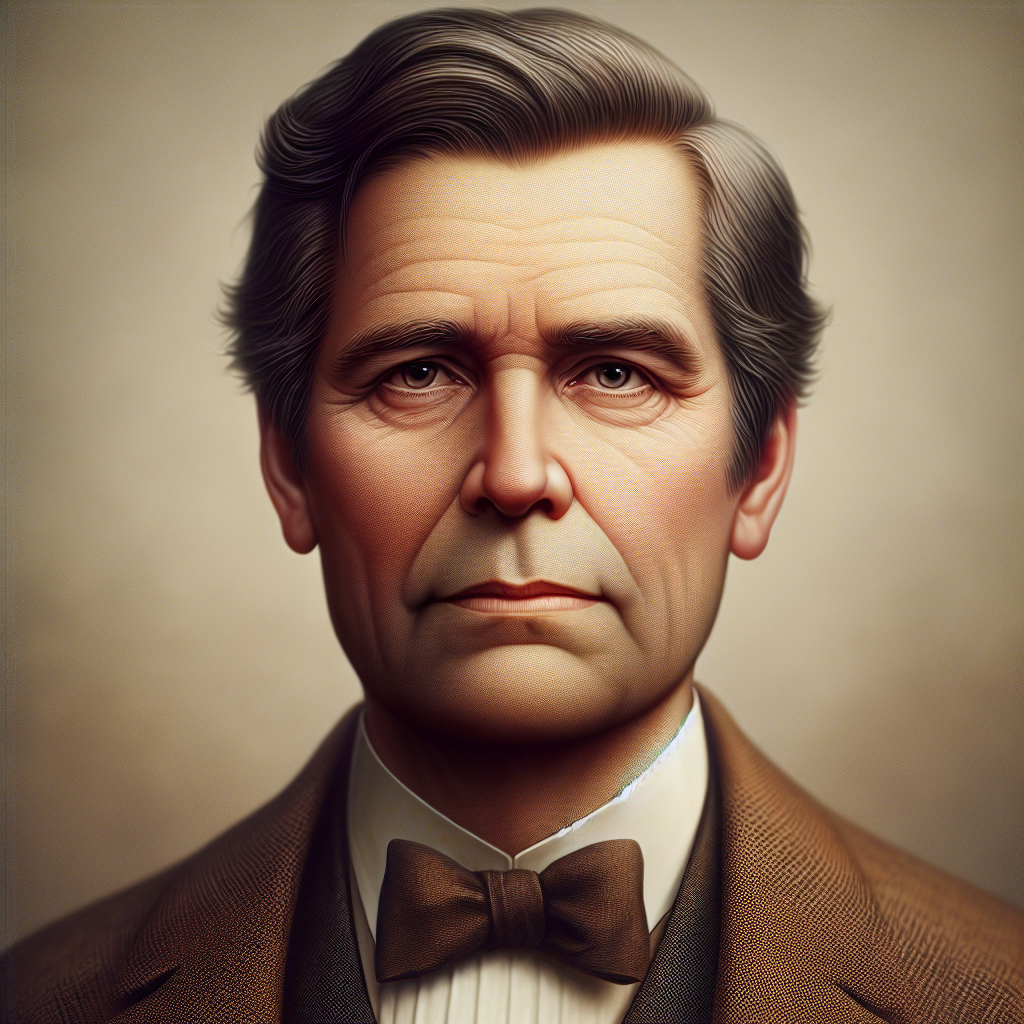

Pedro Diez Canseco might not be a household name like some of his contemporaries, but his journey through the political landscape of 19th-century Peru is nothing short of intriguing. Who wouldn't be fascinated by someone who stepped in as President not once, but thrice during periods of chaos in one of South America's vibrant nations? Born in 1815 in the town of Arequipa, Canseco's life unfolded during an era of upheaval and transformation, where Peru was constantly navigating between stability and turmoil. His leadership emerged during these pivotal moments, often filling the void left by civil wars or political unrest.
Throughout his political career, Canseco was a figure who instigated diverse reactions, characterized by his military background and liberal leanings. In a time when Peruvian society was constantly shifting, he was the kind of leader who could temporarily steady the ship. Yet, every reign was temporary, pointing to a recurring theme in his life: while he was trusted to take the reins from time to time, the political climate was too volatile for any enduring stay in power.
His first assumption as President was rather unexpected. In 1863, after the assassination of President Miguel de San Román, Canseco took on the role, hoping to restore order and guide the country towards elections. It was a role thrust upon him amid national crisis. The events highlighted his ability to navigate through both the militaristic and civilian aspects of governance which was no easy task. It’s pretty compelling to imagine how he mustered the strength to steer such a wobbling ship of state.
In 1865, his second chance to lead was born out of similar circumstances, albeit this time more briefly. Peru was again drowning in political chaos after the end of the presidency of Juan Antonio Pezet. This era was defined by intense internal conflict as multiple factions vied for control. Canseco served as a provisional president, essentially a stabilizing figure while the nation sought to detangle its complicated political weave and provide some semblance of calm for everyday Peruvians trying to live their lives amidst the noise.
His third and final presidency in 1868 was perhaps the most charged with diverse challenges. After the resignation of President Mariano Ignacio Prado, Canseco entered once again into the eye of a political storm, tasked with shepherding the country until elections could be held. It was like living as the interim CEO of a company in the middle of a hostile takeover – no easy feat, but he took responsibility, ever the soldier, accustomed to the call of duty.
In analyzing his multiple short terms, Canseco's political path has often been critiqued, considering questions of legitimacy and effectiveness. Critics point to his repeated service during only transitory periods, questioning whether he was more of a placeholder than a figure capable of long-term policy achievements. Still, admirers argue he was precisely what Peru needed: a steady hand amidst chaos and someone who upheld democratic processes by holding elections as his pivotal duty during times of leadership vacuum. Balancing these viewpoints paints a picture of Canseco not as a power-hungry leader, but as a loyal soldier and diplomat stepping up to handle situations most would shy away from.
While Peru's politics have evolved, the tension between continuity and change remains a constant theme. Canseco's role elucidates how leadership during crisis can often mean paving ways for others, not cementing one's legacy. This balance of stepping in with calm and stepping out with competence is sometimes referred to as transitional leadership, aiming for stability with minimal disruption to the democratic process.
For the youth of today, observing Canseco's stints might provoke important reflections on political duty, service above ambition, and the crucial role of provisional leaders who prioritize national stability over their own ambitions. Engaging with the notion of temporary power is an essential lesson in leadership. It's about service and the understanding that sometimes, the most vital leaders are those who ensure the transition runs smoothly, even if they're not the star players.
Interestingly, Pedro Diez Canseco's life outside politics was quite different. Often described as down-to-earth, his personal life reflected his communal roots, which perhaps helped in forging trust when he stepped into office. Yet, as much as historical records offer a glimpse into his public deed, they, unfortunately, leave behind the richness of his personal life which might have influenced his decisions and openness to dialogue. This personal touch could be one of the reasons why he managed to emerge as a trusted figure in Peru’s rocky political landscape.
His legacy perhaps lives best not in the grandeur of historical remembrance, but in the subtle yet critical lessons of leadership resilience and adaptation it offers our times. Whether for a leader, a movement, or for those searching for role models in service, it's a good reminder that power doesn't always equate to an extended term. Sometimes, the strength lies in knowing when and how to hand it over, gracefully.