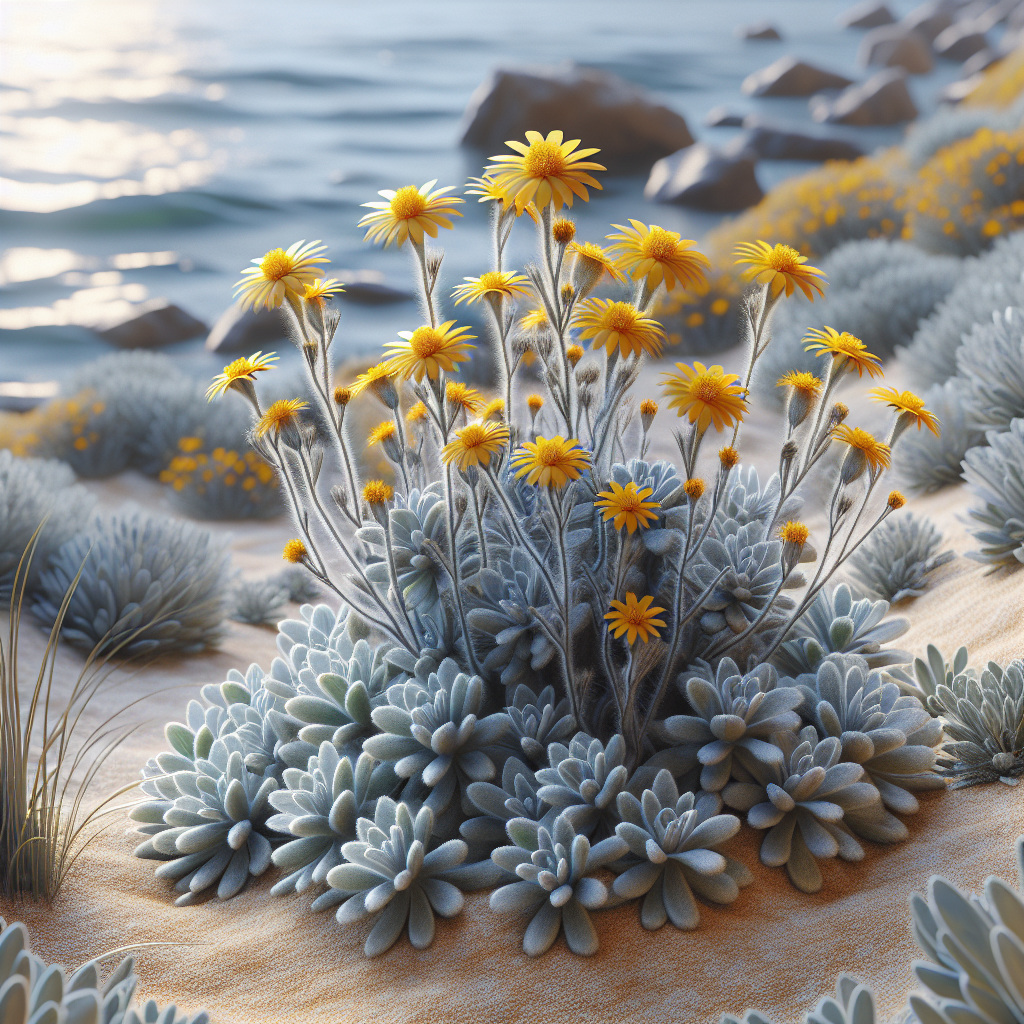

The Resilient Pallenis Maritima: A Coastal Survivor
Imagine a plant that thrives where others wither, basking in the salty embrace of coastal winds. This is Pallenis maritima, a hardy perennial that has made its home along the Mediterranean coastlines. Known for its bright yellow, daisy-like flowers, Pallenis maritima, or the sea daisy, is a testament to nature's adaptability. It blooms from spring to summer, painting the rugged coastal landscapes with its vibrant hues. This plant is not just a pretty face; it plays a crucial role in its ecosystem, providing food and habitat for various insects and small animals.
Pallenis maritima is a fascinating example of how life can adapt to challenging environments. It grows in sandy and rocky soils, often in areas with high salinity where few other plants can survive. This resilience is due to its ability to tolerate salt and its deep root system, which helps it access water in arid conditions. The plant's leaves are covered in tiny hairs that reduce water loss, a common adaptation among plants in dry, windy areas. This makes Pallenis maritima an important species for stabilizing coastal soils and preventing erosion.
The presence of Pallenis maritima in coastal areas is not just a boon for the environment but also for local communities. Its ability to prevent soil erosion helps protect coastal infrastructure and habitats from the damaging effects of storms and rising sea levels. Moreover, the plant's flowers attract pollinators, supporting biodiversity and the health of the ecosystem. In some regions, Pallenis maritima is also used in traditional medicine, highlighting its cultural significance.
However, like many coastal species, Pallenis maritima faces threats from human activities and climate change. Coastal development, pollution, and habitat destruction are significant challenges. Rising sea levels and increased storm intensity due to climate change also pose risks to its survival. Conservation efforts are essential to protect this resilient plant and the ecosystems it supports. This includes preserving natural coastal habitats, reducing pollution, and implementing sustainable development practices.
Understanding the importance of Pallenis maritima and similar species is crucial in the fight against climate change and environmental degradation. By protecting these plants, we are not only preserving biodiversity but also safeguarding the natural defenses that protect our coastlines. It's a reminder of the interconnectedness of life and the need for sustainable practices that respect and preserve our natural world.
While some may argue that focusing on a single plant species is not enough to address broader environmental issues, Pallenis maritima serves as a symbol of resilience and the potential for positive change. By learning from and protecting such species, we can develop strategies that benefit both nature and humanity. It's a small but significant step towards a more sustainable future, where humans and nature coexist harmoniously.