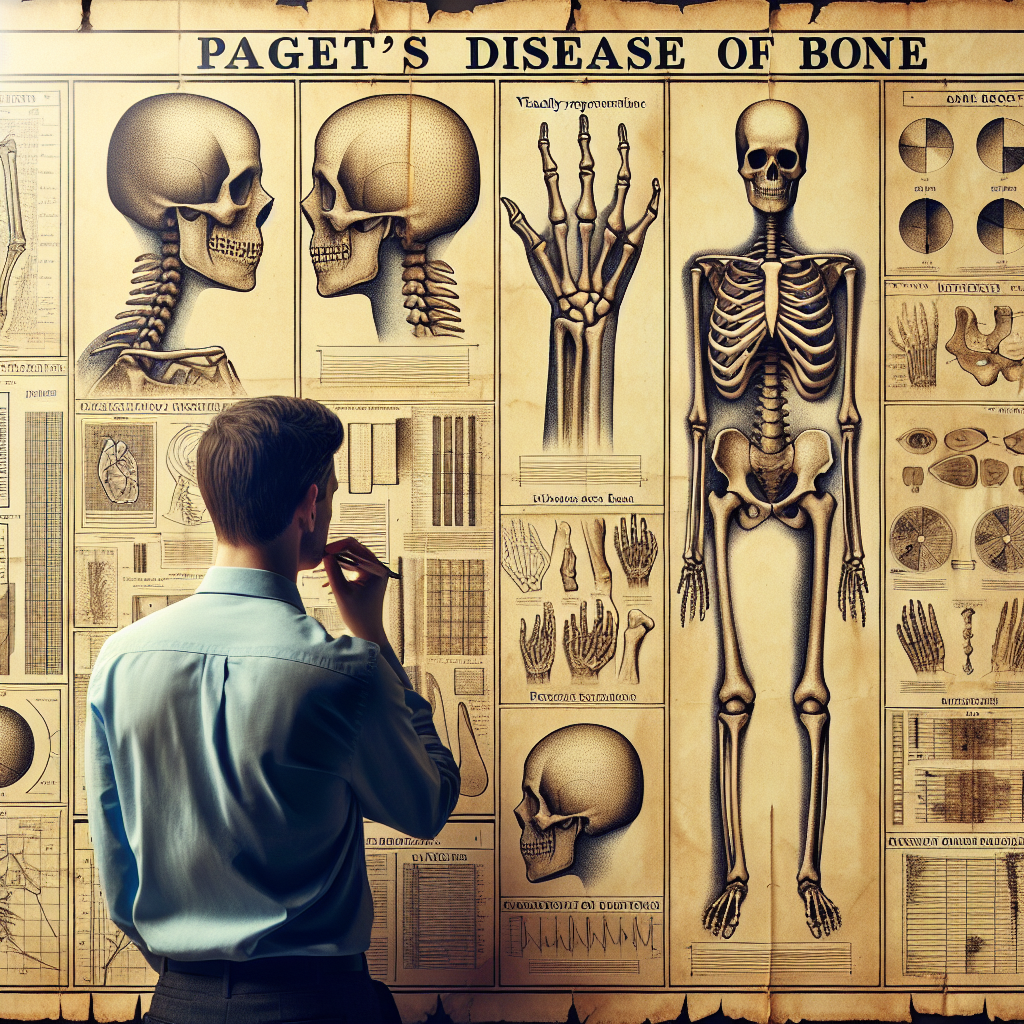

Imagine waking up one day and feeling like your bones are doing some unexpected remodeling without your permission. This isn't the latest TikTok dance or a trendy health hack, but actually Paget's disease of bone doing its thing. Predominantly affecting people over 50 and common among those of European descent, this condition rearranges your bone tissue in a way that can be both puzzling and problematic.
Paget's disease shows up when and where it pleases, often playing favorites with your pelvis, spine, skull, or legs. In a whirlwind of unusual bone activity, your formations speed up like they're in some kind of unsanctioned race, leading to weaker and mishappen parts. But it’s not all aches and fractures; sometimes, the condition quietly lurks in X-rays discovered by accident.
So, what's going on behind the scenes in our skeletal lentos? Bone remodeling is a natural process where your body systematically breaks down old bone and rebuilds it. It's a little like keeping your Instagram feed fresh to avoid that same old vibe. However, with Paget's, this process gets wild. Imagine trying to build a sandcastle with a billion hyperactive kids running around—the results can be disorderly and unpredictable.
One might wonder why these bones decide to rebel? The "why" behind Paget's is largely a mystery. Some suspect viral infections might trigger it in genetically susceptible folks, but this isn’t set in stone yet. There’s a genetic angle too, a lot like inheriting the funky dance moves from your family, but not as fun. Meanwhile, many focus on lifestyle and environmental factors, speculating on the possible links.
Despite the uncertainties, living with Paget's doesn’t have to mean playing the victim. Medical treatments have stepped up, with bisphosphonates leading the charge. These medications, usually reserved for treating osteoporosis, work by slowing down the bone turnover rate—kind of like giving those unruly bone builders a strict checklist to follow.
Yet, while the medical world keeps pushing for answers and better treatments, it’s important to hear out what else is happening. Critics point to the fact that most research funding doesn't target diseases perceived as impacting the older generation only. Gen Z often hears about cures for illnesses impacting younger people, leaving conditions like Paget’s in the shadows of awareness. But those who speak up cherish more inclusive approaches, ensuring that everyone, no matter their age or condition, gets attention.
Furthermore, the relatively low profile of Paget’s means that awareness is scanty, and diagnosis can come too late. Misdiagnosis risk is huge here. Many mistake its symptoms for other typical ageing issues or arthritis. Without proper awareness, patients can be dismissed or undergo unnecessary treatments. It shows yet again how essential it is for the medical community and public health initiatives to broaden their scope to avoid marginalized health concerns.
Discussions around conditions like Paget's invite us all to reconsider how we connect with our health. We often view sudden health conditions from a personal lens, missing the broader picture of how these illnesses impact communities. Knowing about Paget's and advocating for more research can lead to better diagnostic tools and treatments, impacting public policies that prioritize such overlooked conditions.
Aside from clinical interventions, exploring lifestyle changes such as nutrition rich in calcium and vitamin D can also play a role. These nutrients are like reliable buddies for bone health. Strength training and moderate exercises are additions to the mix, although they’ll need a thumbs-up from your healthcare provider.
Lastly, communities and healthcare providers need to embrace the interconnectedness of age and health by leveraging insights from both older adults and the younger generations familiar with promoting systemic change. After all, whether it’s raising awareness of Paget’s or pushing for technological advances in the medical field, it’s these shared interactions and knowledge that promote compassion, advocacy, and progress in health domains.
As more people share stories and experiences with Paget's disease, it helps dismantle the siloed ways of addressing health, challenging assumptions made by both the young and old. Even though there are no viral dances or slick graphics to spread the word about Paget’s, what it asks of us is straightforward: a little knowledge, a little understanding, and the willingness to demand better. In a society that often forgets the older populations, maybe it’s up to Gen Z to not just listen but amplify—theyre already fluently wielding the tools of the digital age.
Paget’s Disease might not be considered headline material, yet its peculiar drama continues to unravel quietly. As we listen more and assume less, hope lies in a future where medical stories get transformed into broad dialogues, ensuring no condition is left in the shadows, waiting for the world to wake up to its presence.