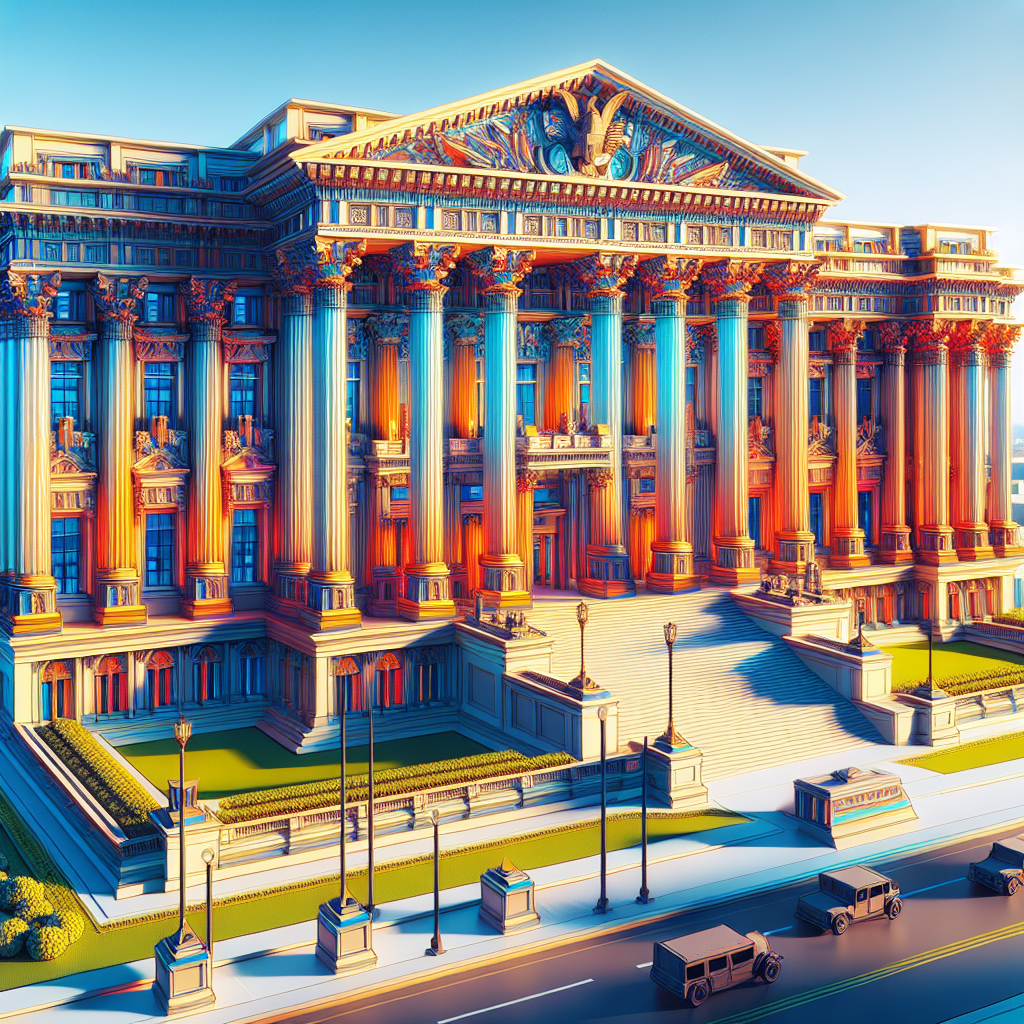

The Enigma of the Ok Saroy Presidential Palace
Imagine a palace so grand that it stands as a symbol of power and authority, yet remains shrouded in mystery for many. The Ok Saroy Presidential Palace, located in Tashkent, Uzbekistan, is precisely that. Built during the Soviet era, this architectural marvel has served as the official residence of the President of Uzbekistan since the country's independence in 1991. The palace is not just a building; it is a testament to the political and cultural evolution of a nation that has seen its fair share of change. But why does this palace hold such significance, and what does it represent in the broader context of Uzbek history and politics?
The Ok Saroy Presidential Palace is a blend of Soviet architectural style and traditional Uzbek elements, making it a unique structure that captures the essence of Uzbekistan's past and present. The palace's construction began in the late 1980s, a time when the Soviet Union was on the brink of collapse. It was completed in the early 1990s, just as Uzbekistan was emerging as an independent nation. This timing is crucial because it reflects the transition from Soviet rule to self-governance, a period marked by both hope and uncertainty.
For many Uzbeks, the palace is a symbol of national pride and independence. It represents the country's ability to stand on its own after years of Soviet domination. The palace is not just a residence for the president; it is a place where important decisions are made, where foreign dignitaries are received, and where the future of the nation is shaped. It is a physical manifestation of the country's sovereignty and its aspirations for the future.
However, the Ok Saroy Presidential Palace is not without its controversies. Critics argue that the palace is a symbol of authoritarianism and the concentration of power in the hands of a few. They point to the lack of transparency and democratic processes in the country, suggesting that the palace is more of a fortress than a beacon of hope. This perspective is not without merit, as Uzbekistan has faced criticism for its human rights record and lack of political freedoms.
Despite these criticisms, the palace remains an important part of Uzbekistan's identity. It is a place where the past and present collide, where the dreams of a nation are both realized and challenged. For the younger generation, particularly Gen Z, the palace is a reminder of the complexities of their country's history and the ongoing struggle for a more open and democratic society.
Understanding the significance of the Ok Saroy Presidential Palace requires a nuanced perspective. It is a place that embodies both the achievements and the challenges of Uzbekistan. It is a symbol of independence and a reminder of the work that still needs to be done to ensure a brighter future for all Uzbeks.
In the end, the Ok Saroy Presidential Palace is more than just a building. It is a reflection of a nation's journey, a testament to its resilience, and a symbol of its aspirations. Whether viewed as a symbol of pride or a reminder of the challenges ahead, the palace remains an integral part of Uzbekistan's story.