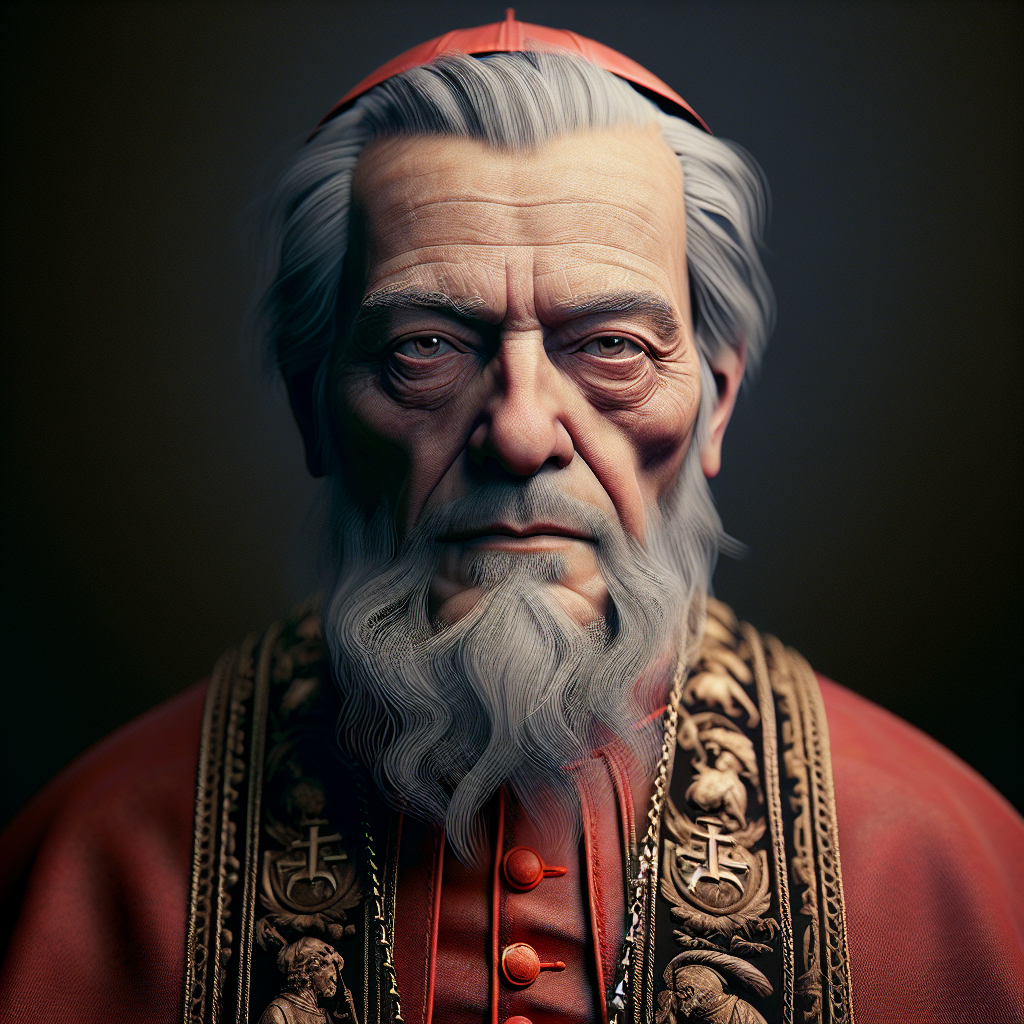

Ever heard the one about the Cardinal who sent a letter that changed the course of science? No? Nikolaus von Schönberg, an influential figure in the Roman Catholic Church during the early 16th century, may not be a household name, but his reach extended far beyond the ecclesiastical domain. Born in the late 15th century in the region of Schönberg, now part of modern-day Germany, Schönberg rose through the ranks of the Church to become a cardinal. His most noteworthy contribution came in 1536 when he penned a letter to Nicolaus Copernicus, urging him to share his groundbreaking heliocentric theory—a pivotal moment in the scientific revolution.
Born around 1472, Nikolaus von Schönberg started his ecclesiastical career in an era where the Church was the epicenter of power and knowledge. Unlike many of his contemporaries who might have wielded their influence solely for personal gain or dogmatic preservation, Schönberg was a progressive figure willing to push the boundaries of intellectual exploration. This open-mindedness, rare for a clergyman of his time, led him to engage with thinkers and revolutionaries of the period.
Schönberg’s interest in Copernicus highlights his forward-thinking nature. While the Catholic Church was deeply entrenched in the Ptolemaic model of the universe, which placed the Earth at the center, Schönberg envisioned a different picture. The letter he wrote to Copernicus was not just a request; it was a demonstration of faith in human reason and scientific inquiry. Schönberg seemed to understand that knowledge should not be a prisoner of doctrine but a catalyst for human progress.
The importance of Schönberg's letter cannot be overstated. At a time when resistance to change was a knee-jerk reaction, Schönberg recognized the value of Copernicus's work. His encouragement likely played a role in giving Copernicus the confidence to publish "De revolutionibus orbium coelestium," a publication that fundamentally altered our understanding of the universe.
Balancing Schönberg’s revolutionary mindset, however, was his deep commitment to the Church. This duality—his encouragement of scientific endeavors while adhering to the rigid structures of religious authority—speaks volumes about his complex persona. A liberal thinker in a conservative institution, Schönberg knew he had to tread carefully. Yet, his correspondence with Copernicus and his support for new ideas shows a man capable of seeing beyond his immediate environment, envisioning a world where both faith and reason could coexist.
Seeing Schönberg simply as a Church figure or merely as a supporter of a fledgling scientific revolution belies the multifaceted nature of his contributions. In addition to his push for scientific progress, he was also involved in the geopolitics of his day. He played crucial roles during the conclaves of the 1530s and was a diplomatic emissary in France, embodying the idea that intellectual pursuits do not exist in silos but are interconnected with the broader societal framework.
It’s also important to view Schönberg’s story from a contemporary perspective. In today’s world, polarized by debates over science and belief, Schönberg’s approach is a compelling model for how individuals can bridge divides. His openness is a lesson for those on both sides of the aisle in modern discourse: those who fear the implications of scientific discovery and those who criticize religious dogmatism must find ways to engage meaningfully with each other.
Despite his accomplishments, Schönberg remains a somewhat obscure historical figure, overshadowed by the magnitude of the scientific breakthroughs he supported. The reasons for his obscurity might include the dominance of other more vocally heretical figures whose confrontations with the Church are better known. Or, possibly, it reflects a historical tendency to credit monumental achievements to singular names, rather than the interconnected web of contributors they depend upon.
The narrative of Nikolaus von Schönberg is not so much a forgotten chapter but a reminder of an additional player in the pages of history—a Cardinal who dared to venture into uncharted intellectual territory. As a generation emerging into a constantly evolving world, gen Z finds itself faced with challenges not so different from the ones faced by Schönberg. Whether it’s climate change, technological innovation, or social justice, the call is the same: to push for progress and not shy away from difficult conversations.
Nikolaus von Schönberg’s legacy encourages today’s thinkers to continue that tradition, embodying an openness to transformative ideas and a willingness to act upon them. By remembering figures like Schönberg, we celebrate not just the grandeur of discovery but the collaborative spirit that fuels true advancement. A spirit that intertwines science, curiosity, and a profound belief in the human capacity to redefine what we think we know.