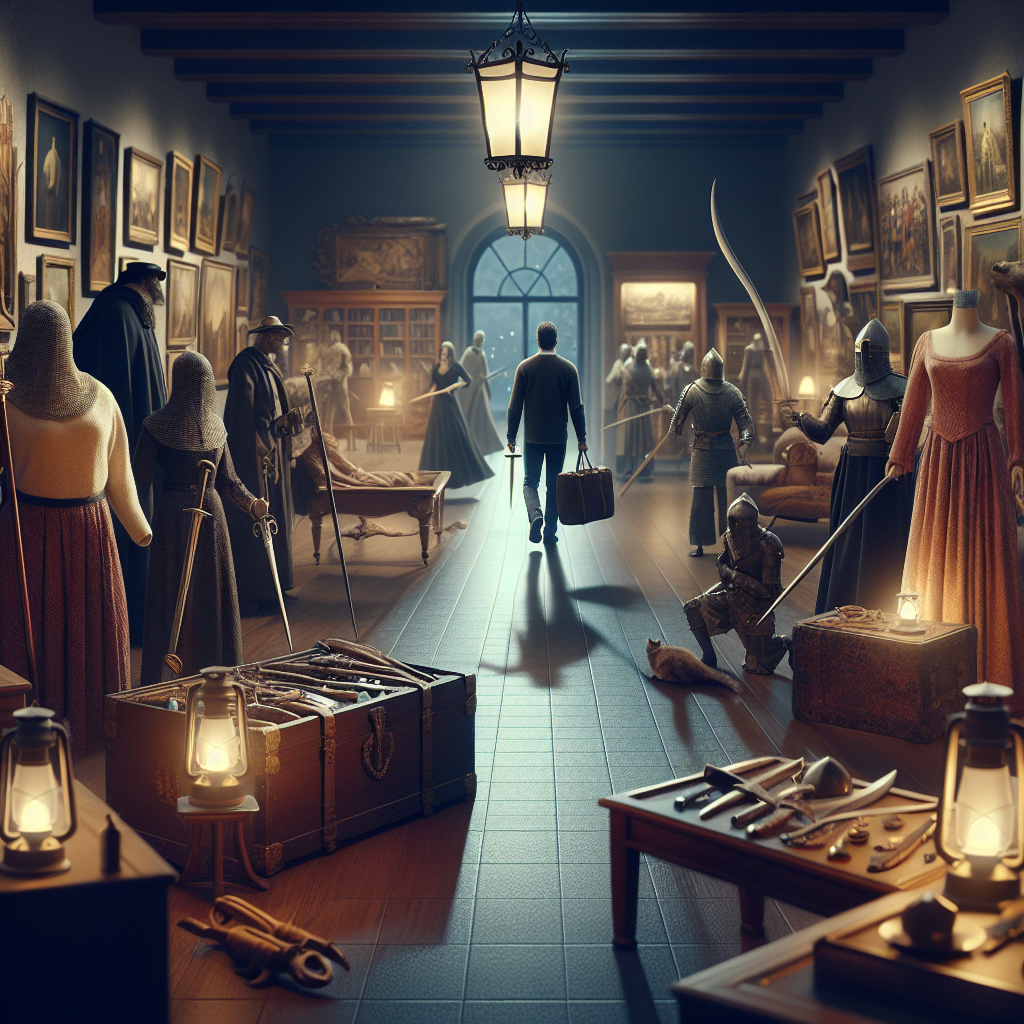

One night, a bumbling security guard named Larry Daley witnesses his wildest dreams—and nightmares—come to life in the whimsical fantasy, Night at the Museum. At the American Museum of Natural History, exhibits and artifacts spring into motion as soon as the sun sets, causing chaos and hilarity. Released in 2006, this film is set in the bustling heart of New York City, providing a magical backdrop to the unfolding events. Why? Because of a mystical Egyptian tablet that inexplicably brings history roaring back to life when the clock strikes closing time.
Imagine clocking in for a nighttime gig only to find your coworkers are a capuchin monkey with an attitude and Teddy Roosevelt on his trusty steed. The film stars legendary comic Ben Stiller as Larry and features an ensemble cast including Robin Williams, Owen Wilson, and Rashida Jones, blending historical figures with fictional fun. Critics might say it's just a wild fantasy, but behind the laughs lies a poignant message about self-discovery and growth.
The central story follows Larry, originally deemed a failure due to his dead-end jobs and unstable life. He lands the security guard position as a last resort, hoping to show his son that he's not a total screw-up. At first, he's overwhelmed by the living exhibits: a rampaging T-Rex who just wants to play fetch, two miniature armies who can't stop fighting, and a giant Easter Island head with a hankering for gum. This is Larry's new reality, and it's a far cry from the mundane office job he initially envisioned.
Pop culture can sometimes paint museums as dull or outdated, mere places to gaze passively at silent relics of the past. But this movie flips that stereotype on its head. It presents museums as vibrant hubs of history where magic can reside, inviting viewers to rethink how they interact with legacy and heritage. It challenges the notion of museums being static. Instead, they can be dynamic places of engagement.
It’s interesting to consider the broader implications of the narrative. One could argue that the film is a metaphor for how history is not just dusty stories from the past but living legacies that continue to impact our present and future. With every artifact, there’s a lesson, emotion, or debate to be had. And if we listen closely, these relics have stories to tell, much like the varied characters Larry encounters on his nightly rounds.
Night at the Museum also brings forth questions of modern relevance—what role do museums play in society today? Do they merely preserve, or do they inspire and educate in ways textbooks never can? The movie suggests the latter, as it pairs various historical dynamics: cowboys versus Roman centurions, Neanderthals witnessing modernity, and Egyptian pharaohs in dialogue with the modern world.
However, some might critique that the film takes too many liberties with historical facts. They’d argue that the portrayals are oversimplified for comedic effect, which some historians may find frustrating. Yet others might see value in this imaginative reinterpretation. After all, if it can spark interest in history among younger audiences, is that not a worthy pursuit? Fiction has a wonderful way of igniting curiosity in reality.
Regarding representation, the film strives to include a mix of eras and cultures despite its comedic tone. It attempts to bridge diverse stories across history, though there’s always more to be done in terms of depth and authenticity. The film’s sequel and later installments tried to expand on this concept by introducing new characters and settings.
The film’s charm largely stems from its comedic elements. It pokes fun at the quirks of historical and fictional characters alike. Larry's interactions with these larger-than-life figures lead to plenty of slapstick humor. Watching Teddy Roosevelt serve as his mentor while giving snippets of wisdom keeps the narrative fresh and engaging. This mix of history, comedy, and personal growth gives the audience a chance to step back from the ordinary and enter a world where anything is possible.
Ultimately, Night at the Museum speaks to embracing the unexpected and finding value in the seemingly mundane. It's about transformation, as Larry transforms from a wallflower into a hero of sorts, just as the museum comes alive each night to breathe life into the static displays.
The movie encourages us to find the extraordinary in everyday settings. Even a nightshift in a silent museum can lead to the adventure of a lifetime, if only we allow ourselves to be open to the magic around us. It reminds us all—Gen Z or otherwise—that curiosity, history, and personal growth can go hand in hand. If you listen, perhaps your nearest museum has its own tales to tell, waiting for you to step inside and find out what comes alive when the lights go out.