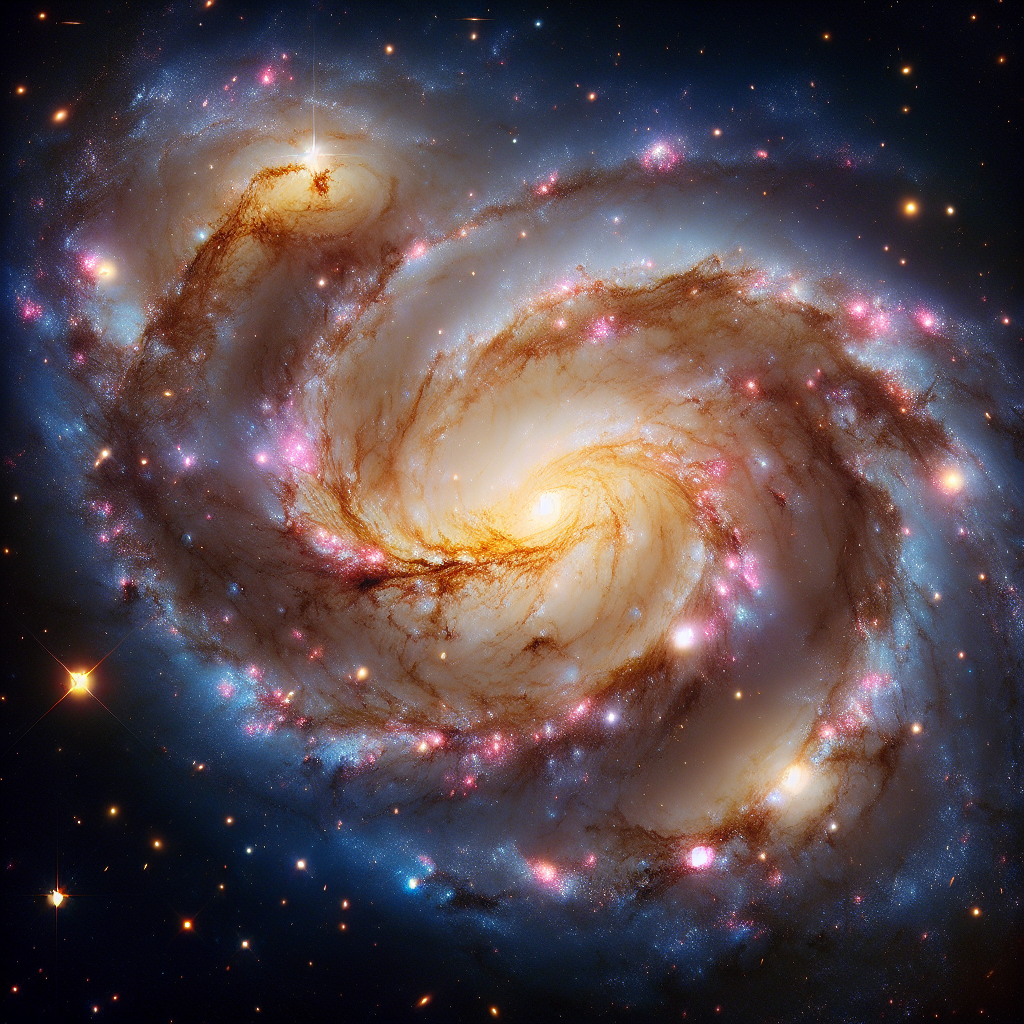

The Cosmic Dance of NGC 2527
Imagine a cosmic ballet taking place millions of light-years away, where stars twirl and galaxies glide in a mesmerizing performance. This is the scene at NGC 2527, an open star cluster located in the constellation Puppis. Discovered by the renowned astronomer John Herschel in the 19th century, this cluster is a collection of stars bound together by gravity, shining brightly in the southern sky. NGC 2527 is situated approximately 1,300 light-years from Earth, making it a relatively close neighbor in the vast expanse of the universe. The cluster is a fascinating subject for astronomers and stargazers alike, as it offers insights into the life cycle of stars and the dynamics of stellar groups.
Open clusters like NGC 2527 are crucial for understanding stellar evolution. These clusters are formed from the same giant molecular cloud, meaning the stars within them are roughly the same age and composition. This makes them excellent laboratories for studying how stars develop over time. NGC 2527, with its mix of young and middle-aged stars, provides a snapshot of different stages in stellar life. By observing these stars, scientists can learn more about how stars like our Sun evolve and eventually die.
The beauty of NGC 2527 is not just in its scientific value but also in its visual appeal. Through a telescope, the cluster reveals a stunning array of stars, some shining with a bluish hue, indicating their youth and high temperature, while others glow with a warmer, yellowish light, suggesting they are older and cooler. This diversity in color and brightness adds to the cluster's allure, making it a favorite target for amateur astronomers and astrophotographers.
While the scientific community is captivated by the data NGC 2527 provides, there's also a philosophical aspect to its study. Observing such clusters reminds us of the vastness of the universe and our place within it. It sparks curiosity and wonder about the origins of the cosmos and the forces that govern it. For many, gazing at NGC 2527 is a humbling experience, a reminder of the beauty and complexity of the universe beyond our everyday lives.
However, not everyone shares the same enthusiasm for astronomical studies. Some argue that resources spent on space exploration and research could be better used addressing pressing issues on Earth, such as poverty, climate change, and healthcare. This perspective is understandable, given the immediate challenges humanity faces. Yet, it's important to recognize that the pursuit of knowledge, whether it's about distant star clusters or our own planet, often leads to unexpected benefits. Technological advancements from space research have historically contributed to improvements in various fields, including medicine, environmental science, and communication.
NGC 2527, like many celestial objects, serves as a bridge between science and art, fact and imagination. It invites us to explore not only the physical universe but also the boundaries of our understanding and creativity. As we continue to study such clusters, we are reminded of the interconnectedness of all things and the endless possibilities that lie ahead. Whether you're a scientist, a dreamer, or someone in between, the stars of NGC 2527 offer a glimpse into the mysteries of the cosmos and the potential for discovery that awaits us all.