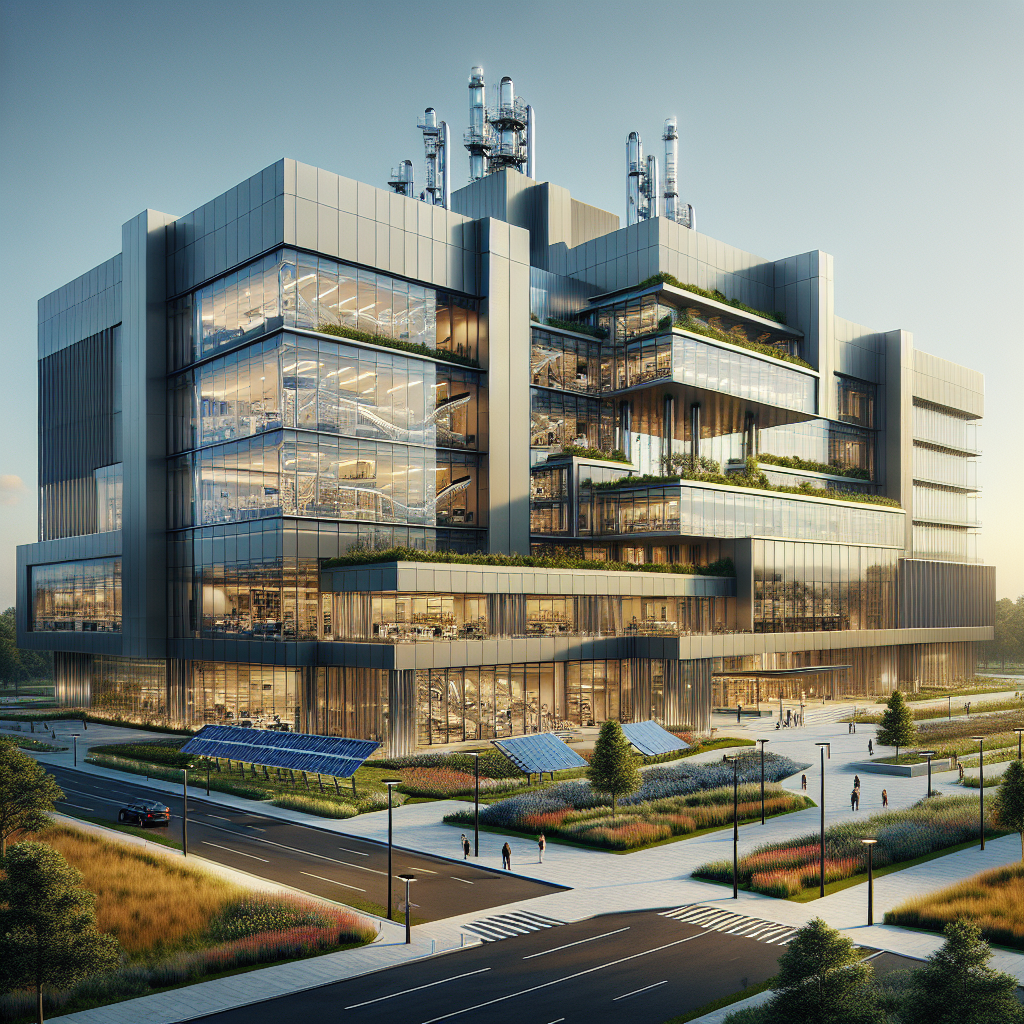

Buildings might not typically ignite excitement, but what if I said that a newly planned research building is about to redefine the modern landscape? Slated for completion by 2025, this architectural marvel will rise in the heart of Boston, Massachusetts, where innovation meets tradition. The research building is a product of years of collaboration between industry leaders, philanthropists, and academic institutions eager to forge new pathways in science and technology. But what purpose does it serve, and why is it particularly relevant today?
Imagine a structure that actively promotes collaboration, a place where scientists from varied disciplines can share ideas to tackle the world's most pressing issues. As climate change, health crises, and technological ethics continue to dominate headlines, the need for a diversified research environment becomes more evident. This building intends to be a crucible for innovation, with labs specifically designed to be adaptable, anticipating shifts in research needs and focuses over the next several decades. It's an exciting era as we watch the very structures we inhabit adapt to our aspirations for a better future.
From the outset, this project has embraced sustainability. This isn't just about green roofs or solar panels, though they'll be there, too. Engineering and architecture firms involved are pushing for net-zero energy usage, intending to leave a minimal carbon footprint. Water recycling, passive heating and cooling, and even an urban garden are parts of a broader aim to marry cutting-edge research with responsibility for environmental impact. For Gen Z, who grew up witnessing the effects of climate change, such a commitment isn't just commendable—it's expected.
Critics might argue the vast sum—over half a billion dollars—is an extravagant expenditure on a single building. There's a point to consider: this project represents an investment in human potential. The ramifications of research conducted here can ripple across the globe. When public funds are utilized, there's an inherent responsibility to demonstrate value, an assurance through longstanding benefits. Yet, are there better ways to allocate these resources, such as in healthcare or other critical social issues? Such debates are crucial to balance the scale of ambitions.
It's easy to underestimate the psychological impact architecture can have. For the researchers, the vast glass walls and the abundant natural light are more than aesthetic choices. Their design is instrumental in fostering transparency and collaboration. Gen Z, accustomed to openness in digital spaces, is likely to appreciate these qualities in physical environments too. Spaces within the building are designed to be fluid for dynamic ideas and unpredictable breakthroughs.
To fully appreciate the ethos behind this project, let's follow the journey of a young scientist working in these walls. Rising from an internship to a full-time researcher, she finds herself amidst new technology and like-minded peers. She prones over her thesis as she peers across shared workspaces, each conversation threads new hypotheses into her research tapestry. Her discoveries, nurtured by this environment, may further climate-responsive agriculture or tech-driven healthcare solutions, positively impacting millions.
Of course, not everyone is on the same page when it comes to investing in such buildings. Some believe public funds should fight visible issues: underfunded schools or deteriorating public infrastructure. Their skepticism aligns with concerns over immediate social challenges overshadowed by scientific ambitions. But what if this building's legacy is educating the next generation of scientists who then tackle these very issues? The lines between direct and indirect impact are often blurred, leaving us to ponder worth and priorities.
It's fascinating to consider how technology itself plays a role in development. The 'Internet of Things' will weave through its wires, ensuring data-driven insights for energy and resource management. This smart ecosystem can adapt to the building's needs before they are realized. It’s kind of like magic, albeit magic grounded in engineering and data sciences.
Conversations surrounding the appropriation of funds for such endeavors reveal a lot about our values. They challenge us to reflect on what we deem essential or luxurious. Yet, this dialogue inspires an undercurrent of optimism, a hope that these monumental efforts won't just scratch the surface but instead dig deep into untapped human potential.
Emerging from this project is a new vision—a testament to what can be achieved when intention meets ingenuity. For Gen Z, a generation poised for action amidst chaotic global climes, this building could symbolize more than innovation or sustainability. It may stand as a promise that despite adversity, progress is both possible and tangible.