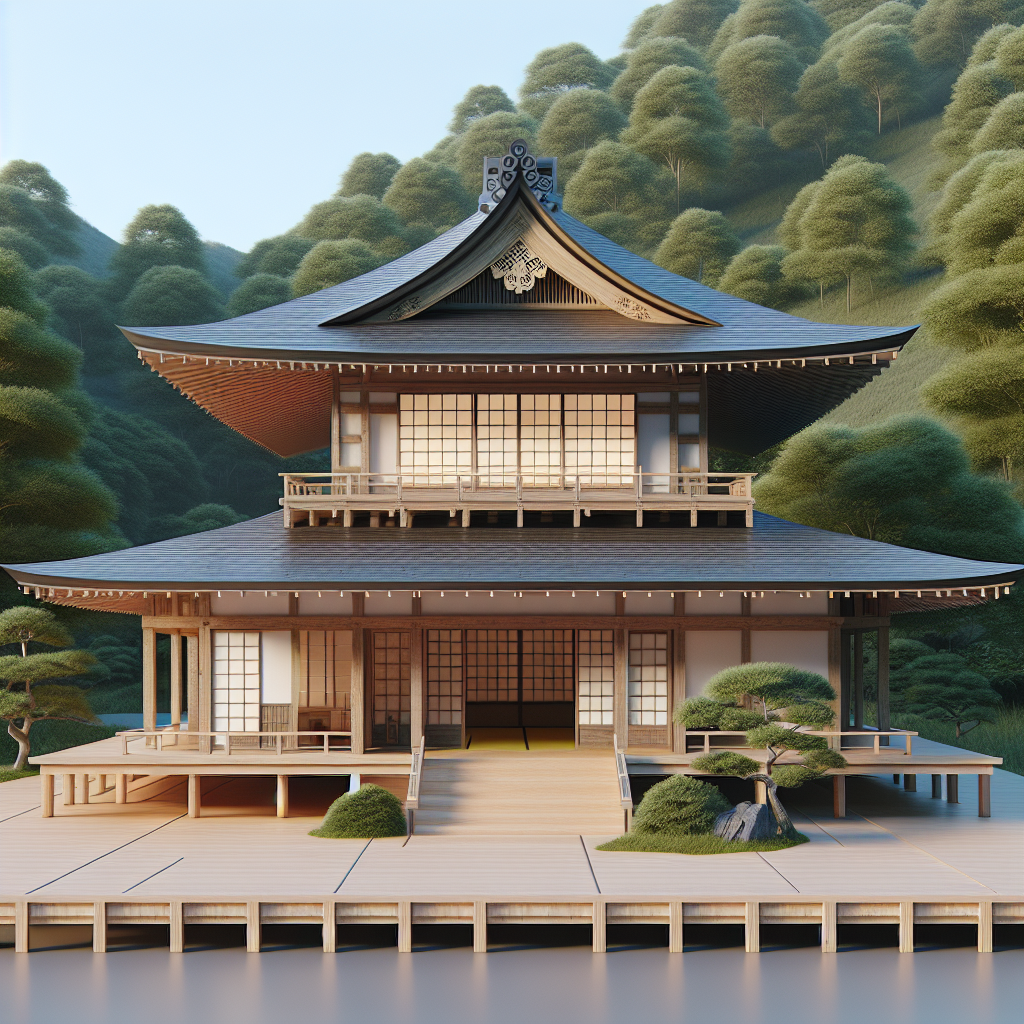

The Timeless Elegance of Nagare-zukuri
Imagine a building style that has withstood the test of time, blending seamlessly with nature while exuding an air of tranquility and grace. This is Nagare-zukuri, a traditional Japanese architectural style that has been captivating hearts since the Heian period, which spanned from 794 to 1185 AD. Originating in Japan, Nagare-zukuri is most commonly associated with Shinto shrines, where its flowing lines and harmonious design reflect the spiritual connection between humans and nature.
Nagare-zukuri is characterized by its sweeping, asymmetrical rooflines that mimic the gentle flow of a river. This design not only serves an aesthetic purpose but also has practical benefits, such as efficiently shedding rainwater and snow. The style is often seen in the main halls of Shinto shrines, where the roof extends over the entrance, creating a welcoming and protective space for worshippers. The use of natural materials like wood and thatch further enhances the connection to the environment, making Nagare-zukuri a perfect example of architecture that respects and celebrates its surroundings.
While Nagare-zukuri is deeply rooted in tradition, it continues to influence modern architecture. Architects today are increasingly looking to sustainable and eco-friendly designs, and Nagare-zukuri offers valuable lessons in how to achieve this. By prioritizing harmony with nature and using locally sourced materials, this ancient style provides a blueprint for creating buildings that are both beautiful and environmentally responsible.
However, not everyone is enamored with Nagare-zukuri. Critics argue that its reliance on traditional materials and techniques can be limiting, especially in a world that demands rapid construction and cost efficiency. They point out that the maintenance of such structures can be labor-intensive and expensive, as natural materials are more susceptible to wear and tear. Additionally, the style's emphasis on asymmetry and organic forms may not appeal to those who prefer the clean lines and minimalism of modern architecture.
Despite these criticisms, Nagare-zukuri remains a beloved and enduring symbol of Japanese culture. Its ability to evoke a sense of peace and connection to nature is something that resonates with many people, especially in today's fast-paced and often disconnected world. For those who appreciate the beauty of tradition and the wisdom of ancient design principles, Nagare-zukuri offers a glimpse into a world where architecture and nature exist in perfect harmony.
As we continue to grapple with the challenges of climate change and urbanization, the lessons of Nagare-zukuri are more relevant than ever. By embracing the principles of this timeless style, we can create spaces that not only meet our needs but also honor and protect the natural world. In doing so, we ensure that the elegance and grace of Nagare-zukuri will continue to inspire and guide us for generations to come.