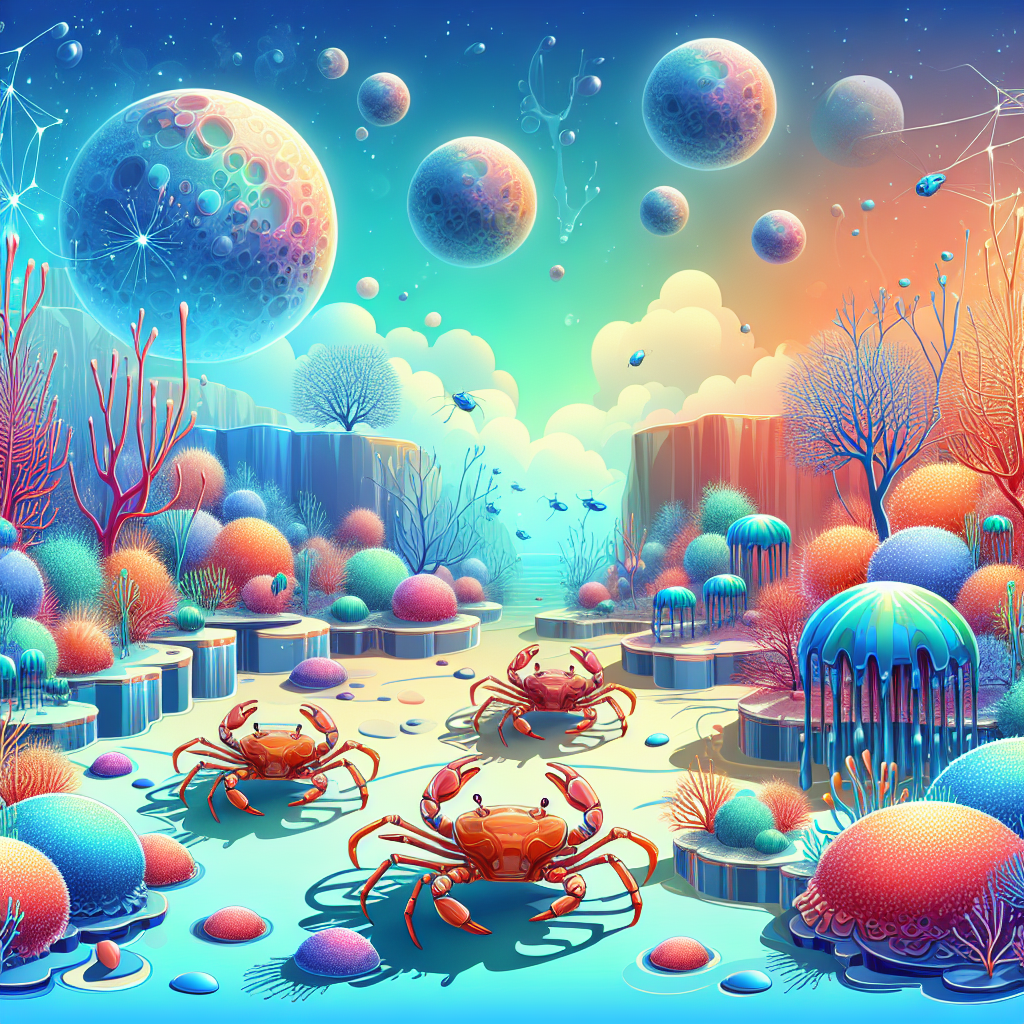

The Curious Case of the Mictyris: Nature's Tiny Architects
Imagine a creature so small yet so industrious that it can transform entire landscapes with its tiny claws. Meet the Mictyris, commonly known as the soldier crab, a fascinating crustacean that inhabits the sandy beaches of the Indo-Pacific region. These crabs are most active during low tide, when they emerge from their burrows to feed and interact with their environment. The Mictyris is a master of its domain, playing a crucial role in the ecosystem by aerating the sand and recycling nutrients. But why should we care about these little architects of nature?
The Mictyris crabs are not just any ordinary beach dwellers. They are social creatures, often found in large groups, sometimes numbering in the thousands. This social behavior is not just for show; it serves a vital purpose. By moving in unison, they can efficiently forage for food, which consists mainly of detritus and microorganisms found in the sand. Their synchronized movements also help them avoid predators, as there is safety in numbers. This behavior is a testament to the power of community and cooperation, something that resonates with human values.
However, the Mictyris crabs face numerous challenges. Coastal development and human activities threaten their natural habitats. As beaches are transformed into tourist destinations, the delicate balance of the ecosystem is disrupted. Pollution, particularly plastic waste, poses a significant threat to these crabs, as it can contaminate their food sources and habitat. Climate change also looms large, with rising sea levels and increased storm activity potentially altering their environment irreversibly.
On the flip side, some argue that the economic benefits of coastal development outweigh the ecological costs. Tourism and real estate development can bring jobs and revenue to local communities. However, this perspective often overlooks the long-term environmental impact and the loss of biodiversity. The Mictyris crabs, though small, are an integral part of the coastal ecosystem. Their decline could have cascading effects on other species and the overall health of the environment.
The plight of the Mictyris crabs is a microcosm of the broader environmental challenges we face today. It highlights the need for sustainable development practices that balance economic growth with ecological preservation. Protecting these crabs and their habitats requires a concerted effort from governments, businesses, and individuals. Simple actions, like reducing plastic waste and supporting conservation initiatives, can make a significant difference.
For Gen Z, who are increasingly aware of and engaged with environmental issues, the story of the Mictyris crabs is a call to action. It underscores the importance of protecting our planet's biodiversity and the interconnectedness of all living things. By advocating for sustainable practices and holding those in power accountable, we can ensure that future generations inherit a world where creatures like the Mictyris can thrive.
In the end, the Mictyris crabs remind us of the beauty and complexity of nature. They teach us that even the smallest creatures have a role to play in the grand tapestry of life. As we navigate the challenges of the 21st century, let us take inspiration from these tiny architects and work together to build a sustainable future for all.