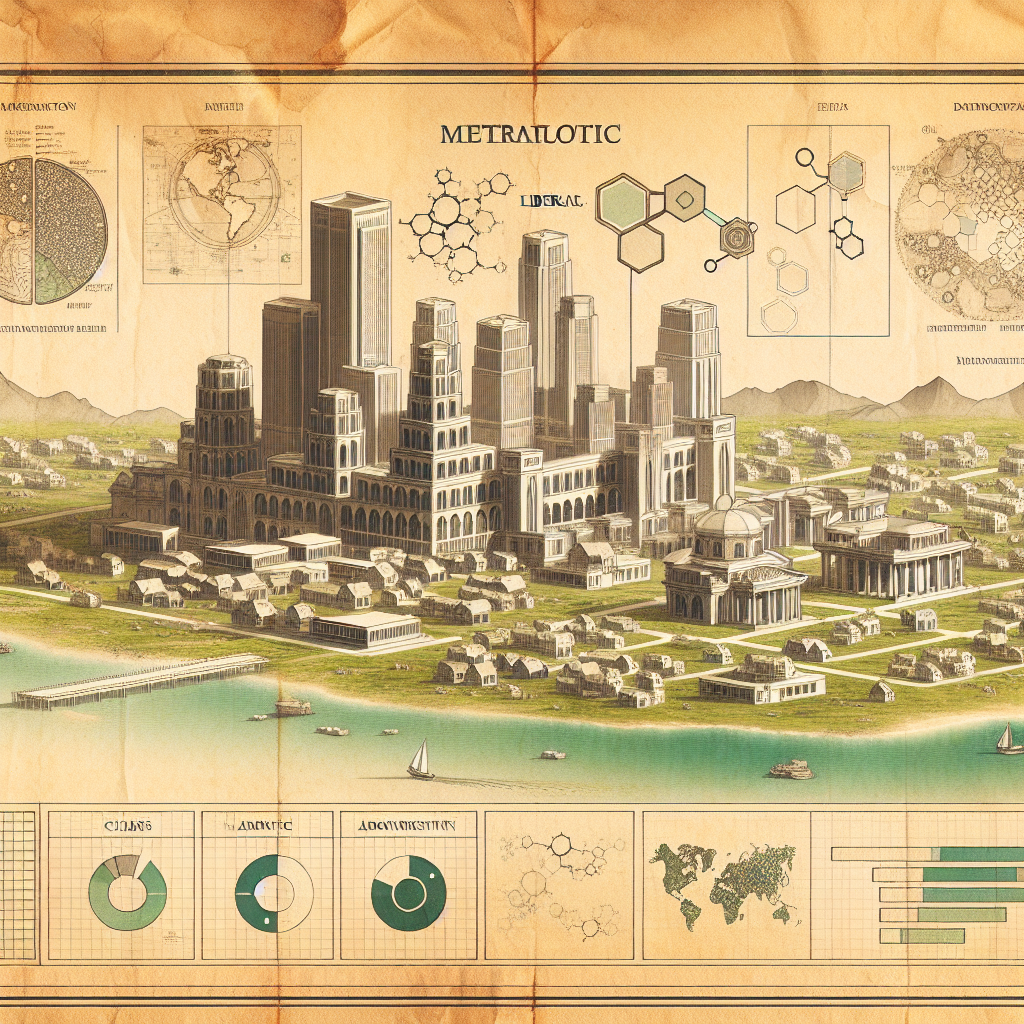

Imagine a world where cities transform like living organisms, evolving to adapt to our ever-shifting needs. That was the bold vision behind Metabolism, a utopian architectural movement conceived in post-war Japan during the 1960s. The brainchild of forward-thinking architects like Kisho Kurokawa and Kenzo Tange, this movement sought to redefine how urban environments could develop, flourish, and respond to the rapid changes in technology and society. Born from the destruction of World War II, Metabolists aimed to rebuild Japan with architecture that wasn’t just utilitarian—we're talking about leaps into futuristic new worlds.
Metabolism was radically different because it embraced change and organic growth as central design principles. While traditional architecture sought stability and permanence, Metabolists envisioned buildings and cities as dynamic organisms capable of adaptation. Structures were conceived as components in larger systems, capable of being replaced or reconfigured without disrupting the whole. In this vision, buildings could grow upward or outward, adding modules as needed to accommodate population shifts or technological advancements.
This approach was wildly innovative, yet it was also a reflection of the uncertainties of the era. Japan had suffered immensely during the war, and Metabolists offered a way to imagine a brighter, more resilient future. With rapid urbanization pressing forward, their ideas took root in a society eager for reinvention.
Many urban megastructures emerged, incorporating elements of this thinking into places like Tokyo. One of the most famous examples is the Nakagin Capsule Tower, designed by Kisho Kurokawa. The tower consists of individual, prefabricated capsules—essentially, rooms—that can be attached to or removed from the core structure. Each unit was designed to be replaceable every 25 years, a concept reflecting the impermanence and continuous evolution central to Metabolist ideals.
But Metabolism faced its challenges. While it promised flexibility, modular housing developments often didn't match the ever-changing needs of population density and urban growth. The aspirations were high, but practical implementation sometimes stumbled. This is a common tale for many avant-garde movements, where the ideal clashes with realistic execution.
Some critics argue that the movement's visionary megastructures were, in practical terms, too ambitious, often resulting in imposing constructions without considering the nuances of human scale and livability. Others felt that while the movement celebrated change, it often overlooked the cultural and historical contexts of the urban environments it aimed to revolutionize.
Yet, the spirit of Metabolism lives on in contemporary architecture and urban design. The idea of flexible, adaptable structures that can change over time resonates in today's smart cities. Modern architects and urban planners continue to grapple with the challenges Metabolists first identified, as societies face issues like climate change, technological advancements, and shifting demographics.
What makes Metabolism particularly intriguing is its enduring political and social significance. At its heart, it was about more than just buildings. It was a conversation about identity, resilience, and the possibilities of human ingenuity. The movement's ideals reflect the same hope and skepticism present in political discussions today—envisioning futures that accommodate diverse needs and unpredictable challenges.
The conversation around Metabolism isn't one-sided, though. It's essential to understand that architecture, like any social art form, thrives on the tension between dreams and realities. Every architectural approach, including Metabolism, has its advocates who push for utopian solutions and its critics who caution against overlooking human-scaled imperatives.
Metabolism, with its ambitious visions and occasionally impractical implementations, encourages us to think expansively. Its legacy pushes us to reimagine what urban living can look like and to question the permanence of our cities. It's a call to consider how we might better design our world—not just for the present, but as adaptable frameworks for the future.