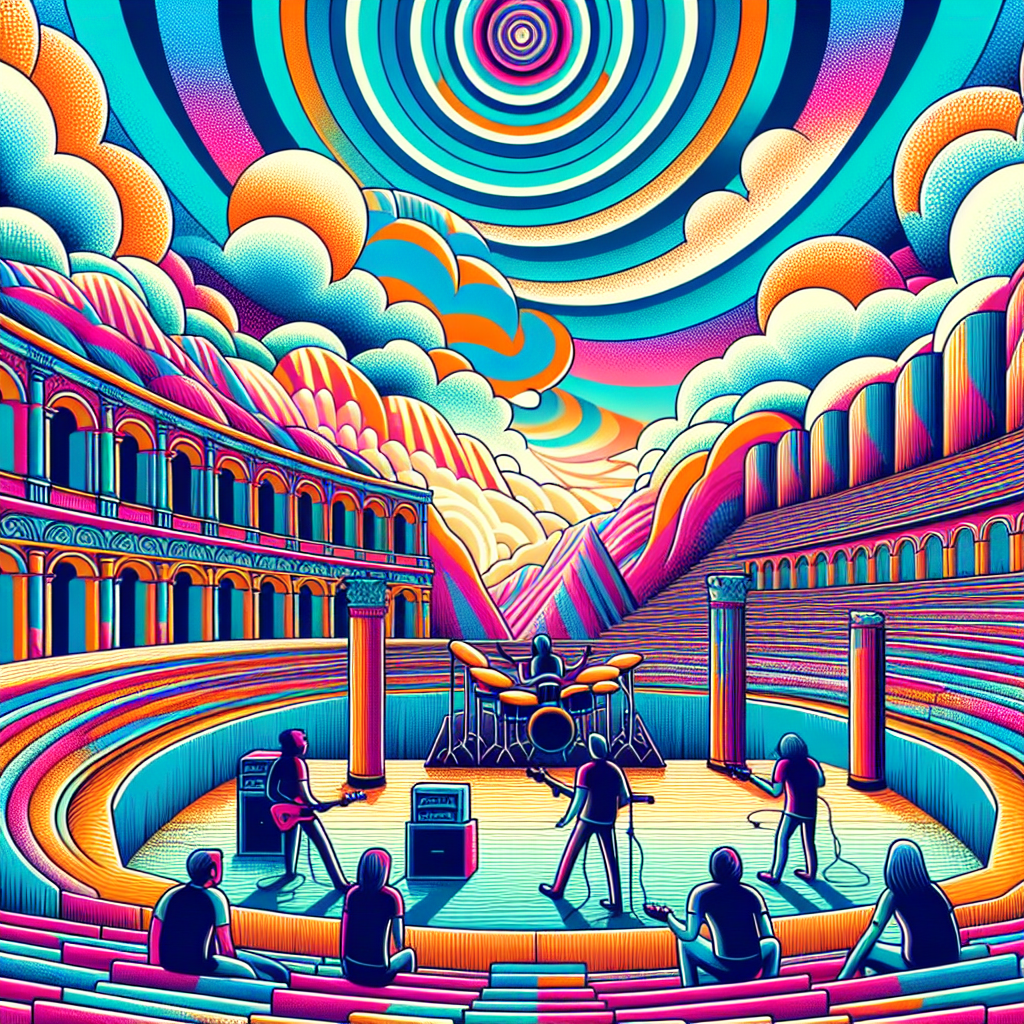

The Timeless Echoes of Pink Floyd: Live at Pompeii
In the early 1970s, a band known for its psychedelic sound and experimental music, Pink Floyd, embarked on a unique project that would become legendary. They performed a live concert without an audience at the ancient Roman amphitheater in Pompeii, Italy. This event, captured in the film "Pink Floyd: Live at Pompeii," was recorded over four days in October 1971. The choice of location was as audacious as the band itself, blending the haunting ruins of a city frozen in time with the ethereal sounds of one of the most innovative bands of the era. The film was released in 1972, and it remains a testament to the band's creativity and the timeless allure of their music.
The decision to perform in Pompeii was not just about the acoustics or the visuals, though both were extraordinary. It was about creating a connection between the past and the present, between the ancient and the modern. The amphitheater, buried by the eruption of Mount Vesuvius in 79 AD, provided a stark and powerful backdrop. The absence of a live audience allowed the band to focus entirely on the music and the atmosphere, creating an intimate and immersive experience that was both haunting and beautiful.
For Pink Floyd, this was an opportunity to push the boundaries of what a concert film could be. Unlike traditional concert films that focus on the interaction between the band and the audience, "Live at Pompeii" was more of a visual and auditory exploration. The film intersperses footage of the band performing with shots of the ruins, the surrounding landscape, and even the band members discussing their music and philosophy. This approach allowed viewers to experience the music in a new way, as a journey rather than just a performance.
The film features some of Pink Floyd's most iconic tracks, including "Echoes," "A Saucerful of Secrets," and "One of These Days." Each song is given room to breathe, with extended instrumental sections that highlight the band's skill and creativity. The absence of an audience means there are no interruptions, no applause, just the music and the setting. This creates a sense of timelessness, as if the music is echoing through the ages, connecting the ancient world with the modern one.
Critics and fans alike have praised "Live at Pompeii" for its innovative approach and its ability to capture the essence of Pink Floyd's music. However, some have argued that the lack of an audience makes the film feel cold or detached. They miss the energy and interaction that comes from a live performance with a crowd. This is a valid point, as the dynamic between a band and its audience can be a vital part of a live performance. Yet, the film's unique approach offers something different, a chance to experience the music in a more introspective and contemplative way.
For those who appreciate Pink Floyd's music, "Live at Pompeii" is a must-see. It captures a moment in time when the band was at the height of its creative powers, experimenting with new sounds and ideas. The film is a reminder of the power of music to transcend time and place, to connect us with the past and inspire us in the present. It is a testament to the enduring legacy of Pink Floyd and their ability to create music that resonates with people across generations.
"Live at Pompeii" remains a unique and powerful experience, one that continues to captivate and inspire. It is a reminder of the band's willingness to take risks and push the boundaries of what music can be. For those who have yet to experience it, the film offers a chance to step back in time and witness a truly remarkable moment in music history.