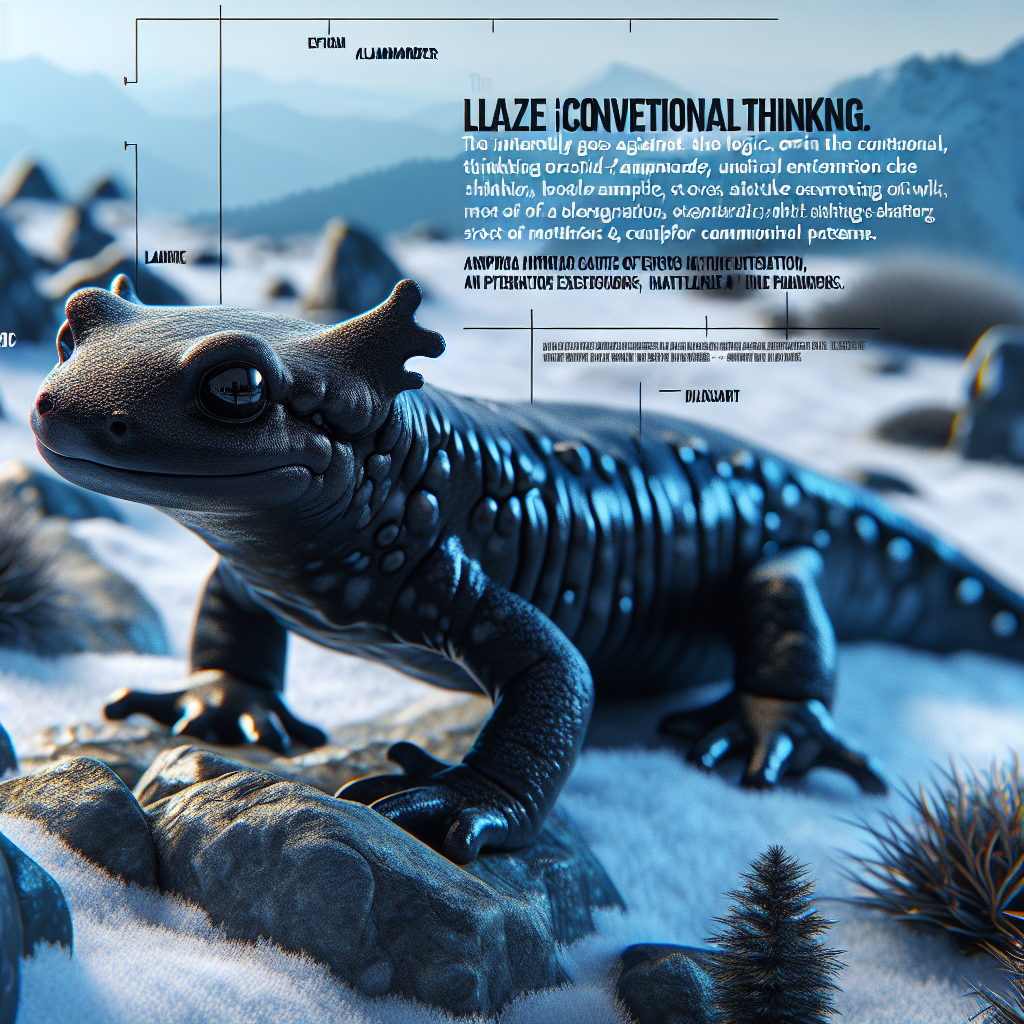

If salamanders could wear capes, Lanza's alpine salamander would be dashing around the mountainous regions of Europe. Discovered by the Italian herpetologist Benedetto Lanza, this extraordinary creature has adapted to thrive in the harsh terrains of the Alps. Known scientifically as Salamandra lanzai, this species lives high up in the limestone cliffs and rocky outcrops of the Maritime and Cottian Alps. While its black, slick skin may not make fashion headlines, it signals a fascinating evolutionary trait shared only among the hardest of creatures. These salamanders are viviparous, a trait that eliminates the less-than-favorable requirement of having their eggs laid in water.
The unique terrain of the Alps is exactly what made these salamanders exceptionally interesting. Adaptation is not just a word in the dictionary but a life motto for these critters. Born and bred in the frigid peaks, the Lanza salamanders bring new meaning to survival. Unlike their amphibian counterparts that embrace moist, wooded environments, Lanza's alpine salamanders flourish in rocky crevices far away from the usual salamander hotspots.
When discussing the environmental niche they occupy, it’s crucial to acknowledge the power of isolation. The geographical barriers presented by the Alps have isolated these salamanders for years, allowing them to evolve all kinds of extraordinary characteristics. This offers a captivating look into how such isolation maintains biodiversity on our planet, providing us an intimate look at natural selection at work.
It might be strange to think of a woodland creature making cool, rocky ravines home, and yet this is their theater, where they show off their survival acts daily. In a world that increasingly demands adaptation from all life forms, there's something inspiring about this species’ solitary existence. But like all great stories, their endurance comes with stakes.
Recent climate changes cast a looming shadow over these high-altitude inhabitants. Glacial melts and seasonal changes could alter their habitat significantly. The increasing temperatures make areas that were once ideal slightly more hostile, and these shifts threaten to shrink their already limited territory. Such environmental pressures have sparked discussions about their conservation status and the urgency surrounding it.
A different point of view suggests adaptation could still be on their side. Historically, these salamanders have shown adaptability. Some, though, argue that the rate of current changes exceeds natural adaptive capabilities. Their rugged isolation has been their shield but could just as easily become a cage, creating a scenario where the very traits they've developed to survive put them at risk.
While some argue for more interventionist approaches to conservation, others insist on a hands-off policy, believing nature should take its course. The question lingers: do we disrupt nature’s intricate design to save such species, or do we risk losing a small, yet significant piece of the natural symphony? This pushes us to think deeply about our role in conserving biodiversity, especially when human activities are a primary catalyst for change.
Investing in research to monitor their natural habitat and understand their role in the alpine ecosystem might offer some solutions. Knowing how these creatures interact within their environment can shed light on the broader health of the Alpine biosphere, making the case that conservation is not just about the survival of an isolated species but about maintaining balance in entirety.
Compelling as their individual story is, Lanza’s alpine salamander is another reminder of nature's grand tapestry. They compel us to question not just how we treat unique species but the holistic perspective we hold towards the environment. The Alps are not just mountainous landscapes but living entities housing a mosaic of life, each bit reflecting a different color in the spectrum of biodiversity.
Amidst all debates, it's the ideal of harmony we're chasing. Whether you lean into the staunch preservationist side or embrace a more laissez-faire approach, the ultimate goal remains to reflect on how interconnected our fates are with such creatures. Ultimately, the endurance of Lanza's alpine salamander pushes us to imagine, what if our efforts protect more than just them? What if they protect us right back?