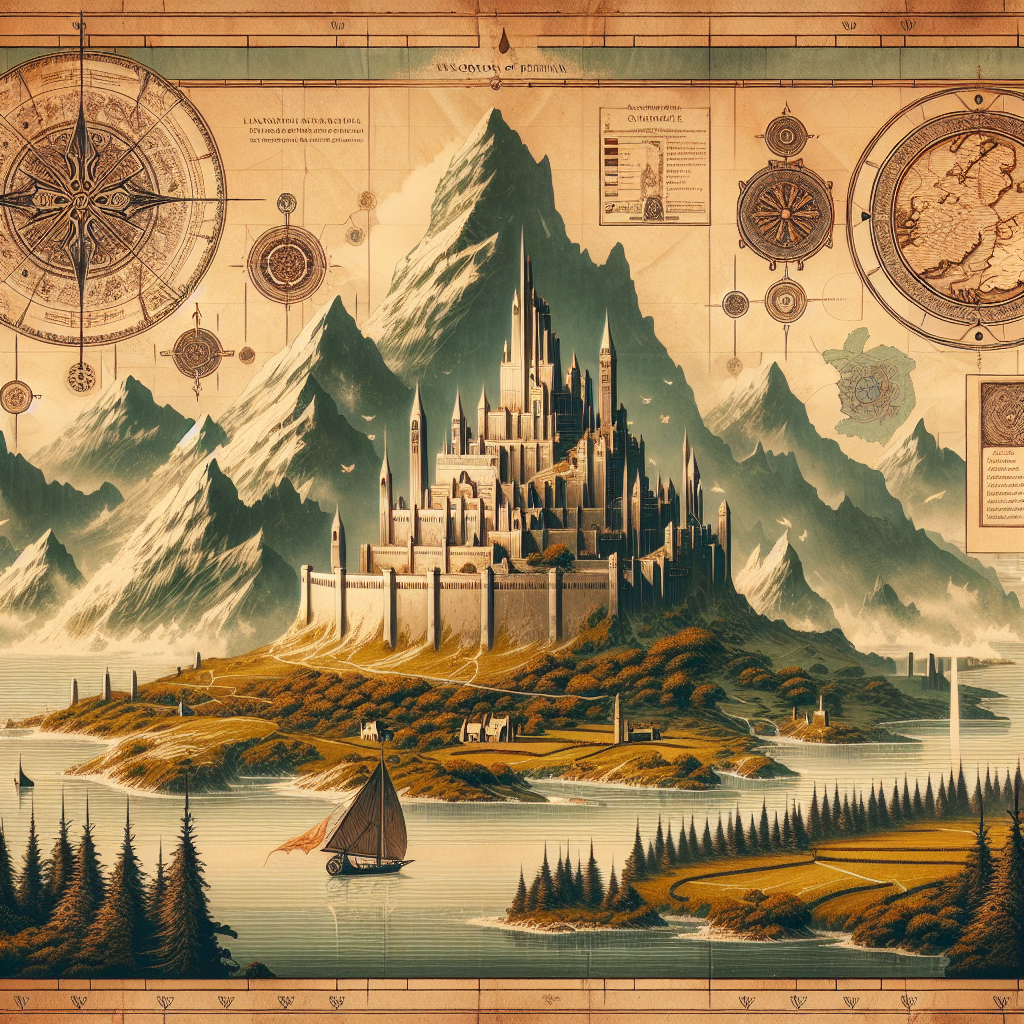

The Enigmatic Kingdom of Breifne: A Glimpse into Ireland's Past
Imagine a time when Ireland was a patchwork of small kingdoms, each with its own unique culture and history. One such kingdom was Breifne, a medieval Irish kingdom that existed from around the 8th century until the early 17th century. Located in what is now the northwestern part of Ireland, Breifne was primarily situated in the modern counties of Leitrim and Cavan, with parts extending into Sligo, Fermanagh, and Meath. The kingdom was ruled by the O'Rourke and O'Reilly clans, who were often at odds with each other, as well as with neighboring kingdoms. The story of Breifne is a fascinating tale of power struggles, alliances, and the resilience of a people determined to maintain their identity in a rapidly changing world.
Breifne's history is marked by its strategic location and the ambitions of its ruling families. The O'Rourkes and O'Reillys were powerful Gaelic clans who vied for control over the kingdom. This internal rivalry often led to conflicts, but it also fostered a strong sense of identity and pride among the people of Breifne. The kingdom's location made it a significant player in the politics of medieval Ireland, as it served as a buffer zone between the more powerful kingdoms of Connacht and Ulster. This position allowed Breifne to play a crucial role in the shifting alliances and power dynamics of the time.
The kingdom's history is also intertwined with the broader narrative of Ireland's struggle against external forces. The Anglo-Norman invasion of Ireland in the 12th century brought new challenges to Breifne, as the invaders sought to expand their control over the island. The O'Rourkes and O'Reillys resisted these incursions, often forming alliances with other Gaelic lords to push back against the Anglo-Norman threat. This resistance was not always successful, but it demonstrated the determination of the people of Breifne to defend their land and way of life.
Despite the challenges posed by external forces, Breifne managed to maintain a degree of autonomy for several centuries. The kingdom's rulers were adept at navigating the complex political landscape of medieval Ireland, forging alliances and making strategic marriages to strengthen their position. This ability to adapt and survive in a turbulent environment is a testament to the resilience and resourcefulness of the people of Breifne.
The decline of Breifne as an independent kingdom began in the late 16th century, as the English crown sought to consolidate its control over Ireland. The Tudor conquest of Ireland brought an end to the traditional Gaelic order, as the English imposed their own system of governance on the island. The O'Rourkes and O'Reillys were eventually dispossessed of their lands, and the kingdom of Breifne was absorbed into the English-controlled counties of Leitrim and Cavan.
While the kingdom of Breifne no longer exists, its legacy lives on in the cultural and historical memory of Ireland. The stories of the O'Rourkes and O'Reillys, and their struggles to maintain their independence, continue to resonate with those who value the rich tapestry of Ireland's past. The history of Breifne serves as a reminder of the resilience and determination of a people who, despite facing numerous challenges, remained steadfast in their pursuit of autonomy and identity.
Understanding the history of Breifne also provides valuable insights into the broader narrative of Ireland's past. It highlights the complexities of medieval Irish politics, the impact of external forces on the island, and the enduring spirit of the Gaelic people. For those interested in exploring the rich history of Ireland, the story of Breifne offers a captivating glimpse into a world that, while long gone, continues to shape the cultural landscape of the country today.