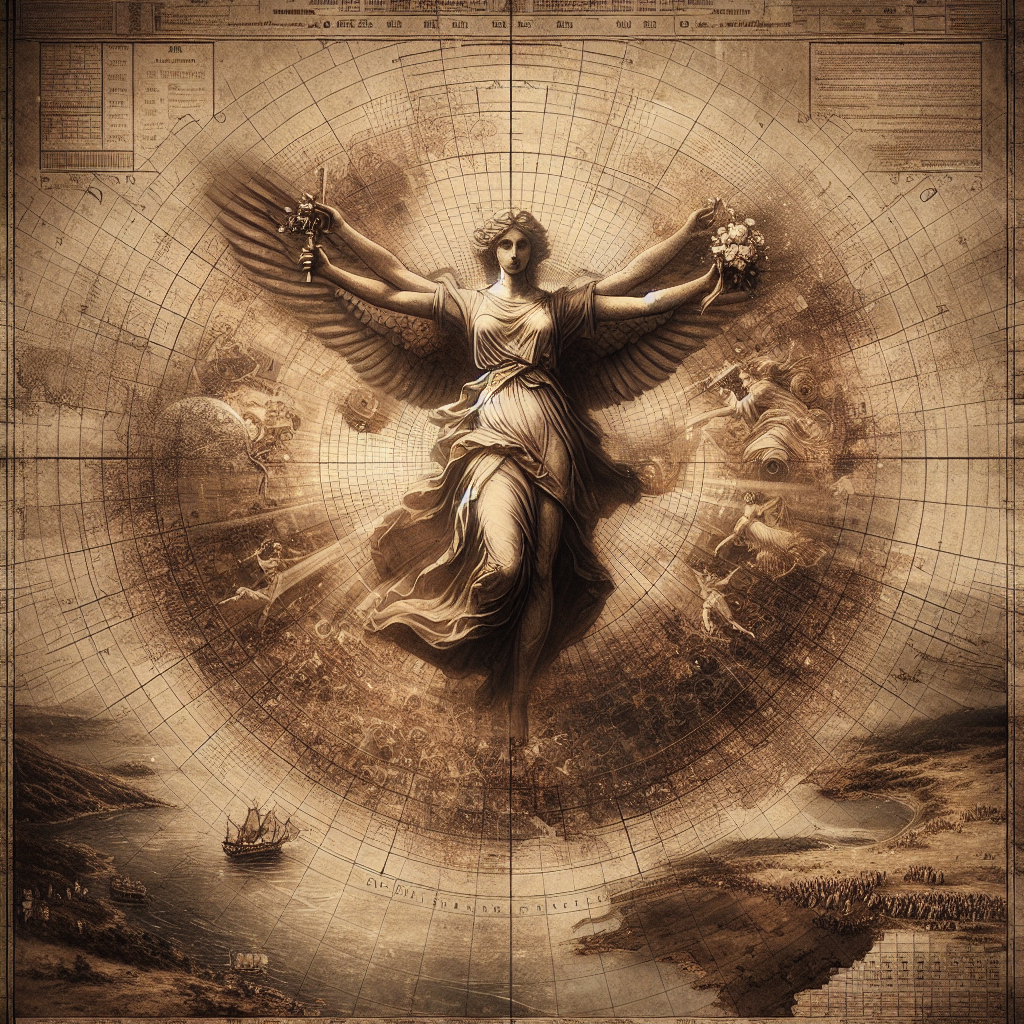

Imagine growing up in a world that tells you your place is on the sidelines, yet you decide to pick up a brush and paint your own reality instead. That’s the kind of determination Kate Bunce, an English painter and poet, showed in the artistic world during the late 19th and early 20th centuries.
Kate Elizabeth Bunce was born in 1856 in Birmingham, England, a time when female artists were frequently overshadowed or confined by societal expectations. As a daughter of John Thackray Bunce, editor of the Birmingham Post, she was exposed to the arts early on. Her passion for art flourished despite the rigidity of Victorian expectations about gender. Bunce was educated at the Birmingham School of Art, where her talent in the Pre-Raphaelite style became evident.
The Pre-Raphaelite Brotherhood primarily sought to reject the conventions of their time by seeking inspiration from the rich, detailed narrative styles predating Raphael. Kate Bunce embraced this with her own unique twist. Her paintings usually depicted women in elaborate, often medieval costumes, wrapped in an aura of romanticism and wonder. Paintings such as 'Musica' encapsulate this, with their vibrant colors and intricate details.
While celebrated within artistic circles, Bunce did not achieve the same level of fame as some of her male contemporaries. Yet, the beauty of her work and the themes she explored made her paintings enduring pieces of admiration. Society during her time often pigeonholed female artists to certain subjects or dismissed their contributions in broader discussions of artistic merit. Nevertheless, Bunce pressed on, pursuing her craft with a fervor that was both daring and sincere.
It's fascinating how discussions about artists like Bunce often circle back to how their genders influenced their recognition. While some may argue that talent is boundless, regardless of gender, historical patterns suggest that male artists most frequently ended up in the limelight. Bunce’s dedication to her work, despite these odds, serves as a strong testament to her resilience.
Looking at Bunce's work today, one can't help but appreciate the serene yet potent energy encapsulated in her art. Her portrayal of women as subjects with depth and agency contributed to the gradual evolution of how women were depicted in art. 'The Keepsake', another notable work, captures this essence, bringing out the personality and narrative of the figure portrayed, a masterful deviation from mere aesthetic decoration.
Within the context of her time, Bunce offered a perspective colorfully contrasting the normalcy of bland, Victorian societal roles. Beyond just painting pretty pictures, her works are like time capsules, preserving the stylish rebellion against the societal norms she subtly challenged.
Despite the strides she made, Bunce's name may still not resonate as loudly as it should among lists of great artists. This often reflects the broader systemic issues within the art world, where many women’s contributions were downplayed or archived without flair. Yet, an encouraging aspect of this latent fame is the modern reevaluation of female artists who were marginalized. Contemporary exhibits now frequently showcase talented women like Bunce, acknowledging their rightful place in art history.
It’s also crucial to acknowledge opposing views regarding Bunce’s style. Some critics have posited that her adherence to the Pre-Raphaelite Brotherhood’s principles made her less innovative compared to her contemporaries exploring abstraction. While there’s merit to seeking new paths in art, dismissing Bunce for her stylistic choices would devalue the cultural and personal narratives she infused into her work.
Bunce enjoyed creating poetry too, pairing her two loves for literature and art. Her poetic endeavors, though less renowned, allowed her to expand her storytelling prowess beyond visual confines. Thus, she wasn't merely a painter in a sea of Victorian conformity, but a voice that harmonized the visual and the verbal.
The conversation about artists like Kate Bunce is far from merely a nostalgic recollection. It holds significance for current and future generations evaluating how history enriches our understanding of present equality and representation. Her legacy encourages a nuanced appreciation of art beyond mere aesthetics, advocating for broader inclusivity and acknowledgment of diverse contributions to culture.
As we explore artistic legacies in today’s context, Kate Bunce’s remarkable work serves as both a mirror and a prism. It reflects the historical challenges she endured while refracting inspiration across emerging artists striving for recognition in a world still echoing faint remnants of those Victorian constraints. In Bunce's journey and work, we witness a form of gentle yet vigorous defiance that remains relevant amidst modern movements for gender equality in the arts.