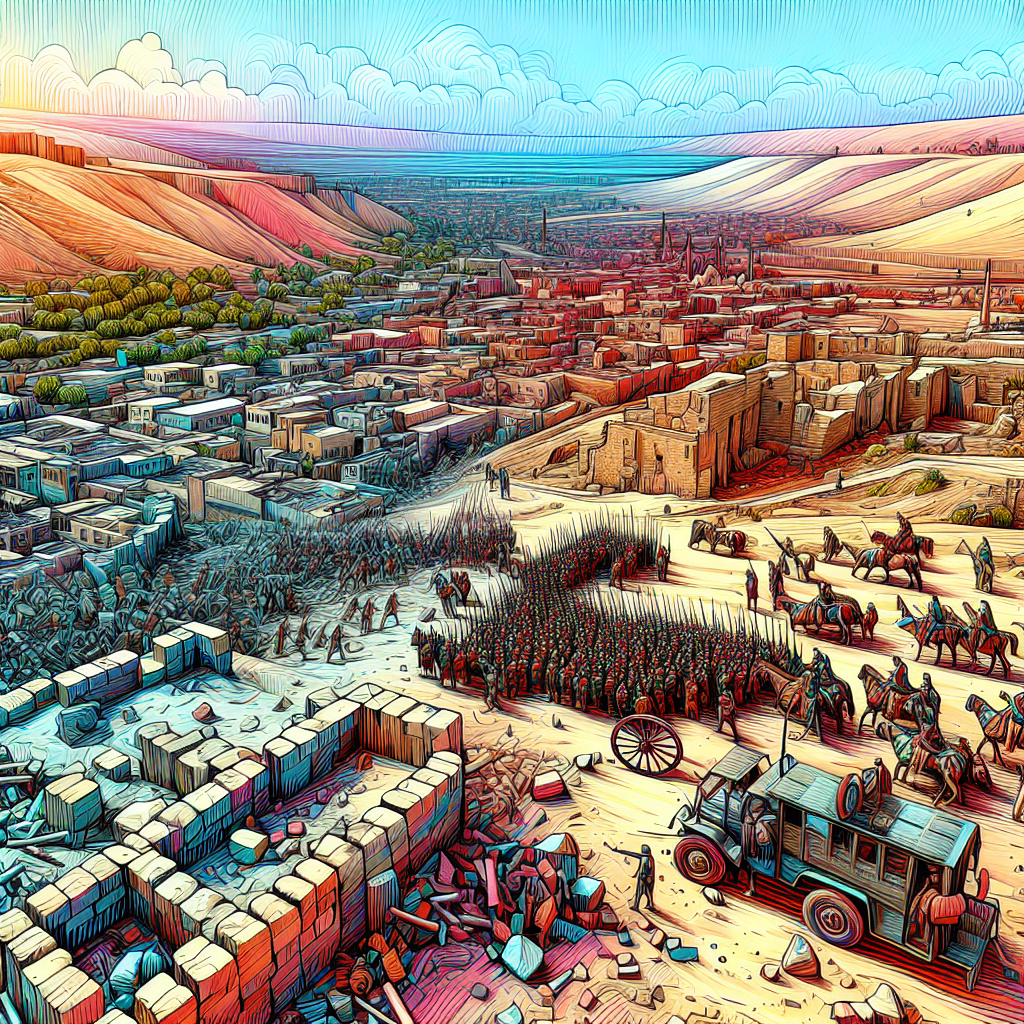

The Enigmatic Walls of Jericho: A Tale of History and Mystery
Imagine a city so ancient that its walls have witnessed the rise and fall of civilizations, a place where history and mystery intertwine. Jericho, one of the oldest inhabited cities in the world, is located in the West Bank, near the Jordan River. This city has been a focal point of archaeological and biblical interest for centuries. The story of Jericho is not just about its famous walls, which are said to have crumbled at the sound of trumpets, but also about the people who have lived there and the cultural significance it holds.
Jericho's history dates back to around 10,000 BCE, making it a site of immense archaeological importance. The city is often associated with the biblical narrative of Joshua and the Battle of Jericho, where the Israelites are said to have brought down its walls with divine intervention. This story has captured the imagination of many, but it also raises questions about the intersection of faith and historical evidence. While some see the biblical account as a literal event, others view it as a symbolic tale, representing the triumph of faith and perseverance.
The archaeological findings in Jericho have provided a wealth of information about early human settlements. Excavations have revealed evidence of ancient fortifications, dwellings, and artifacts that offer insights into the lives of its early inhabitants. These discoveries have sparked debates among historians and archaeologists about the accuracy of the biblical narrative and the true nature of the events that took place in Jericho. The city's layers of history are like a puzzle, with each piece offering a glimpse into the past.
Jericho's significance extends beyond its historical and biblical associations. It is a city that has been shaped by various cultures and civilizations, including the Canaanites, Israelites, Romans, and Byzantines. Each of these groups has left its mark on the city, contributing to its rich cultural tapestry. Today, Jericho is a symbol of resilience and continuity, a place where the past and present coexist.
The story of Jericho also highlights the complexities of the Israeli-Palestinian conflict. As a city located in the West Bank, it is part of the ongoing struggle for land and identity in the region. For Palestinians, Jericho is a symbol of their historical and cultural heritage, while for Israelis, it holds religious significance. This duality adds another layer of complexity to the city's narrative, making it a focal point for discussions about peace and coexistence.
Understanding Jericho requires empathy and an appreciation for the diverse perspectives that surround it. It is a city that embodies the challenges and opportunities of reconciling history with modern realities. By exploring Jericho's past, we can gain insights into the broader human experience and the ways in which history shapes our present and future.
Jericho's story is a reminder of the power of history to inspire and challenge us. It invites us to question, to learn, and to seek understanding in a world that is often divided by differences. As we reflect on the enigmatic walls of Jericho, we are reminded of the enduring human spirit and the potential for unity amidst diversity.