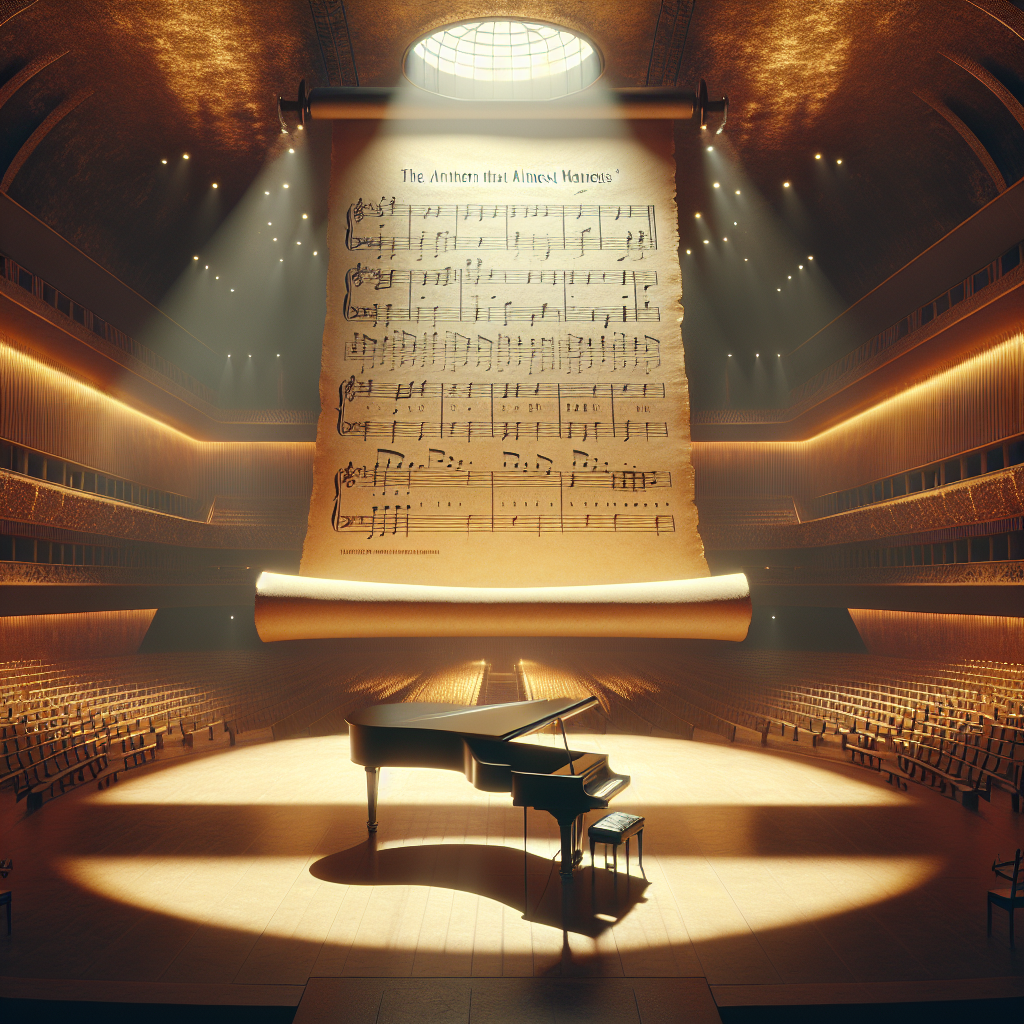

The Anthem That Almost Was: The Hymn to the United Nations
Imagine a world where every time the United Nations General Assembly convenes, a harmonious melody fills the air, uniting nations through song. This was the vision behind the "Hymn to the United Nations," a musical piece composed by the renowned Pablo Casals with lyrics by poet W. H. Auden. The hymn was first performed on October 24, 1971, at the United Nations headquarters in New York City, during the UN Day celebrations. The idea was to create an anthem that would encapsulate the spirit of international cooperation and peace, a musical embodiment of the UN's mission.
The hymn was commissioned by then-UN Secretary-General U Thant, who believed that music could serve as a universal language, transcending cultural and linguistic barriers. The performance was a grand affair, with Casals himself conducting the orchestra. The lyrics, penned by Auden, were meant to inspire hope and unity among the member states. However, despite the initial enthusiasm, the hymn never gained the official status of an anthem. It was performed only a few times and eventually faded into obscurity.
The reasons for the hymn's lack of adoption are varied. Some argue that the lyrics, while poetic, were too complex and abstract for a global audience. Others point out that the UN, with its diverse membership, found it challenging to agree on a single piece of music that could represent all nations. The political climate of the time, marked by Cold War tensions, also played a role in the hymn's lukewarm reception. Nations were wary of endorsing a piece that might be perceived as favoring one ideology over another.
Despite its obscurity, the "Hymn to the United Nations" remains a fascinating footnote in the history of international diplomacy. It serves as a reminder of the challenges inherent in creating symbols that resonate across diverse cultures and political landscapes. The hymn's story also highlights the power of art and music to inspire dialogue and understanding, even if only for a brief moment.
For those who champion the hymn, it represents an idealistic vision of what the UN could be—a place where nations come together not just to negotiate and debate, but to celebrate their shared humanity. Critics, however, see it as a well-intentioned but ultimately impractical endeavor, a reflection of the UN's struggles to find common ground on complex global issues.
In today's world, where divisions often seem more pronounced than ever, the hymn's message of unity and peace is still relevant. It challenges us to think about how we can use art and culture to bridge divides and foster a sense of global community. While the "Hymn to the United Nations" may never become an official anthem, its legacy endures as a symbol of hope and aspiration for a more harmonious world.