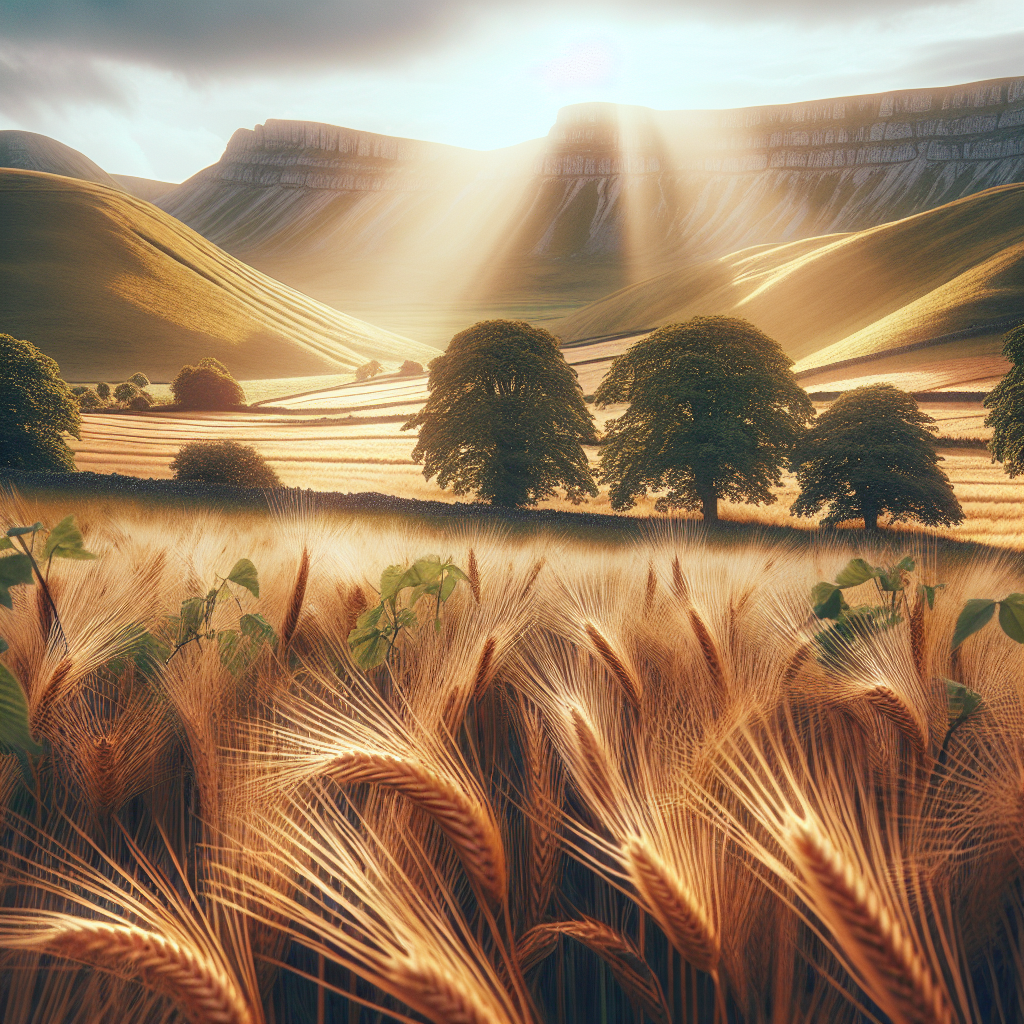

In a world of underappreciated heroes, meet Hordeum spontaneum, the wild barley that quietly but significantly altered the course of human history. This unassuming grass, native to the Fertile Crescent, laid the foundations for modern agriculture around 10,000 years ago. It was the unsuspecting catalyst that transformed nomadic foragers into settlers, launching the first agricultural societies. Who would have thought that a simple plant could pave the way for human civilization as we know it?
Hordeum spontaneum, or wild barley, is a species that, despite its inconspicuous nature, has played an undeniably vital role in shaping human society. This plant once thrived in the regions of present-day Israel, Palestine, Syria, and Jordan. Intriguingly, it caught the eyes of early humans who saw potential in its grains. These grains, small and encased in husks, must have been a laborious food source. Yet, thousands of years ago, this barley became one of the first plants to be domesticated. Around 10,000 BCE, the people of the Fertile Crescent started experimenting with cultivating this grass, leading to the rise of agriculture.
Wild barley's journey from untamed wild grass to a globally important crop is undoubtedly fascinating. As agricultural practices evolved, Hordeum spontaneum's domesticated version, Hordeum vulgare, became a staple food. It helped sustain empires and civilizations, from the Egyptians to the Romans, and later, our modern society. Today, barley isn't just for bread and beer but is also seen in health food trends embraced by younger generations who value sustainable, nutritious choices.
It’s worth noting that the study of wild barley offers insights into climate resilience. These plants have survived countless environmental changes over millennia, showcasing adaptability that modern agriculture craves. As we face global issues like climate change and food insecurity, understanding Hordeum spontaneum could unlock secrets to breeding more resilient crops. By examining its genetic material, researchers aim to develop barley that can withstand rising temperatures and decreasing rainfall.
However, it's important to acknowledge the concerns some people have with the focus on genetically modifying crops. Critics often argue about biodiversity being at risk, and they worry that giant corporations, rather than communities, control food production. Yet, supporters believe that scientific advances can offer more equitable food distribution and reduce hunger. Adopting more nature-inspired agricultural techniques might reconcile these differences, promoting resilience without risking natural diversity.
The discourse about Hordeum spontaneum also links back to social-economic power dynamics. The domestication of barley and other crops enabled wealthy and military-consolidated societies. These societies often expanded at the expense of less resourceful groups, deepening social inequalities. Observing these historical trends reminds us to be wary of repeating the past’s exploitation within today's globalization. We should strive for agricultural development that benefits all, supporting equitable access to resources across the globe.
Moreover, studying Hordeum spontaneum brings up fascinating conversations about cultural heritage. As wild barley is considered the progenitor of all cultivated barley, it is intertwined with cultural identities. From ancient bread ovens traced back to early grain processing to modern artisanal bakeries, barley holds an honorary place in culinary traditions worldwide.
Hordeum spontaneum should encourage our generation to think broadly about sustainability and innovation. Gen Z understands the urgency of reshaping agricultural practices to safeguard the planet for future generations. Wild barley presents a compelling case for conservation-based approaches, advocating for the synergy of technology and nature. It inspires discussions about how we can innovate with respect rather than exploitation.
As we walk forward into an uncertain global future, imagining a world where agriculture and ecology coexist harmoniously is crucial. Hordeum spontaneum is more than an ancient grass; it's a teacher. It's showing us ways to adapt, embrace technological advancements with caution, and nurture our natural world. While embracing progress, let us also recognize the wisdom of the wild barley that preceded us, for it holds lessons that are as relevant today as they were ten millennia ago.