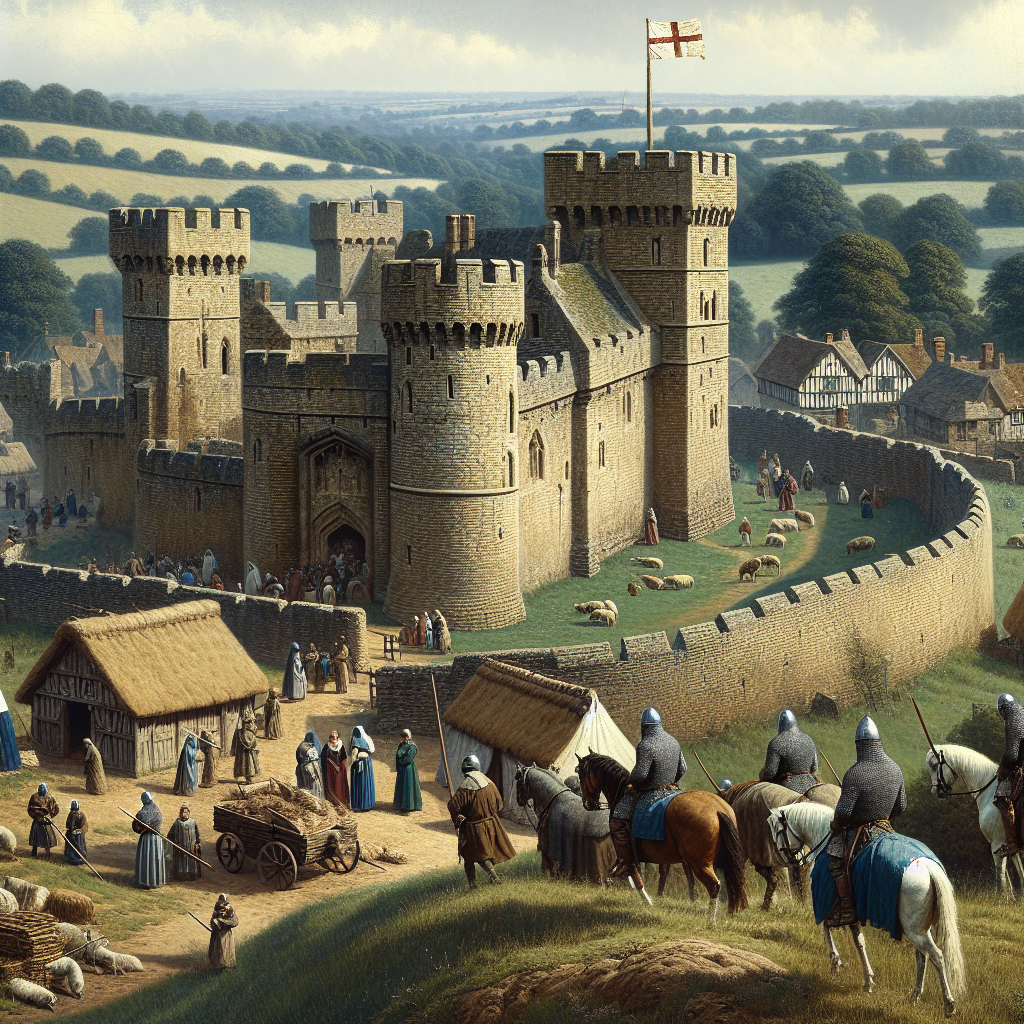

Feudal England sounds like a label you’d see in a daunting medieval history textbook. However, understanding pieces like the Honour of Wallingford makes it feel more like an epic tale than a test question. The Honour of Wallingford was a huge area of land centered around Wallingford, an ancient town in Oxfordshire, England. Its story stretches from the chaotic era right after the Norman conquest in 1066 to rippling effects seen centuries later. So why dig into this nearly forgotten piece of history? Because within its layers of knights, castles, and villages, we find keys to understanding social structures and the evolution of land governance.
Under William the Conqueror’s rule, the Honour became a strategic symbol of loyalty and power. In essence, the Honour was a large feudal landholding, including several manors that all pledged allegiance to Wallingford Castle. What's fascinating is how the Honour of Wallingford functioned like a mini kingdom, with its own courts and economic systems. It was a microcosm of feudal life. Think of it as a powerful fiefdom granting both economic stability and military might to its overseers.
The Honour transferred through several influential hands, reinforcing its status as a political chess piece. At times, it was given to trusted allies as a reward or used as a strategic marriage settlement. The Honour's control often signified allegiance to the crown—a deed of trust and prestige. Its early governance was in the hands of Robert D'Oyly, a Norman knight who constructed the original Wallingford Castle, dramatically reshaping the regional power dynamics.
Over time, control of the Honour became a political matter. Monarchs, ever eager to solidify their reigns, awarded the land strategically. During Stephen’s reign, Matilda, the Empress for whom the world wouldn’t bow, seized Wallingford as a stronghold in her quest to reclaim the English throne. Wallingford played host to negotiations between Matilda and Stephen, crucially affecting the path to the Treaty of Wallingford which led to a temporary shift in power back to Stephen, only to pave the way for Henry II's accession.
Feudal responsibilities tied to the Honour revolved largely around military support. The Honour’s holders owed knights and troops to the crown. This relationship shows how deeply intertwined feudal life was with military obligations and loyalty, revealing how landholdings like the Honour of Wallingford were not just territories but engines of political leverage.
By the late medieval period, the significance of the Wallingford Honour dwindled, as monarchs leaned more toward central power and unified governing structures. Yet, Wallingford's rich political impact endured. Infrastructure like roads and castles persisted as a testament to its formative years. Even the modern acts of Parliament failed to erase Wallingford’s imprint.
Looking at this historic Honour through empathy, one sees threads of inequality inherent in feudal systems. It may be tempting to romanticize the knightly culture, but it's crucial to understand that such regimes thrived on a distinct divide. The peasants, mere serfs working the lands of the Honour, bore the brunt of the labor while enjoying little of its profit or power—an early window into systemic class disparities. These historic inequities resonate to this day, inviting debates on land ownership, community governance, and economic justice.
However, it's insightful to ponder the intentions of those on both sides of the feudal contract. For many serfs, the Honour represented security in dangerous times. Nothing in medieval history is black and white. While the fairness of this stratified system remains suspect, it was also a world bound by survival, kinship, and a different set of societal axioms.
Today, Wallingford retains charming remnants of its medieval past. Visitors bask in the shadow of castle ruins and stroll streets that echo centuries-old footsteps. There’s an enduring nostalgia, a bridging of past and present that heads to the heart of why these historic entities matter. They are not merely footnotes but dynamic chapters that have influenced the social and political fabric of Britain.
As modern society debates land and power, looking back at the Honour of Wallingford might offer unexpected lessons. Scrutinizing the gains and losses, the loyalties and betrayals within its history challenges us to consider how power structures evolve—and how they persist. Can we shape a world where power use is equitable? Whether aiming for such change makes history mere stories or a springboard for new frameworks is ours to decide.