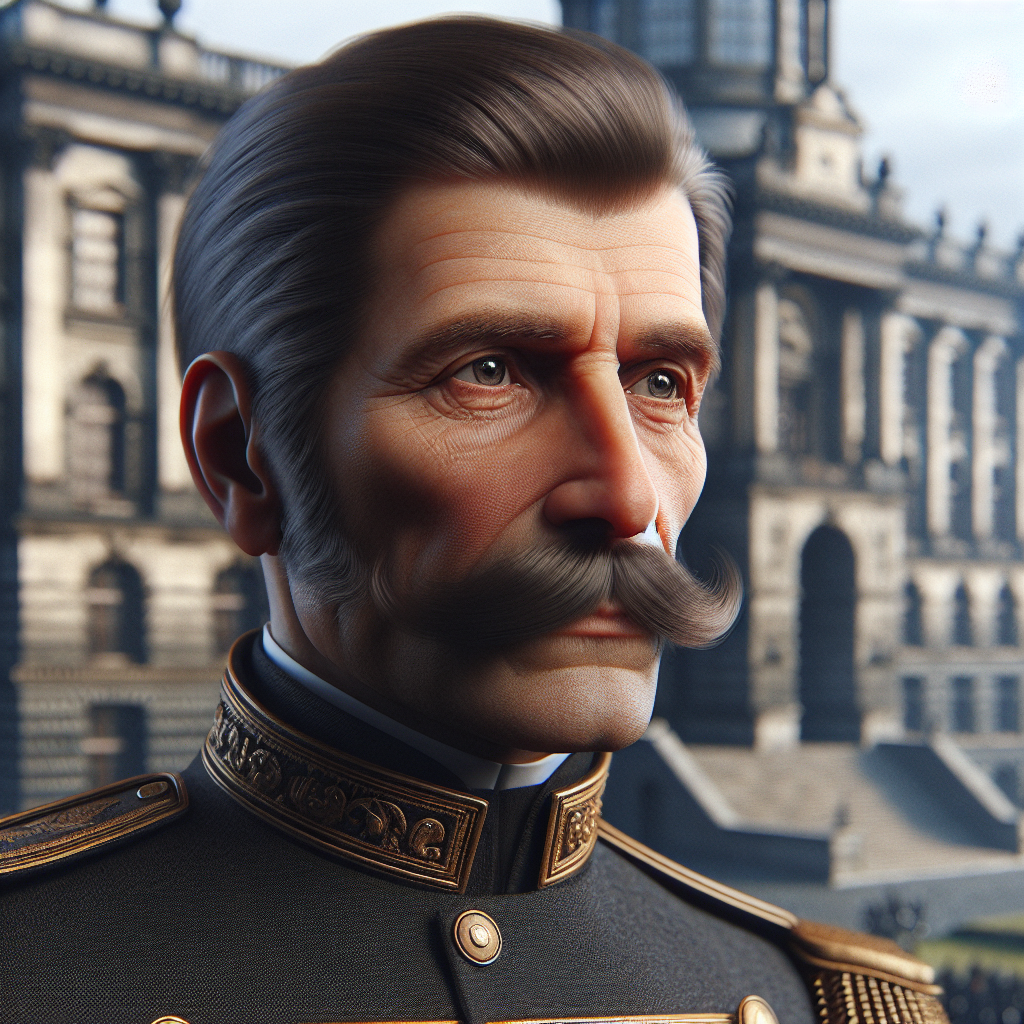

Herbert von Bismarck: The Shadow of a Giant
Imagine living in the shadow of a giant, where every step you take is measured against the towering legacy of a parent. This was the life of Herbert von Bismarck, the eldest son of the legendary German Chancellor Otto von Bismarck. Born on December 28, 1849, in Berlin, Herbert was thrust into the world of politics and diplomacy, a path paved by his father's monumental achievements in unifying Germany. As the 19th century drew to a close, Herbert found himself navigating the complex political landscape of Europe, trying to carve out his own identity while upholding the Bismarckian legacy.
Herbert's political career was largely defined by his role as his father's right-hand man. He served as the Secretary of State for Foreign Affairs from 1886 to 1890, a position that placed him at the heart of German diplomacy. During this time, he worked closely with his father, who was the Chancellor of the German Empire. Herbert's tenure was marked by his efforts to maintain the delicate balance of power in Europe, a task that required both diplomatic finesse and a deep understanding of international relations. However, his career was not without its challenges. The political climate of the time was fraught with tension, and Herbert often found himself caught between his father's ambitions and the realities of European politics.
Despite his efforts, Herbert struggled to step out of his father's shadow. Otto von Bismarck was a towering figure in German history, known for his strategic brilliance and unyielding determination. Herbert, on the other hand, was often seen as a mere extension of his father, lacking the same charisma and political acumen. This perception was not entirely unfounded, as Herbert's career was closely tied to his father's fortunes. When Otto von Bismarck was dismissed from office in 1890, Herbert's political career also came to an abrupt end. He resigned from his position as Secretary of State and retreated from the public eye, a move that marked the end of his political ambitions.
Herbert's life after politics was marked by a sense of disillusionment. He spent his later years managing the family estates and engaging in various business ventures. Despite his withdrawal from the political scene, Herbert remained a staunch supporter of his father's legacy. He was deeply involved in preserving the Bismarck name, both through his writings and his efforts to maintain the family's social standing. However, his attempts to uphold the Bismarckian legacy were often overshadowed by the changing political landscape of Germany, which was moving away from the ideals championed by his father.
Critics of Herbert von Bismarck argue that he failed to live up to the expectations set by his father's legacy. They point to his lack of political achievements and his inability to assert himself as an independent figure in German politics. However, it is important to recognize the immense pressure Herbert faced as the son of one of Germany's most influential leaders. The expectations placed upon him were immense, and the political environment of the time was unforgiving. In many ways, Herbert's story is a testament to the challenges faced by those who are born into the shadows of greatness.
Supporters of Herbert argue that he played a crucial role in supporting his father's diplomatic efforts. They highlight his contributions to maintaining peace in Europe during a time of great uncertainty. Herbert's work as Secretary of State, though often overshadowed by his father's achievements, was instrumental in upholding the Bismarckian vision of a unified and stable Germany. His dedication to his father's legacy, despite the personal and political challenges he faced, is a testament to his loyalty and commitment to the ideals he believed in.
Herbert von Bismarck's life is a complex tapestry of ambition, loyalty, and the struggle for identity. His story serves as a reminder of the challenges faced by those who live in the shadows of greatness, and the enduring impact of familial legacy on personal and political aspirations. While he may not have achieved the same level of fame as his father, Herbert's contributions to German diplomacy and his unwavering dedication to the Bismarckian legacy remain an important part of history.