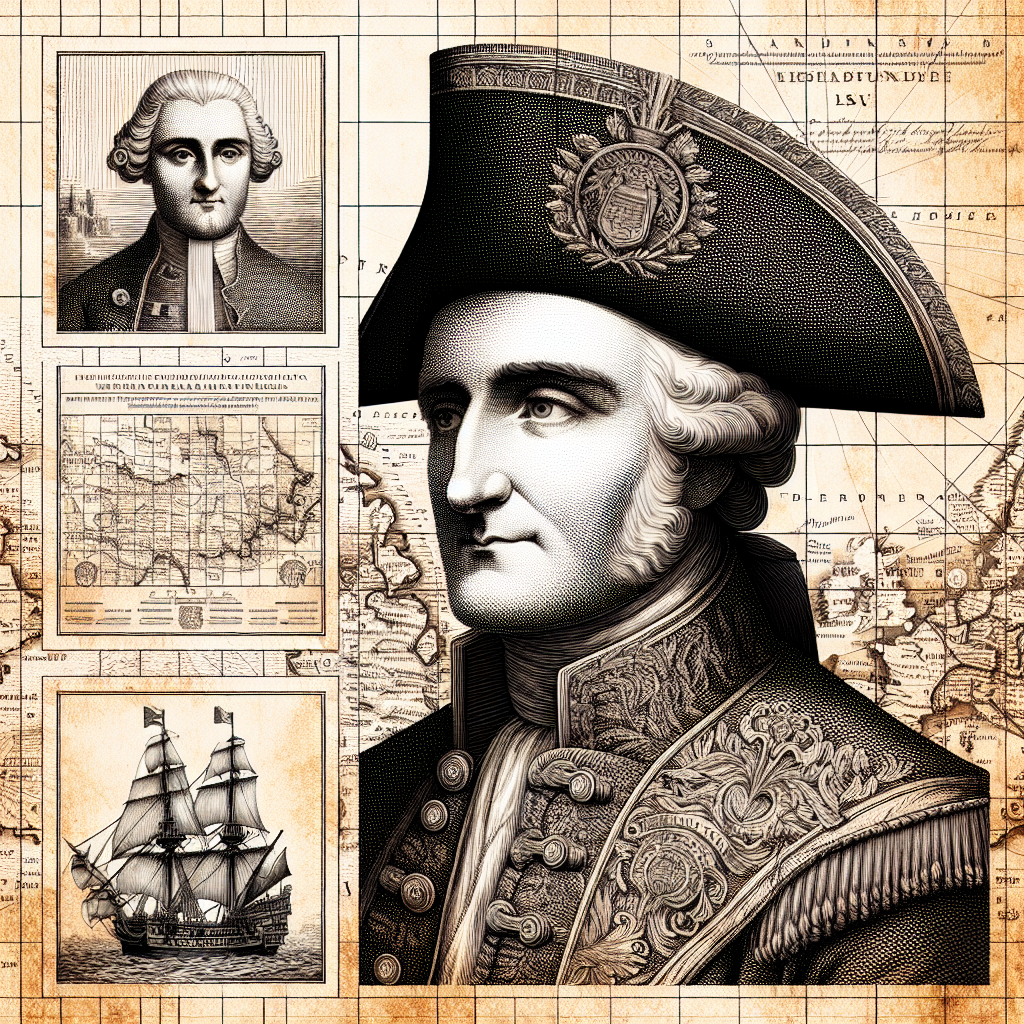

Henri Grégoire was not your typical revolutionary figure. Born on December 4, 1750, in the modest town of Vého in France, Grégoire was a Catholic priest who defied convention by becoming an ardent advocate for equality and human rights during the tumultuous times of the French Revolution. While many clergy members clung to their privileges, Grégoire chose a different path, standing at the forefront of a movement that sought to radically transform France, and indeed the world.
Grégoire's journey into the world of politics was rather unexpected for someone ordained in the Roman Church. He was a man of letters, fascinated by the ideas of Enlightenment thinkers who questioned the status quo and championed liberty and equality. Inspired by these intellectual currents, Grégoire leaped into politics with passionate energy. By 1789, he was elected to the Estates-General as a representative of the clergy, a position he used not to defend the interests of the Church, but to champion broader social causes.
One of Grégoire’s most significant accomplishments was his unyielding fight to abolish slavery. At a time when the economy of French colonies heavily relied on enslaved labor, Grégoire spoke out courageously against the inhuman practice. He aligned himself with other abolitionists in France, such as the Society of the Friends of the Blacks, helping to push the conversation on slavery into legislative spaces that had previously ignored it. His commitment contributed to the eventual abolition of slavery in French territories, marking a significant advance in human rights that others could build on.
Grégoire wasn’t just concerned with immediate political issues. His vision extended to the field of education and culture. He argued for universal education, believing that ignorance was a primary tool of oppression. In a nation where access to education was largely confined to the privileged, Grégoire envisioned a system where education was accessible to all, regardless of social standing. He understood that knowledge was a form of power that could fuel societal change and empower marginalized populations.
Equally noteworthy was his advocacy for the cultural rights of minorities. During his tenure, he worked tirelessly to protect linguistic diversity in France. The dominant French-speaking high culture often dismissed regional languages and dialects as inferior. Grégoire opposed this cultural imperialism; he promoted the importance of regional languages as a vital part of the nation’s heritage and argued for their preservation. This stance foreshadowed modern movements that champion cultural diversity and inclusivity.
Grégoire was also a fervent supporter of Jewish emancipation. He saw the persecution and discrimination faced by Jewish communities in France—a blight on the values of liberty, equality, and fraternity that the revolution stood for. With diplomatic skill, he lobbied for legislation granting equal rights to Jews, making sure they were recognized as full citizens. This was a bold initiative that challenged deep-seated prejudices and was illustrative of Grégoire’s broader commitment to civil rights for all.
Despite his contributions, Grégoire’s radical stances did earn him critics. Some of his contemporaries viewed his ideas as overly idealistic, worrying they might undermine traditional institutions like the Church and monarchy. Detractors doubted whether the egalitarian society he envisioned was possible or even desirable. His advocacy for religious tolerance was not universally embraced, particularly by factions that saw religious uniformity as vital for national unity. Yet, Grégoire’s ideas continued to inspire, presenting a challenge to ingrained societal norms and sparking conversations that are still relevant today.
His work laid a foundation for subsequent generations who would continue the struggle for equality and justice. While he may not be as well-known as figures like Robespierre or Napoleon, his influence on France's social fabric was significant. Henri Grégoire's life is a testament to the power of principled advocacy and the impact one person can have by staying true to their convictions. His dedication to human rights and equality resonates through history as a reminder of the importance of fighting for what is just, even when society isn’t ready to accept it.