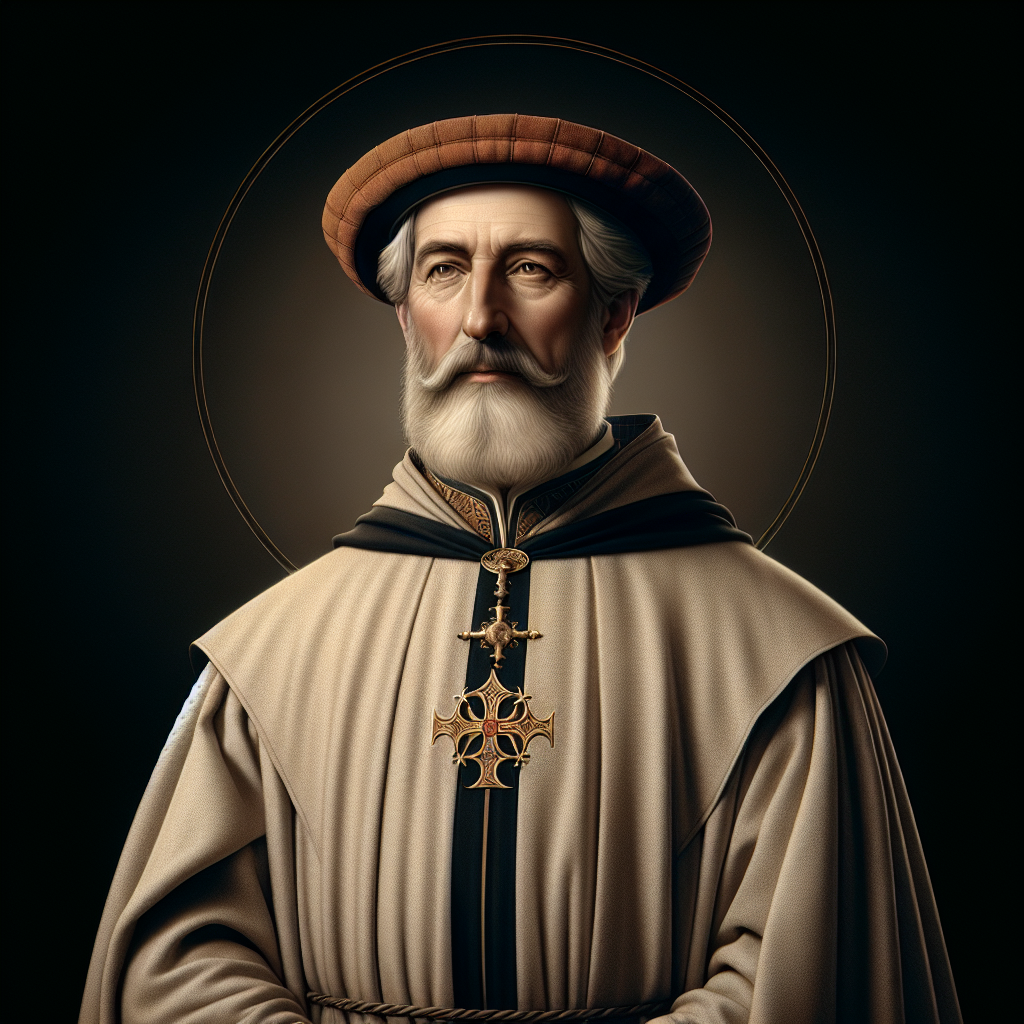

Hélion de Villeneuve was like that rebellious leader in a post-apocalyptic movie you never thought would bring order to chaos, yet somehow they do. Born around 1270, he became a pivotal figure in the history of the Knights Hospitaller during the 14th century. His leadership from 1319 to 1346 not only stabilized the Order’s fragmented state but also led it through a series of significant geopolitical challenges. His journey took him from France across Europe to the Mediterranean base of Rhodes, where he reshaped not just a military order but a governing body that would last centuries.
Now, what makes Hélion de Villeneuve an intriguing historical character? Start with his strategic thinking. When he took over as Grand Master of the Knights Hospitaller, the Order was in disarray. As expected in any old-school, sword-swinging drama, they were dealing with threats from the surrounding Ottoman Empire, political opposition within Europe, and pressure to safeguard Christians as arguably, a kind of medieval worldwide police force. Villeneuve recognized that to survive in a dangerous world, they needed more than just strength in battles. He was a political player in an era where power was won through strategic alliances and sheer diplomatic bravado.
To people living in today’s world of instant communication, it might be difficult to imagine the slow grind of 14th-century diplomacy. Villeneuve, however, excelled in this patient art. Having traveled from the South of France, he negotiated treaties with surrounding kingdoms and forged alliances, ensuring the Order’s survival and relevance. He saw opportunity in what others saw as defeat, much like the underdog tech companies bringing something fresh to the market against megacorporations. Critics may argue that he benefited from a 'might is right' approach, winning support through force and rigid structures. Villeneuve, however, used power not as a bludgeon but as a shield to protect the vulnerable.
It wasn't just strategy; Hélion had a knack for governance and reform. Under his leadership, the Knights evolved from a purely militaristic role to include economic and administrative responsibilities. The Order's annual revenue increased, and they managed civilian affairs with a focus on effective resource management. Villeneuve showed early signs of what today might be called social responsibility or community-driven governance. This era under his rule suggests he understood the strengths of a well-managed, diverse operation—supporting hospitals and schools, and not simply preparing for war. This is where modern parallels emerge, echoing today’s notions of what leadership and care for community truly mean.
Of course, as with any revered historical figure, it’s important to acknowledge that Villeneuve’s triumphs were sometimes shadowed by coercive methods. While he was expanding the Order's horizons, there were undoubtedly many in his ranks who disagreed or were marginalized for opposing his vision. His tenure saw an alignment predominantly focused on Christianity, excluding those different in faith or without allegiance to Christian European monarchies. Arguments can be raised about whether his vision for the Hospitallers was overly parochial, ignoring broader lessons that inclusivity might offer. Despite this, Villeneuve persists as a master strategist and ruler of remarkable capabilities.
From his base in Rhodes, a strategic archipelagic stronghold, Villeneuve fostered the Order’s growth as both a military power and a diplomatic faction. This dual role paints a fascinating picture of a man balancing martial prowess with political acuity. Yet, like with any leader who stands the test of time, it is his ability to connect the threads of governance, defense, and human society that distinguishes him.
The responsibility he bore was daunting—ensuring peace under the constant threat of war. Many today look at societal systems and governance as twisted complexities, hoping for a leader who can chop through the red tape. Villeneuve’s ability to steer the Knights through troubled waters shows how firm decisions and forward-thinking can carve out a legacy.
Hélion de Villeneuve's era was rife with change, much like today’s world where Gen Z finds themselves at a cultural and technological crossroads. His methods remind us of the importance of adaptability, communication, and empathy in leadership. Villeneuve possessed the foresight to see the forthcoming shifts in power dynamics, and he adapted, creating ripples that shaped European medieval landscapes.
In reflecting on Villeneuve’s legacy, consider the layers—strategist, diplomat, and innovator. While the barriers of the past have shifted, the lessons on leadership and governance endure. His life was a tapestry woven with the threads of resilience and strategic vision—elements that remain as relevant today as in the 14th century.