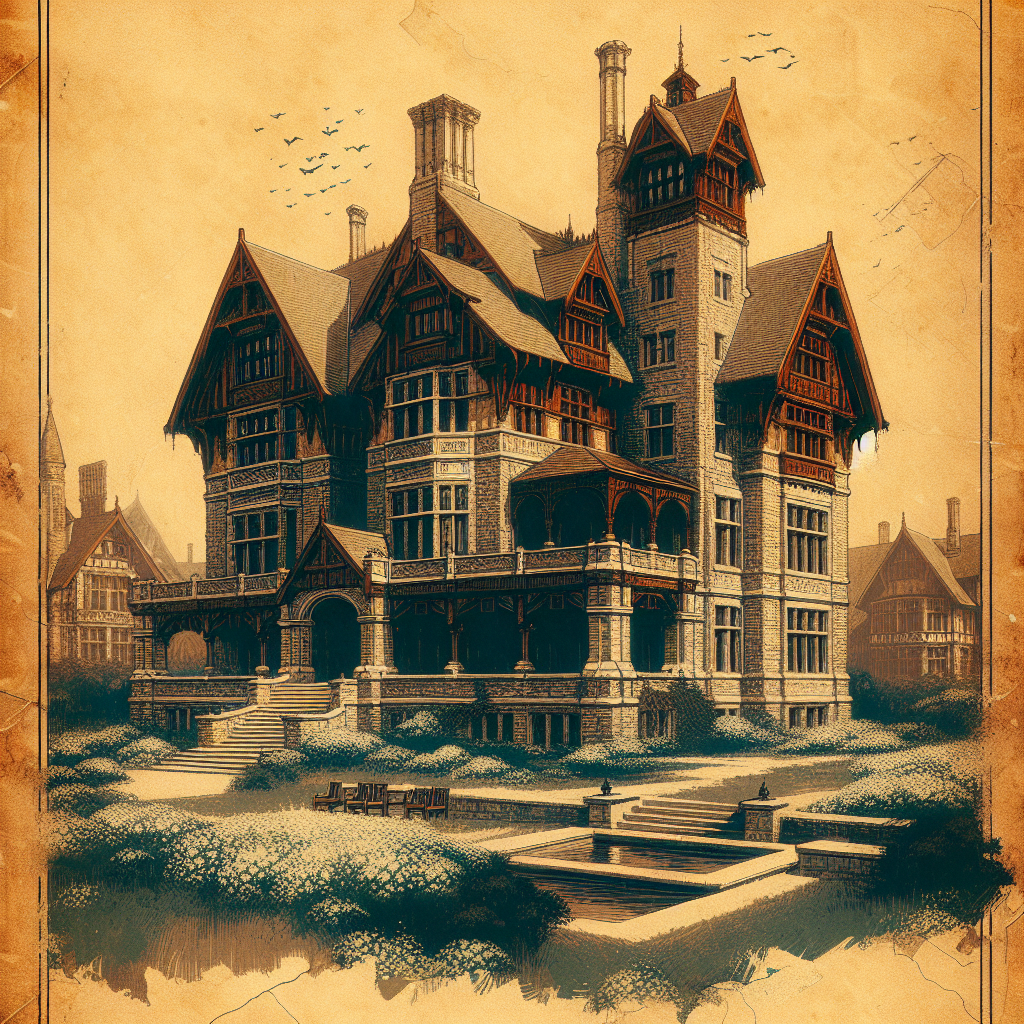

Step into the grande dame of New York, where a millionaire’s intrigue and Old World charm layer the façade of the Harry F. Sinclair House. Built in 1897 at 79th Street and Fifth Avenue, this Gothic Revival masterpiece is a dizzying spectacle woven by architect C.P.H. Gilbert for banker Isaac D. Fletcher originally, but it didn't take long for the extravagant oil mogul Harry F. Sinclair to stamp his name on it. Known for its puzzling blend of towers, gables, and turrets, it looks as if a Gothic puzzle box had been exploded at the north end of Central Park.
More than just a fabulous building, it’s a portrait of an age steeped in wealth, power, and scandal. Harry F. Sinclair, the flamboyant owner, was notorious in his own right, embroiled in the infamous Teapot Dome Scandal of the 1920s. This story of oil-thirsty deception and bribery echoes the same greed visible in the gilded details of Sinclair's home. Ironically, such a reminder of scandal now houses the prestigious Ukrainian Institute of America, acting as a cultural ambassador. Through various art exhibitions and cultural events, it mirrors its diverse Byroneque architecture by reflecting the complexity of global arts and heritage.
Now, why should Gen Z care about a fossilized monument of the Gilded Age? It's a window into both America's architectural evolution and the often shadowy tales of the rich and powerful. There's no denying we could learn a thing or two from the past. If the walls of this limestone wonder could speak, they’d unveil the whispered conversations of business deals and artistic revelations, though things aren’t as gilt-edged as they once were.
Politics snakes through this story like the intricate wood carvings threading the staircase inside the house. Harry F. Sinclair was a political animal, greasing the wheels with money that some say questioned the integrity of political dealings. He was not alone — absolute power, they say, corrupts absolutely.
But what about the building itself, beyond the scandals and dramas? Unlike other structures on Fifth Avenue that bow down to modernism, this house stands as an icon of eclectic design and grandeur. Consisting of eight floors, steeped in grandiose the interior is an opera of craftsmanship — its sweeping staircase and opulent, yet cozy living spaces enchant as relics of splendor. The structure does not shout; it whispers timeless stories.
Today, young people hovering on digital devices might wonder about the relevance of real-world historical monuments, as tangible as Sinclair’s home. Much like the issues of power, money, and identity still prevalent—they are frozen in brick and stone, parallels that tell us every era thinks it's unique, and every era is wrong.
In a city where everything ages faster than fashion, the Sinclair House remains steadfast. Institutions like the Ukrainian Institute remind society that while AI changes the game today, the heart of culture rests on what we've been through together as humanity. A home once contested by wealth and filled with clandestine whispers now unites through shared art and history. There's a clash between the history it represents and the history it's making today.
Let's not forget, Gen Z, if we don’t tell these stories and learn from them, we might be doomed to repeat the same patterns. So, when you walk past the Harry F. Sinclair House, paint a picture of these centuries-old paradoxes in your mind. Shapes and silhouettes dot Fifth Avenue, but in this house, the past and present continue their dance, the rhythm of time uninterrupted, offering a lesson in architectural resilience and human folly alike.
As the world around us swivels and shifts, know that within the sanctuary of this building is a museum of stories, longing to remind us of the ghosts of privilege past alongside a yearning for social justice today. That seems like something worth listening to.