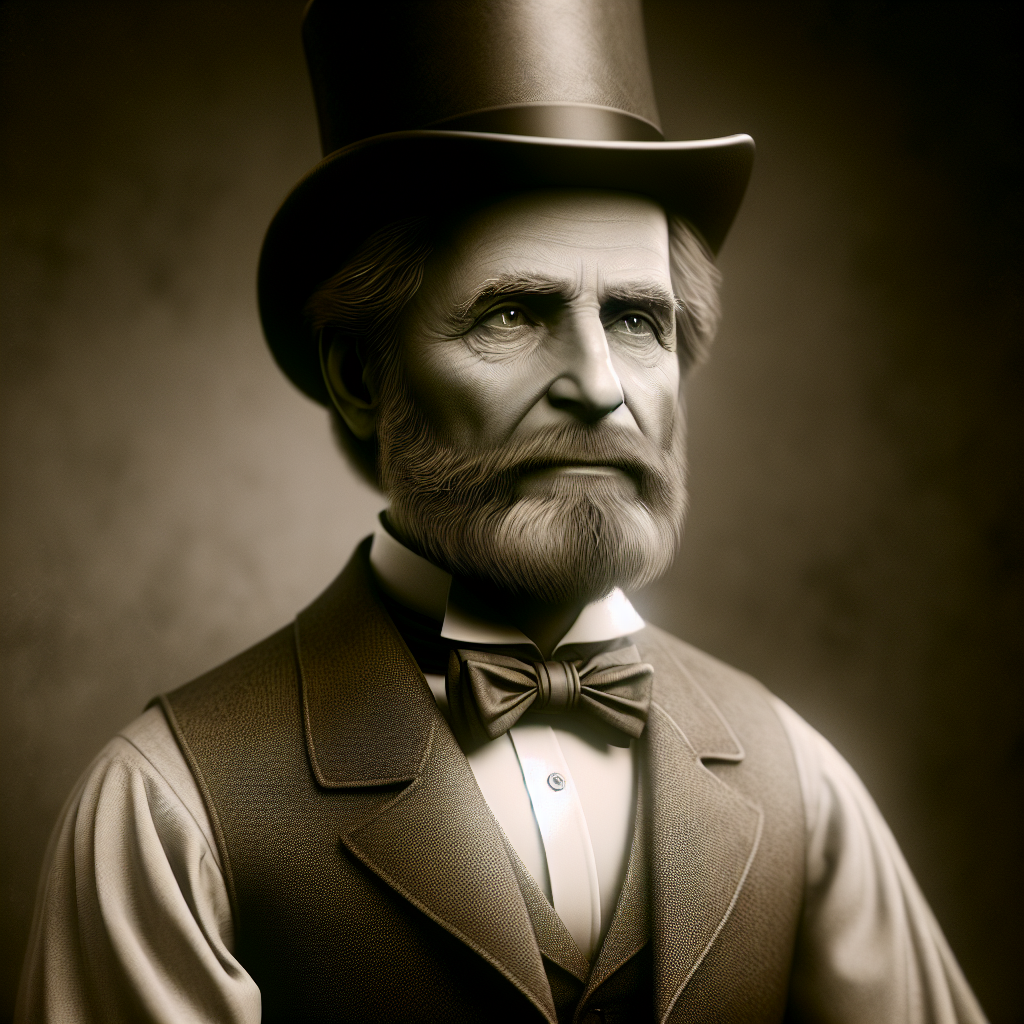

If someone ever embodied the idea of having many lives in one lifetime, it was Harrison Carroll Hobart. Born in 1815, Hobart carved out multifaceted careers as a politician, lawyer, and Union Army officer. His journey started in Ohio, but it was Wisconsin where he expanded his influence and made his mark. In an era marked by boundless change, caused by the American Civil War and rapid westward expansion, Hobart's story is one of adaptability, resilience, and sometimes contradiction. Many roads crossed in his story, and with each turn, Hobart seemed to embrace the ever-changing American landscape.
Hobart's political career began on a high note. After studying law and moving to Wisconsin, he quickly became involved in state politics. As a member of the Democratic Party, he participated vigorously in local governance in a time when parties were both vehicles of change and stagnation. While one might imagine a politician to be rigid, Hobart was anything but. His empathy and understanding of different viewpoints were unusual for his time, when partisan divides often seemed insurmountable. He was not a man to turn a blind eye to the mutterings of dissent.
Hobart's involvement in the Civil War adds another layer to his robust life narrative. In 1861, despite his earlier political engagements, he joined the Union Army. The American Civil War could be viewed as a fight for ideals and territory, but for Hobart, it was also a personal battlefield for moral principle. Rising to the rank of colonel, he demonstrated bravery and leadership. He was even captured by Confederate forces in 1863 and endured trying conditions as a prisoner. Yet, this setback did not deter his spirit. He escaped in spectacular fashion, further cementing his legacy as a character of courage and determination.
The complexities of Hobart's life linger when considering his post-war career. Returning to civilian life, he resumed his work in politics and legal practice, eager to contribute to the rebuilding of his nation. Hobart's wartime experiences could have left him cynical, but he remained a progressive thinker for his era—supporting reforms and pushing for improvements in civic life that could resonate even today.
It’s essential to note, though, that Hobart’s legacy is not without blemish. Like many of his time, grappling with the race and human rights issues would have presented a significant challenge. The tensions of his era and personal biases influenced his actions and decisions. Acknowledging the imperfections in historical figures like Hobart helps us build a more nuanced view of history—a lesson younger generations can leverage as they work toward a more equitable society. Understanding these flaws allows us to learn from past mistakes and not merely idolize or demonize our ancestors.
In reflecting on Hobart's life, we see that personal growth and public service can coexist. He demonstrated that an individual's contributions to society are multifaceted and complex. Hobart was not only about significant, headline-capturing events; his story often played out in less visible, more nuanced ways, embodying the kind of quiet strength that today’s Gen Z might admire. His ability to blend personal ambition with communal goals speaks to the potential harmony between private and public lives.
What can we take away from Hobart's biography in contemporary times? Perhaps it's a reminder that history is rarely black and white; it's made up of richly colored stories that speak to our shared human experience. As we examine and interpret the past, Hobart's life encourages empathy, understanding, and a readiness to engage with complex narratives. In a world where ethical decision-making is paramount, especially for the politically active young generation today, Hobart’s courage in making hard choices speaks volumes.
Hobart’s narrative also underscores the importance of change—and the possibility for redemption. His various roles show that people can evolve, challenge their own beliefs, and grow from their experiences. Whether in politics, social issues, or military service, his choices and resilience remain relevant as we navigate contemporary challenges.
Looking back on Harrison Carroll Hobart’s long and twisted path, we can appreciate his willingness to engage boldly with a world that was, like today, tumultuous and in flux. In both the soaring successes and the humbling failures, his life offers lessons on leadership, resilience, and the necessity of forging forward through adversity, all crucial as Gen Z faces their distinct set of societal and personal challenges.