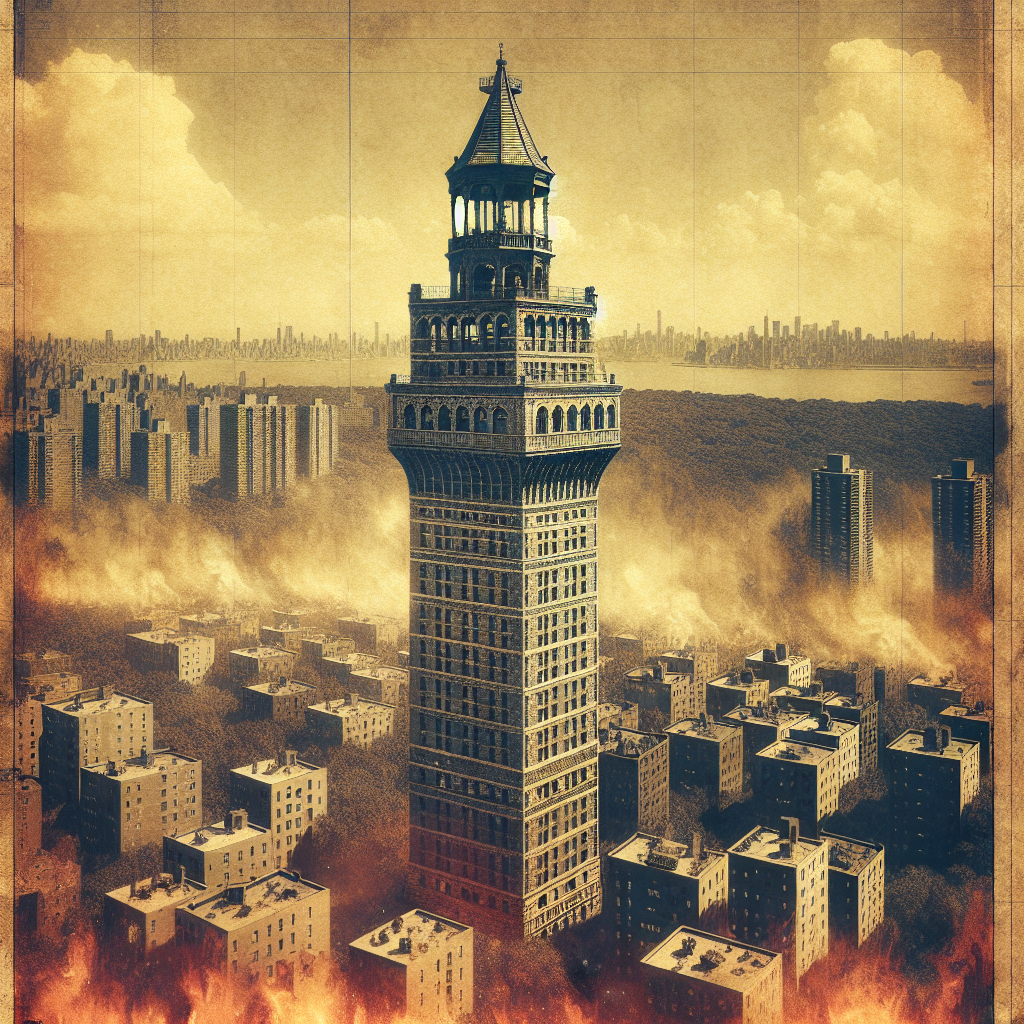

Nestled in Marcus Garvey Park, the Harlem Fire Watchtower stands as a sentinel of the past, blending history, artistry, and community spirit. This cast-iron giant, built in the 1850s, was designed by Julius Kroehl, an engineer who left an indelible mark on public safety. Back in those days, fires posed a severe threat to wooden buildings, making early detection crucial. Positioned at a high point in the park, the tower served as a watchful eye over Harlem, providing an early warning system for approaching flames, thanks to the vigilant watchmen who stood guard.
Fast forward to today, the Harlem Fire Watchtower isn’t just a relic; it’s a symbol of the neighborhood’s resilience and cultural heritage. So, what makes this tower a local treasure? For starters, the watchtower is the last remaining structure of its kind in New York City, an architectural gem crowned by its ornate finial and delicate, lattice-like framework. But beyond its aesthetic, the tower tells the story of a community that values preservation, often amidst gentrification and urban development.
While some argue that maintaining structures like the Fire Watchtower can be costly and cumbersome, there’s much to be said for preserving our historical landmarks. They’re not just inanimate objects of brick and metal; they embody stories of human endeavor, ingenuity, and sometimes, survival. In a city where the skyline is perpetually changing with glass high-rises and modern developments, the presence of something as storied as the Fire Watchtower offers a momentary pause from the city’s frenetic pace.
It's crucial to understand that while restoration projects can be expensive, they often breathe new life into neighborhoods. As with the watchtower, advocates argue that the costs are well worth it. Through the years, this statue of iron has sparked the imaginations of New Yorkers. It has been a project's labor of love—requiring both state funding and community support to bring it back to its former glory after years of structural neglect.
Empathy comes into play when considering opposing voices too. Some might say that resources could serve immediate community needs like education and housing. Valid concerns, undoubtedly. Yet, historic preservation can also equate to community pride, serving as a foundation from which we can build an understanding of our shared history. It can become a focal point for learning, even in educational curriculums.
From another perspective, tourists flock to iconic landmarks, injecting the local economy with much-needed funds from tourism. By restoring and maintaining the Fire Watchtower, Harlem enhances its distinct cultural landscape, ensuring that visitors and locals alike glimpse a piece of the past while contributing to the present-day vitality of the area.
The watchtower also operates as a canvas for artistic endeavors, often hosting events that underscore its significance. It's more than just a static landmark—it's a hub for creativity, where gatherings foster communal ties and shared narratives.
Harlem, with its rich tapestry of history and culture, benefits from something so rooted in its identity. The Fire Watchtower isn’t merely leftover architecture. It’s a testament to a community's determination to maintain its soul in the face of inevitable modern change.
So, while challenges exist in balancing historical preservation with sustainable urban growth, structures like the Harlem Fire Watchtower are invaluable. Their preservation is a testament to what we value as a society. It's about remembering our past, preserving it, and, importantly, making it a part of our future.