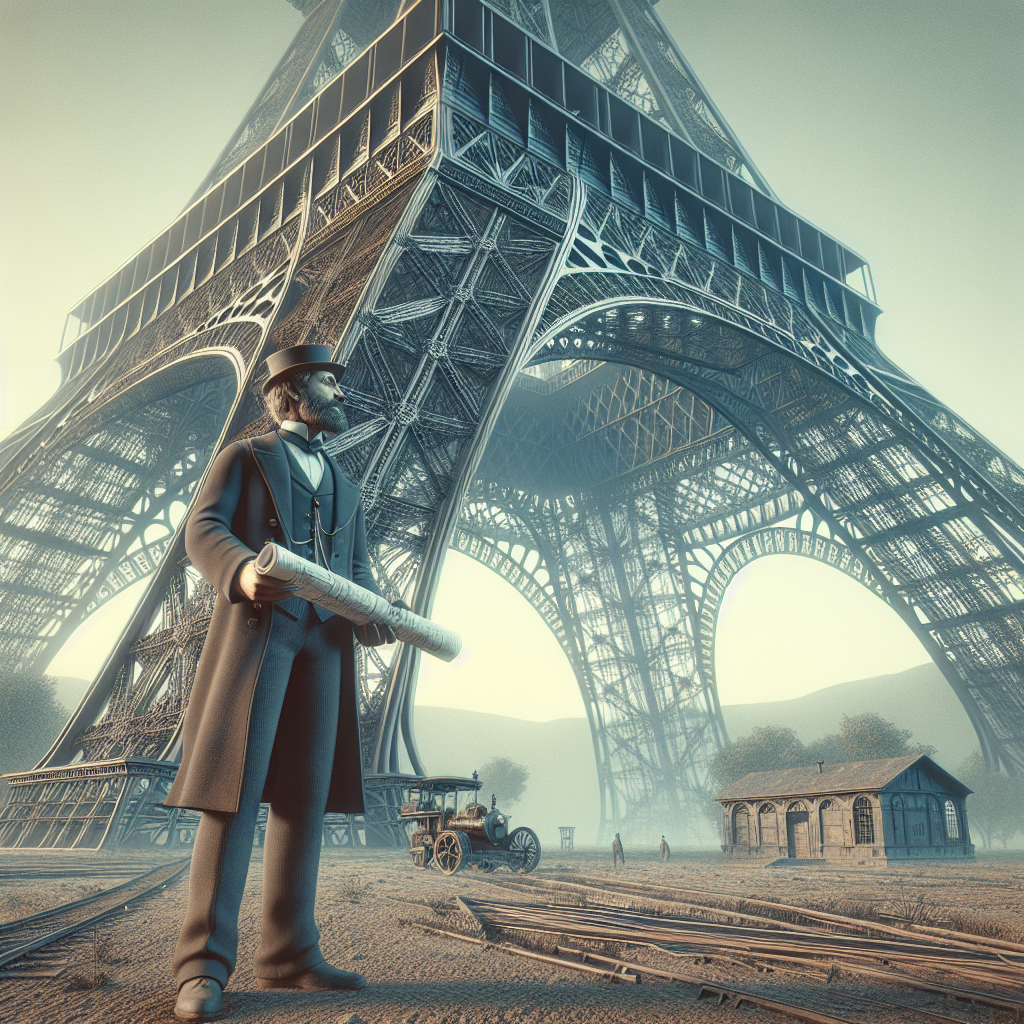

What do a world-famous landmark in Paris and an obscure atmospheric laboratory have in common? Gustave Eiffel, the brilliant mind behind some of the most iconic structures on the planet. Gustave Eiffel was a French civil engineer and architect born on December 15, 1832, in Dijon, France. He is best known for designing the Eiffel Tower, a towering testament to human ingenuity, in the heart of Paris. This historical skyscraper, completed in 1889, marked a turning point in engineering and architecture, showcasing the possibilities of using wrought iron to create structures that appear to defy gravity.
Eiffel's journey wasn't just about the tower that bears his name, though it's undeniably his most famous work. He studied at École Centrale des Arts et Manufactures, where he honed his skills in engineering. With a passion for metal, he worked on several notable projects, contributing to the construction of railway bridges and structures enabling modern transportation to flourish.
During his career, Eiffel's work extended beyond France. He participated in international projects, shaping the industrial landscape in regions like South America. Here, his bridges bore his unmistakable touch, combining elegance and practicality. His role in the construction of the Statue of Liberty's iron framework, gifted from France to the United States, further cemented his place in history.
While Eiffel's work was groundbreaking, his methods were sometimes controversial. A forward-thinker, he constantly pushed the boundaries of design and innovation. Critics of his time viewed the iron structures as stark and devoid of art's traditional aesthetics. They feared the Eiffel Tower would ruin the artistic landscape of Paris, casting a large iron shadow over the city’s romantic silhouette. Appreciation versus preservation can sometimes lock horns, as was the case with Eiffel’s towering ambitions.
But perhaps what truly set Eiffel apart was his response to criticism. He actively addressed public doubts by opening the tower to the world and eventually converting it into a valuable scientific tool. Above the bustling city, experiments on wind, physics, and radio transmissions took place. The Eiffel Tower became more than a feat of engineering—it became a hub of forward-thinking research.
Eiffel's innovations extended to climate research, as well. He used his structures to understand the Earth's atmosphere better. One lesser-known fact about him is his dedication to meteorology, establishing laboratories atop the Eiffel Tower and elsewhere. His inclination toward science over pure construction displayed a multifaceted dimension of curiosity and commitment toward societal advancement.
From a liberal point of view, Eiffel embodies the idea of bolstering society through progress. His approach to blending utilitarian and aesthetic values prompts discussions regarding change and preservation in modern architecture. The controversy surrounding the Eiffel Tower's construction mirrors today's debates about the balance between development and cultural heritage.
Though initially met with skepticism, such forward-thinking ventures exemplify what visionaries like Eiffel face when proposing radical changes. Critics were right to fear losing Paris's charm, but proponents saw the potential for iconography that would not just define a city but also symbolize hope, promise, and human capability.
Gustave Eiffel lived to see his legacy appreciated, passing away on December 27, 1923, in Paris. His structures continue to inspire generations, providing a reminder of what tenacity and imagination can achieve.
Through his works and later scientific studies, Gustave Eiffel left an indelible mark on both the literal and figurative landscapes of our world. For the Gen Z reader, Eiffel's life teaches the importance of embracing innovation while respecting the existing cultural context. The balancing act of honoring the past while bravely stepping into the future remains as relevant today as it was in Eiffel's era. In a world continuously exploring the boundaries of technology, Eiffel’s story underscores that every towering achievement begins with meticulous blueprints drawn from audacious dreams.