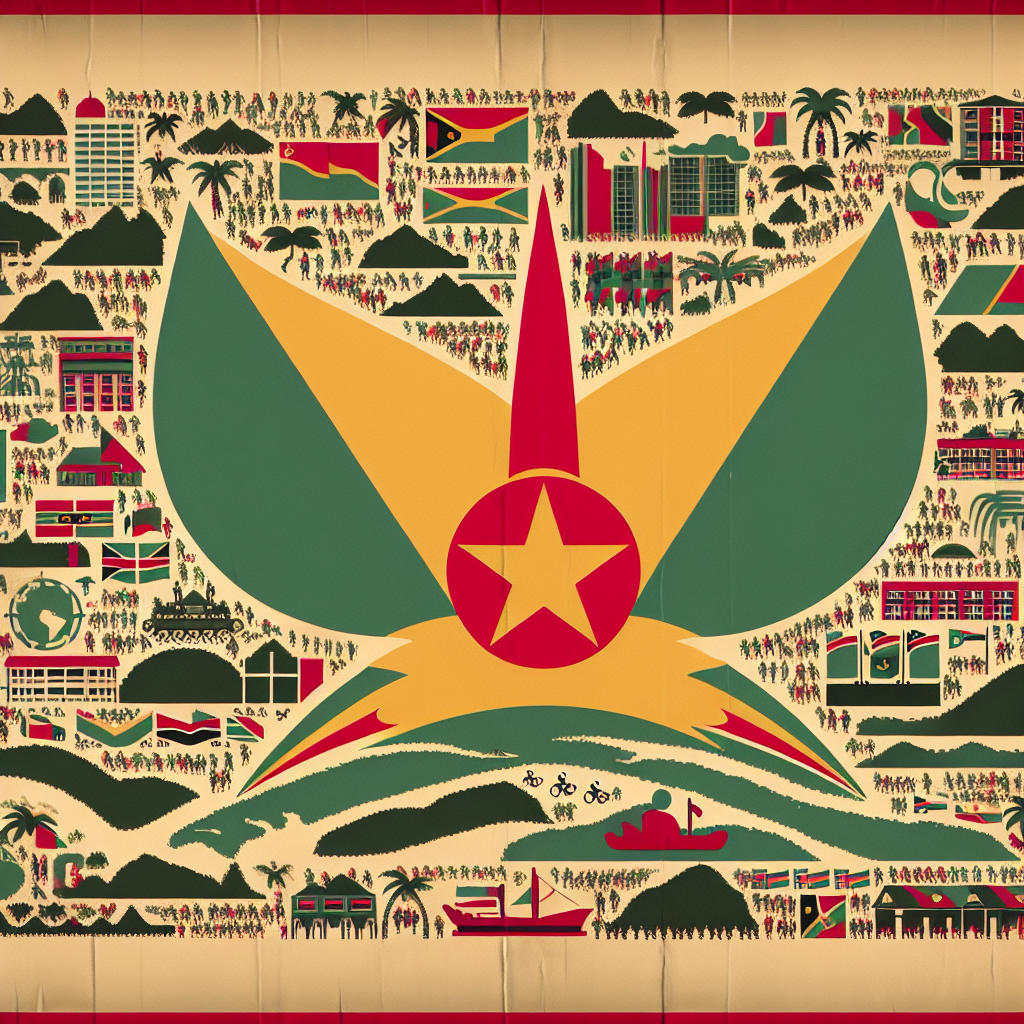

In the vibrant summer of 1999, eyes from across the Americas turned to Winnipeg, Canada, where athletes gathered to compete in the Pan American Games. Nestled among them was Grenada, a small Caribbean nation striving to make its mark on the international stage. This wasn't just a test of athletic prowess—every race, every leap was laced with the dreams and hopes of a country known for its resilience.
The Pan American Games, held every four years, embodies the Olympic spirit in the Western Hemisphere. Countries unite under the banner of sport, embracing both their cultural identities and shared humanity. For Grenada, 1999 was more than participation. It represented a beacon of progress and the relentless pursuit of excellence.
Grenada's delegation was small, yet their aspirations were boundless. The athletes, supported by a community's collective hope, stood shoulder to shoulder with competitors from larger, more resourced nations. The sense of camaraderie and determination was palpable. As headlines often focus on medal counts, the true stories of tenacity are found in the arenas and fields.
Track and field events were where Grenadian athletes hoped to shine. Known for its stunning scenery, Grenada's landscapes inspire endurance and grit — qualities that its sportspeople exhibited fervently. The island's athletes competed fiercely, learning, and growing through each contest. Though not clinching any medals, their participation was an achievement in itself, planting seeds for future successes on the world stage.
Sprinters like Alleyne Francique and Sherry Fletcher carried the torch of Grenada's athletic potential. Francique, a rising star, would later go on to win gold at the World Indoor Championships and represent Grenada in the Olympics. His 1999 appearance laid the groundwork for the island's growing reputation as a breeding ground for sprinting talent.
For small nations like Grenada, international competitions offer more than a chance to showcase athletic skills. They are opportunities to promote cultural heritage and foster national pride. Every stride taken, every goal pursued contributes invisibly yet powerfully to the spirit of the nation. Despite economic challenges and limited resources, these athletes encapsulate the tenacity of their people.
While some critics might argue that investing heavily in sports for such small delegations might not yield instant or tangible results, the stories of growth and resilience offer a counter-narrative. They remind us that sports hold transformative power, often acting as a catalyst for social cohesion and international recognition. Each athlete becomes a symbol of possibility for youth across the nation, inspiring future generations to stride towards a legacy of athletic achievement.
The Pan American Games of 1999 were not just about the races run or the distances jumped—they were about a tiny nation refusing to be marginalized. Grenada’s bold presence highlighted a community that, despite its size, communicated dreams as vast as the ocean. This serves as a reminder that achievements on any field always reflect larger, deeply rooted communal truths.
Empathy allows us to appreciate the sheer determination required by small nations to compete in high-stakes environments. While larger countries may be able to dispatch armadas of athletes with cutting-edge support, it's essential not to dismiss or patronize those who may not stand on the victors' podium. Every athlete, from powerhouse to underdog, writes into the shared history of human persistence and unity.
Imagine the energy of a Grenadian village, gathered around their radios or televisions, hanging onto every event, feeling each victory or loss as a personal triumph or setback. The shared emotion serves to unite the population in ways far beyond any political or societal discourse.
The broader symbolism of participation in such games underscores the fact that visibility is empowering. By stepping onto the playing field, Grenadian athletes presented an image of their nation without boundaries or constraints, showing ways to navigate the world's challenges with dignity.
Through the lens of the 1999 Pan American Games, we witness a snapshot of Grenada's past, its present hopes, and its future ambitions. This reminds us how, often, in the athletic journeys of the world's modest countries, we find the true essence of sport: courage, hope, and humanity.