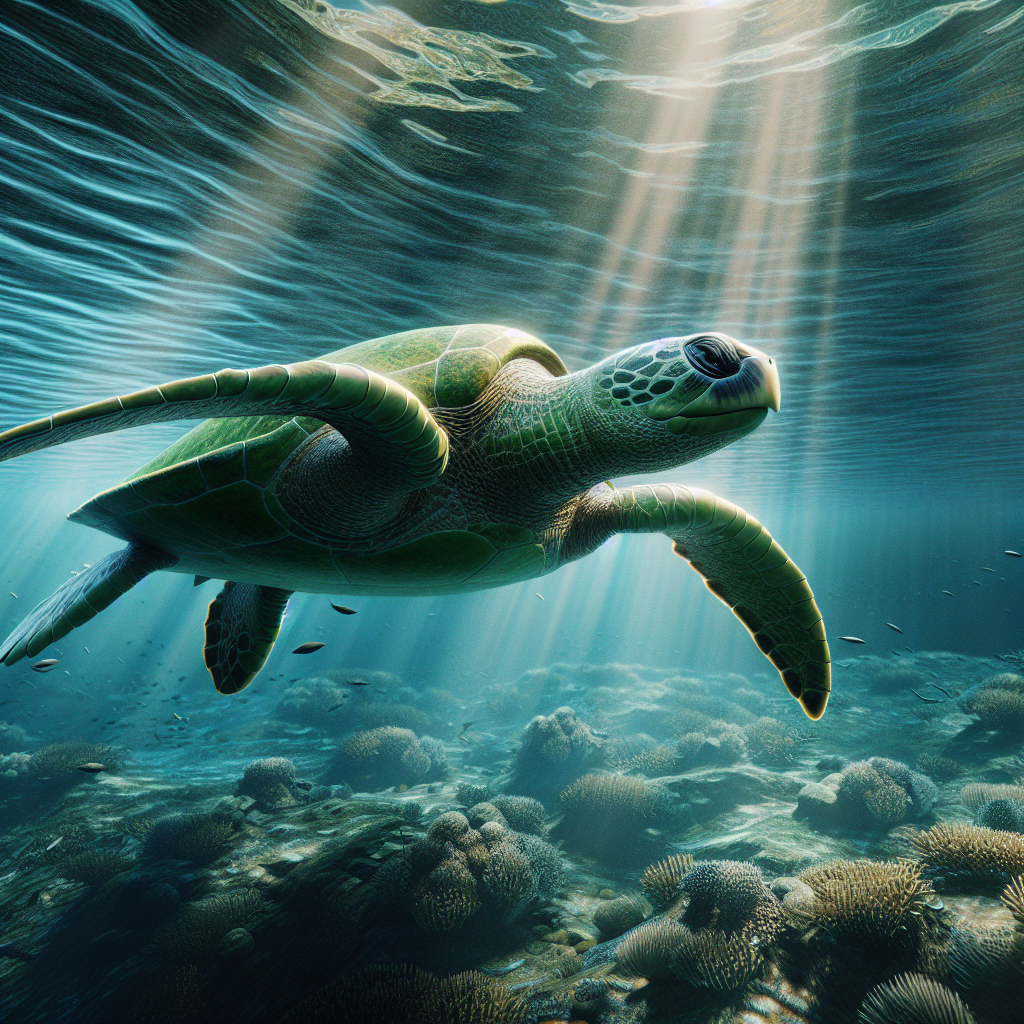

Imagine a creature with flippers as its dance partners and the ocean as its ballroom. The green sea turtle, with its distinctively colored shell and gentle giant reputation, has roamed the sea for over 110 million years, largely untouched by the rapid changes on land. This ancient mariner, belonging to the family Cheloniidae, represents a compelling chapter in our planet's natural history. The name 'green sea turtle' misleadingly refers to the coloration of their body fat rather than their exterior shell. These turtles are usually found along the coastlines of more than 140 countries, especially in tropical and subtropical waters, making them a truly global citizen.
While awe-inspiring, green sea turtles are now facing myriad threats primarily due to human activities. Their numbers have dwindled, resulting in their classification as an endangered species. This brings into question the impact of fishing practices, coastal development, and pollution, highlighting a larger conversation about humanity's relationship with our natural world. Yet, there's hope for these creatures, anchored in global conservation efforts.
During their lifetime, green sea turtles undertake long migrations between feeding grounds and nesting sites. Female turtles, impressive in their determination, return to the very beach where they were born to lay their eggs. This phenomenon, known as natal homing, remains one of nature’s enigmas, showcasing the turtles' innate navigational skills. The nesting process itself demands energy and precision, as these mothers carve out nests in the sand, painstakingly depositing around 100 eggs per nesting season. Sadly, only a small fraction of these hatchlings survive to adulthood due to natural predators and environmental hazards.
For a moment, let's consider the resilience required for a hatchling to reach adulthood. After emerging from the sand, these pint-sized adventurers face a perilous journey to the sea. Bright city lights, which often lure them away from the ocean, embody just one of the many challenges. Efforts to dim coastal lighting along nesting beaches are part of broader initiatives to increase hatchling survival rates. It's a delicate balancing act between development and preservation.
One cannot discuss green sea turtles without addressing the opposing views on conservation. Those benefiting economically from practices detrimental to turtle populations often resist change. Fishing practices, notorious for bycatch, unintentionally capture turtles, leading to their injury or death. Implementing turtle-friendly fishing gear has been a milestone, albeit met with resistance due to cost concerns. On the flip side, increased tourism tied to turtle conservation programs has driven economic growth in some regions, offering a compelling argument for sustainable development.
The threats to green sea turtles extend beyond industrial fishing. Rising sea levels, another consequence of climate change, threaten nesting beaches. These turtles also grapple with marine pollution, particularly plastic debris, mistaken by turtles for jellyfish—a staple in their diet. Consuming plastic can lead to intestinal blockages, often fatal to these creatures. Participating in beach clean-ups or reducing personal plastic use can directly impact their survival.
Appreciation for the green sea turtle is not solely about their role in tourism or ecosystem balance. They play a critical role in marine environments, particularly in maintaining healthy seagrass beds. By grazing, green sea turtles enhance seagrass growth, contributing to the shelter and food sources of numerous marine species. This symbiotic relationship underscores the intricacies of ocean ecosystems, where every organism plays a part.
Engaging younger generations in conservation has proven vital for the future of green sea turtles. Educational programs focused on local schoolchildren emphasize the importance of sea turtles and the broader marine environment. By igniting a passion in young people, we foster a future where humans coexist harmoniously with wildlife.
The conversation about green sea turtles invites us to explore the intersection between anthropogenic actions and wildlife prosperity, urging us to ponder our role within the natural world. As we face the realities of climate change and biodiversity loss, the story of the green sea turtle serves as a compelling reminder of both the fragility and resilience of life in our oceans. Let's embrace the challenge to protect these venerable navigators, ensuring they continue to grace our seas for generations to come.