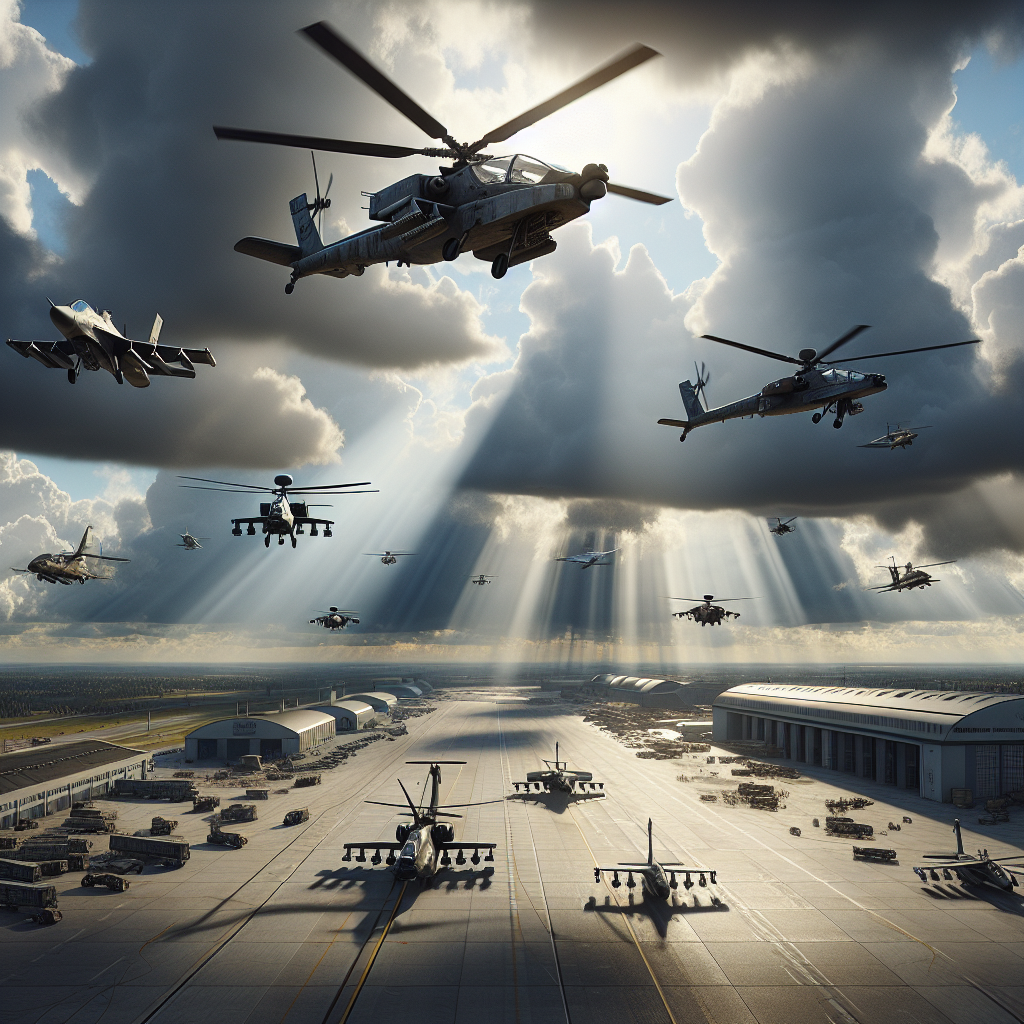

What if I told you that high above the forests and cities of Germany, a dedicated group of aviators are flying missions that keep both soldiers and civilians safe? These aren’t superheroes; they’re part of the German Army Aviation Corps, known locally as “Heeresfliegertruppe.” This unit is a pivotal element of the Bundeswehr, Germany's unified armed forces, first taking flight in 1957 and soaring above to meet modern needs with courage and precision.
The German Army Aviation Corps plays a critical role in responding to both combat and non-combat operations across Germany and beyond. These skilled pilots lead missions that range from reconnaissance and aerial transport to supporting ground troops and aiding in humanitarian efforts. They’re the glue that keeps many operations running smoothly, equipped with helicopters like the UH Tiger and NH90, along with training that ensures they can handle a vast array of challenging scenarios.
While most of us might think of big, multimillion-dollar jets when we hear about military aviation, the German Army Aviation Corps tends to operate more under the radar—pun intended. Their helicopters, which are an integral part of their fleet, are often more versatile for tasks that require close contact, mobility, and precision, such as troop deployment and medivac operations. This versatility makes them invaluable, and their ability to adapt to changing environments highlights the agility of Germany’s military strategy.
The effectiveness of the German Army Aviation Corps has been tested in numerous international missions. For instance, their involvement in Afghanistan showed how critical aerial support is, not just in battle zones but also in building and maintaining peace. Beyond the military focus, they’re often involved in disaster relief, such as during floods or fires, where speed and accessibility can mean the difference between chaos and community survival.
There are critics who argue that military spending could be better allocated to other sectors like healthcare or education, especially in peace times. This is a valid point and one that generates a lot of discussions and often heated debates about national priorities. The cost of maintaining and upgrading aircraft technology is significant, and in times of budget cuts and financial scrutiny, it can be a tough sell.
But for those within the aviation corps, the commitment to duty often transcends budget lines. Understanding their perspectives is key. For them, security and readiness offer a sense of stability that enables all other societal functions to thrive. They see it as an essential piece of Germany’s commitment not just to its own citizens, but also in playing an active role in international peacekeeping.
Moreover, the evolution of technology within army aviation isn’t just about keeping up with the Joneses. It’s about staying relevant in an ever-evolving global landscape where threats can emerge unpredictably, and response times are critical. Innovation in this field often spins off into civilian applications, contributing to broader technological advancement.
For Generation Z, who are well-versed in global citizenship and conscious of the balance between security needs and ethical considerations, the German Army Aviation Corps presents both a historical and contemporary case study. It offers a lens into how military capabilities reflect and contribute to national identity, diplomacy, and crisis management.
Whether or not one agrees with the expenditure or the principles behind militarization, the efforts of those in the aviation corps put human ingenuity and teamwork front and center. Their work is a testament to how strategic capabilities and compassion can become intertwined. Flying isn't just about navigating the clouds; it’s about supporting those on the ground, often when they need it the most.