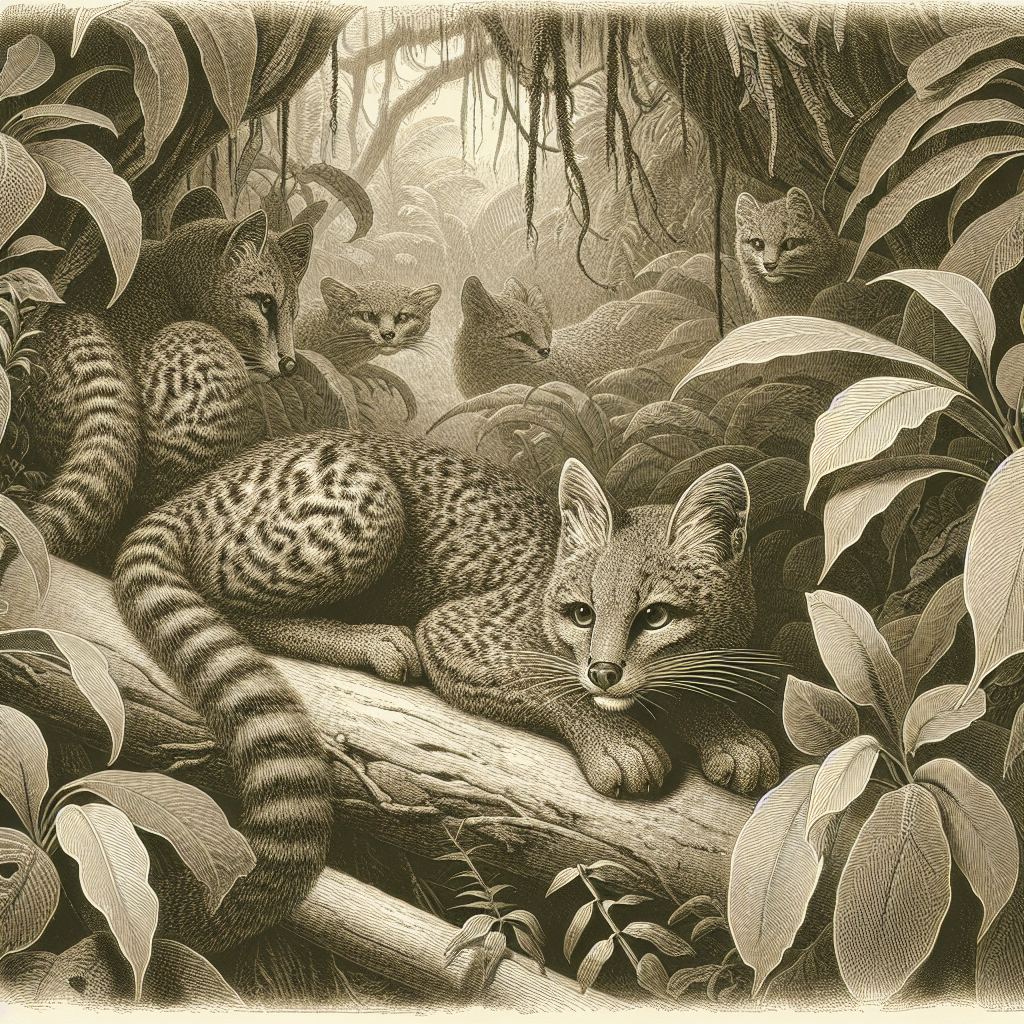

Ever wondered what would happen if a cat and a mongoose had a meeting and decided to spruce up their disguise game? Meet the Genettinae, a fascinating subfamily of small carnivorous mammals in the family Viverridae that tick all the boxes of mystery and grace in the animal kingdom. The Genettinae, often referred to as genets, can be traced back to the intriguing ecosystems across Africa and parts of Europe. With their sleek fur, agile physiques, and sharp hunting skills, they have captivated both the imaginations of researchers and the hearts of animal lovers across continents.
Genets mostly make clean escapes into the shadows of the night, which is fitting as they are creatures of twilight and darkness, favoring the dusk and dawn for hunting and exploration. This solitary way of life has allowed them to perfect their ninja-like existence. Imagine having the ability to walk as quietly and gracefully as a forest sprite while navigating densely busy woods, delicate undergrowth, or even the rooftops of human habitats when the invite to a city soirée is tough to refuse.
But let’s get into the details without throwing any spin at you like a medieval jester. Genets are known for their elongated, slender bodies reminiscent of a band of look-alike fashionistas ready to walk the wild carpet. This physique, coupled with retractable claws like a cat, helps them move swiftly and grip branches effortlessly, although this peculiar trait is increasingly rare in the mammalian world. Sporting spotted coats and ringed tails, they remind us of small leopards, a nod to nature’s own way of brand marketing.
These creatures have evolved in wickedly diverse habitats. From the lush rainforests to the dry bush veld, deserts, and savannas, genets have carved out niches reminding us of life’s adaptability in the face of diversity. Their adaptability does end here. Genets are occasional guests in rural and urban areas, quietly claiming their space among unaware humans, navigating human development with cunning agility. This shift undoubtedly puts them at what some might consider the frontline of the animal modernization revolution, with impacts both charming and concerning.
Genets are opportunistic feeders, a fancy way of saying they don't mind what’s on the menu as long as it meets certain dietary checkboxes. From insects to small mammals, birds, fruits, and even reptiles—they balance their diet with variety as if they’re gunning for a nutritional high score. However, with habitats being disturbed due to human expansion and climate change, this variety might one day fade, making their survival less secure than that of other nocturnal sidekicks.
Some locals where genets reside have historically viewed them with suspicion for preying on chickens, likening them to tiny burglars—misunderstood meetings of the wild and domestic realms. It’s a narrative common to the complex relationship between wildlife and rural development. Genets, if you ask them, might just be expressing an ancient tradition of survival, using whatever evolution has equipped them with—not much different than a city fox dumpster diving under the neon glow. Yet, with conservation efforts and increasing awareness about their ecological roles, attitudes are slowly changing. More people are beginning to see the importance of coexistence, challenging the stereotype of genets as mere thieves to acknowledge their role in controlling pest populations and supporting biodiversity.
Many fascinating aspects still lurk in the genets' DNA, enticing biologists and wildlife enthusiasts alike to continue exploration and data collection. Understanding their behavior can provide insights into the broader ecosystems they inhabit. Conversely, the ethical considerations of how humans develop land and resources intersect with these animals' lives, encouraging greener and more inclusive discussions on making a livable planet.
Gen Z, raised in the digital age, are exquisitely placed to harness videography and photography to foster appreciation and empathy for such secretive animals. With instant social media feeds and online conservation communities, snippets of genet antics can cross borders, raising both awareness and interest on a global scale. This connectivity offers a powerful tool for advocacy, to stand up for these little-known creatures and support efforts aimed at biodiversity conservation.
Environmental changes have already posed steadfast challenges to genets. Still, it’s their inherent adaptability and resilience that gives them—and us—hope. With shared effort, not only is there potential to preserve their habitat, but to preserve a richness that makes our planet unique. The Genettinae, despite being stealthy and elusive, unlock conversations about conservation, cohabitation, and caregiving amidst the wildlife-human exchange of modern times.