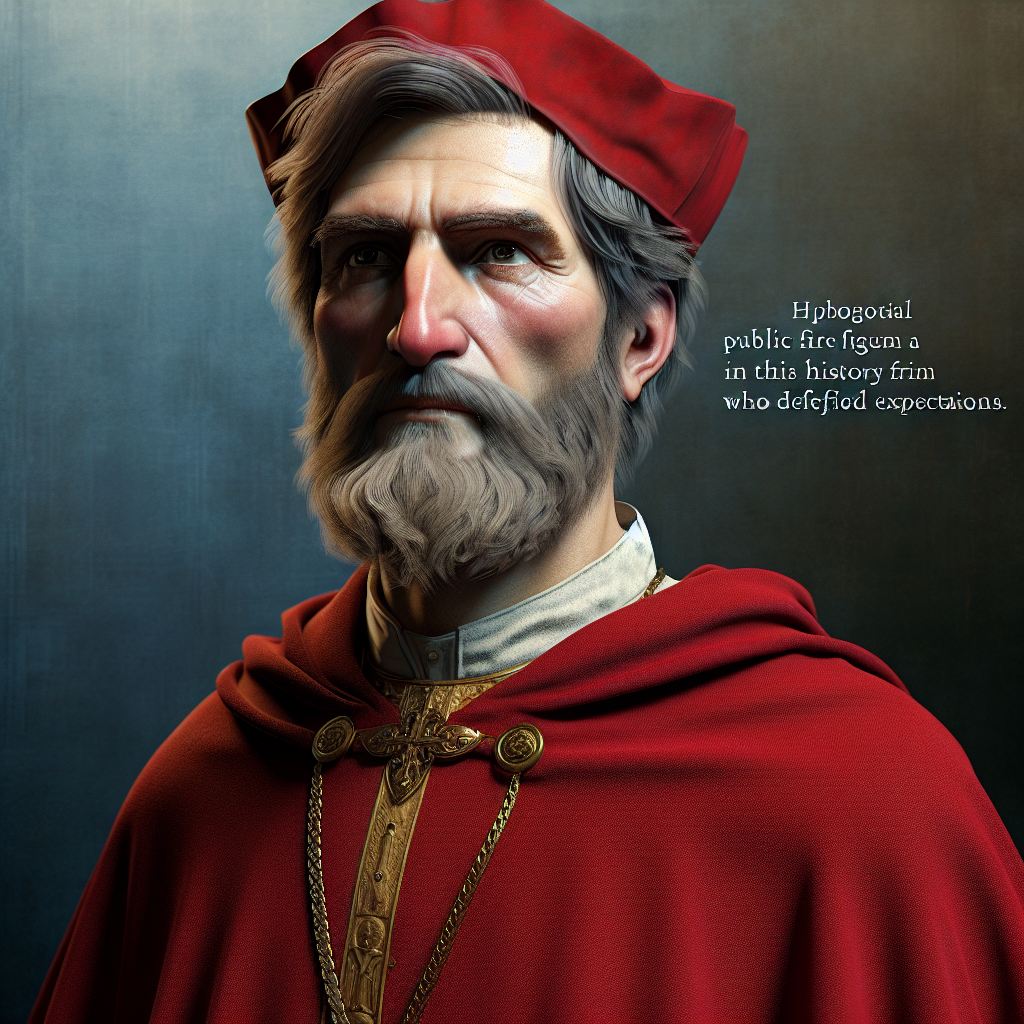

Picture a time when the threads of power and spirituality were more intertwined than ever, yielding a world where the aspirations of a single individual could ripple through the European continent. Enter Gaspar Cervantes de Gaeta—an enigmatic figure, a man of the cloth, who navigated the political and religious complexities of 16th-century Europe with a subtle diplomacy that has been both admired and critiqued. Born in the bustling city of Trujillo, Spain, in 1511, Cervantes de Gaeta's path led him from humble beginnings to becoming the Archbishop of Tarragona, in Catalonia, a role he served until his death in 1575.
Raised during the Reformation, a period that was nothing short of incendiary in terms of ideological conflicts and upheavals, Cervantes de Gaeta's ecclesiastical career can be seen as both a product and a response to the monumental shifts happening around him. At a time when the Catholic Church was entrenched in defending its doctrines against an onslaught of Protestant reforms, he rose through the ranks by demonstrating an acute political acumen coupled with spiritual dedication. However, his ascent was not just due to personal ambition; it was also a reflection of the intricate dance between religion and politics that characterized Europe at the time.
Much like any period of transformation, the 16th century offered opportunities for individuals like Cervantes de Gaeta to leave a mark on history. The Catholic Church itself was fighting an internal battle to maintain its dominion amidst waves of dissenting voices. The Council of Trent, which occurred from 1545 to 1563, was a critical juncture in this struggle, aiming to reaffirm core doctrines while addressing the clergy's need for reform. Here, Cervantes de Gaeta played a role not just as a passive observer but as an active participant, contributing to discussions that had far-reaching effects on Catholic doctrine. His influence during these proceedings illustrates his unique mix of religious conviction and diplomatic skill.
However, not every move formed a straight line of religious righteousness. Cervantes de Gaeta's career, like many during such tumultuous times, was also marked by political machinations and alliances that sometimes required ethical gymnastics. On one hand, his supporters saw his diplomacy as necessary pragmatism to protect the Church and its congregants. On the other, critics could argue that at times his politics leaned more towards opportunism than idealism, a dance that's common in history's complex tales.
Cervantes de Gaeta didn't just preach; he engaged with various communities, understanding their issues while promoting the Church's message. His life was, in many ways, a balancing act of maintaining unity within the Catholic ranks and managing divergent factions. Often dealing with tensions between Spanish and Catalan clergy, his role as Archbishop of Tarragona was no walk in the park. His mediation efforts in Tarragona highlight not just his dedication to the Church but his commitment to regional harmony—a challenge still relevant in today's Europe, echoing the debate over autonomy versus centralized power.
Though his name isn't in the mainstream parlance, his story resonates because it's inherently about bridging divides. He is recalled for being a beacon during storms that threatened to fully divide not just the clergy but also communities. Yet, it’s crucial to remember that Gaspar Cervantes de Gaeta was human, open to criticism for perhaps prioritizing stability over the profound change sought by reformists. This dichotomy sheds light on the age-old struggle between maintaining traditions and embracing the new, an issue very much alive in modern societies as we negotiate identities, philosophies, and religious practices.
It's likely that if he were alive today, his heart would be caught in the same throes of debate that young generations face: between innovation and tradition, progress, and preservation. In an age where the intersection of identity and religion becomes even more complex, understanding figures like Cervantes de Gaeta offers a historical perspective on the choices and dilemmas that come with navigating power dynamics, religious faith, and social progress.
In reflecting on Gaspar Cervantes de Gaeta’s unique journey, we learn not just about his deeds within the Church but also glimpse into an era that has shaped many facets of our contemporary world. His narrative, one of navigating turbulence through faith, diplomacy, and, yes, a bit of political maneuvering, is indicative of a time very much like ours—a world in flux, where understanding our past offers guidance for an uncertain present.