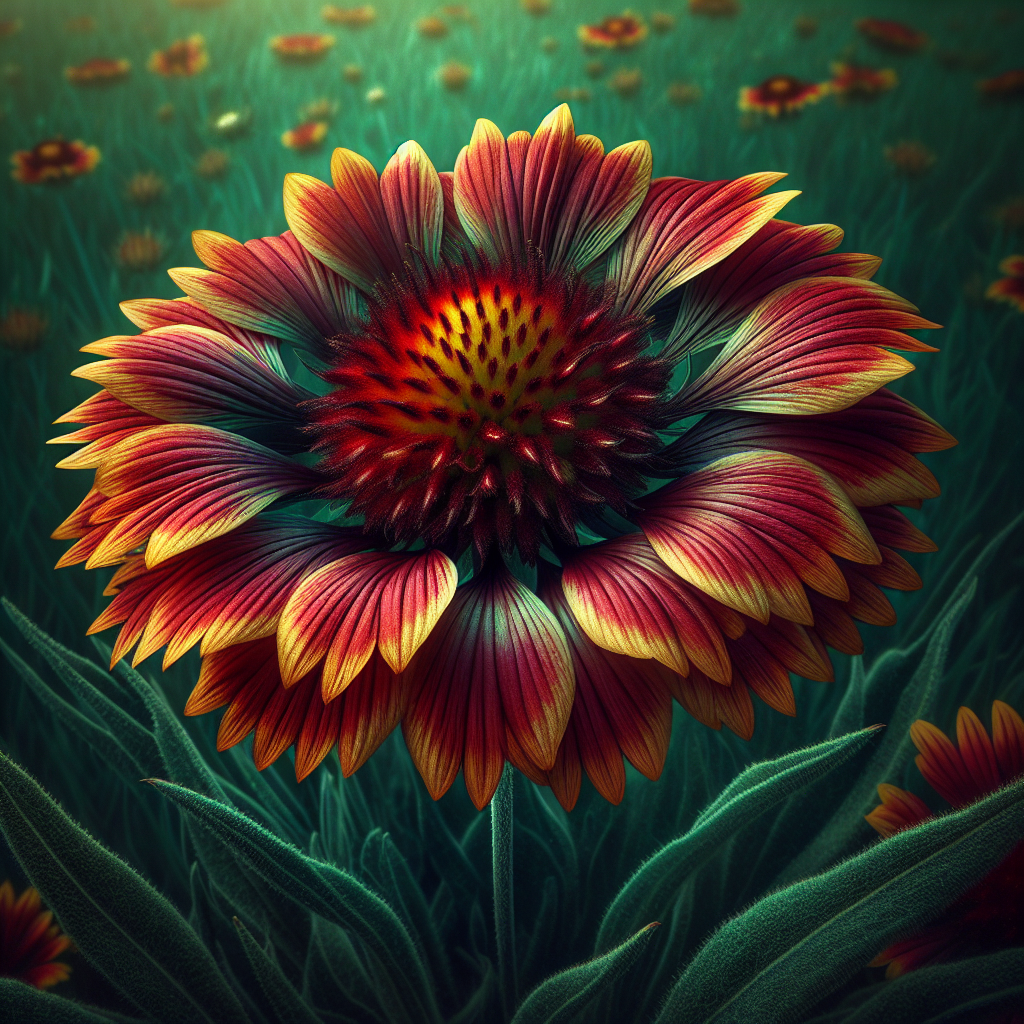

If plants had high school yearbooks, Gaillardia pulchella would be voted most likely to stand out at a summer music festival. This little wildflower, also called the Indian Blanket, attracts attention not just because of its vibrant, fiery colors, but for its resilience. Native to the pristine landscapes of the United States and Mexico, Gaillardia pulchella often blooms against all odds, making fields and prairies its stage from early spring to late autumn.
Gaillardia pulchella is a testament to nature’s flair for making things both tough and beautiful. Picture this: petals painted in warm shades of red, orange, and yellow, resembling a flickering flame, all thriving even in poor soil conditions. This annual plant, living just one year, doesn't let harsh environments stop it from putting on a show. It embodies a message that perseverance is the mother of beauty.
The contrast between its delicate appearance and rugged tenacity is what captivates many enthusiasts. In spite of intense sun, dry spells, and nutrient-poor soils, this flower lives life to the fullest. Gaillardia pulchella offers more than just a lesson in thriving; it also plays an important role in supporting local wildlife. Pollinators like bees and butterflies share a special relationship with this wildflower. They depend on its nectar and, in turn, help in dispersing more plants across the land.
In urban gardening and landscaping, Gaillardia pulchella finds its niche too. Its natural beauty doesn’t just belong in sprawling prairies; it adjusts well to the front yards of homes, lining walkways with its vivid hues. For a generation that values sustainability and low-maintenance solutions, this plant resonates well. With fewer water and soil requirements, it fits perfectly into eco-friendly gardening trends. It aligns with a sustainable ethos, advocating that we share our spaces harmoniously with native plants and insects.
Nevertheless, with every story of triumph, there's a counterpart reflecting a different angle. While many hail Gaillardia pulchella for its undeniable beauty and hardiness, some see it differently. The term ‘weed’ gets thrown around as it sometimes proclaims itself in places not invited. When gardeners devote time and love to manicured lawns and curated flowerbeds, an unexpected guest like this wildflower might seem a bit cheeky, forcing them to reconsider the aesthetics.
This paradox that beauty could be seen as a nuisance underscores the subjective nature of how we tone our environments. It taps into a wider discussion about the values we place on certain aesthetics and natural qualities. Gaillardia pulchella, despite receiving flack from some, continues to charm many into rethinking these ideals. There’s something profoundly humbling about seeing a wildflower persistently pushing through concrete cracks, saying ‘I belong here, even if you think I don’t.’
Gaillardia pulchella’s persistence is echoed in modern society. It mirrors social issues where individuals navigate spaces where they aren’t traditionally welcomed or recognized. This lively wildflower reminds us that natural beauty isn’t confined to symmetry or specific shades — it lies in authenticity and adaptability.
As the world becomes more conscious of preserving nature, there's a stronger movement toward going back to native plants. Cities implement green initiatives that look to species like Gaillardia pulchella for answers. The shift is towards landscapes that are as meaningful as they are beautiful. This wildflower argues that monocultures, while neat and organized, lack the complexity and benefits of diverse ecosystems.
Even if not directly impactful by itself, Gaillardia pulchella is both a witness and a participant in these quiet revolutions. For Gen Z nurtured in a world of looming climate concerns, this flower is more than just eye-candy—it’s a small warrior in the battle for environmental justice. It supports biodiversity, sustains local wildlife, and calls us to pay attention to the languages of our lands.
Engaging with Gaillardia pulchella is letting the land speak its native tongue. It invites us to admire not only curated landscapes but to trust in nature’s knack for balance and beauty without micromanagement. Next time you stumble upon its fiery blooms, see it less as a wild rebellion, and more as a call to recognize the worth in what naturally endures. Take a moment to appreciate the tenacity and elegance of a flower whose life story teaches us that sometimes, standing out is just as important as fitting in.