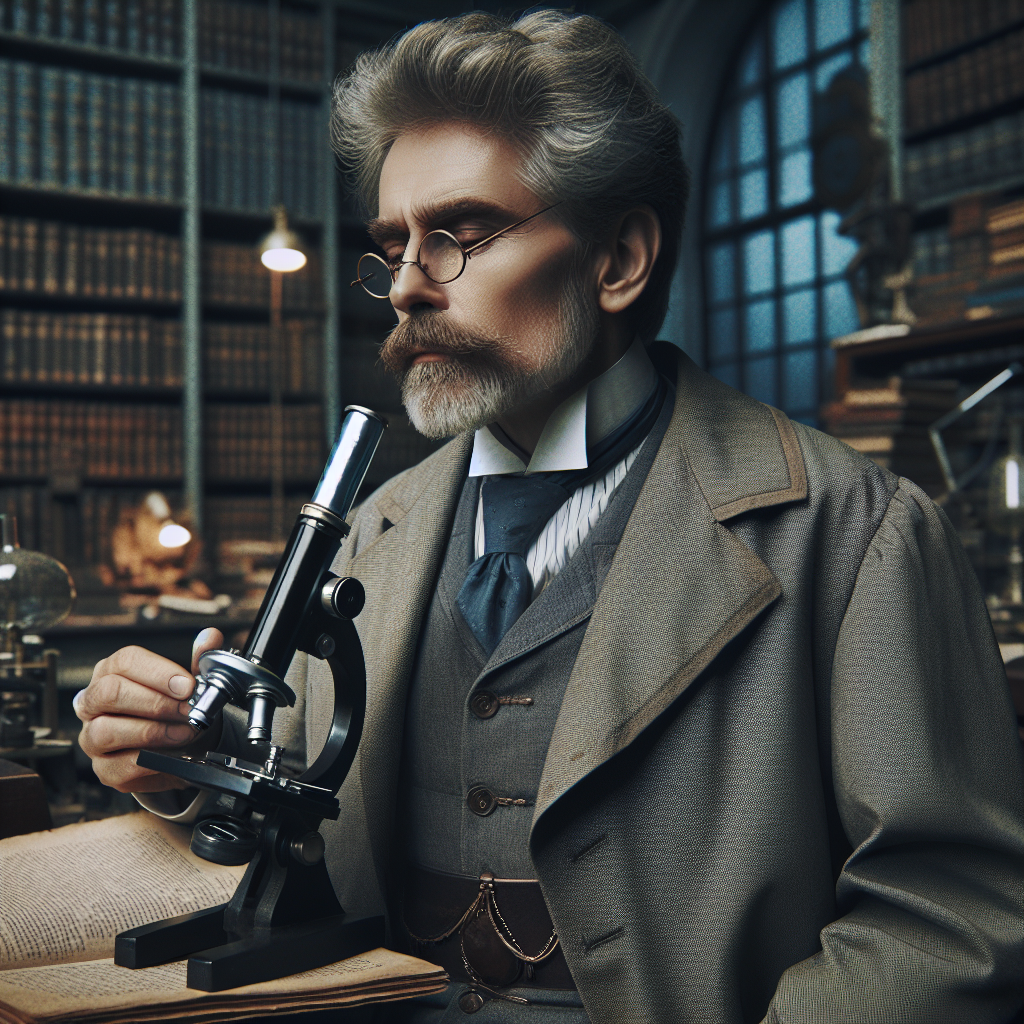

The tale of Franz Ferdinand Schulze might not be popping up on your Instagram feed, but that doesn't make it any less captivating. Franz Ferdinand Schulze, a little-known figure in historical narratives, was a German physiologist whose work in the 19th century laid a foundation for modern science. Born in 1815 in Naumburg, Germany, Schulze was a thinker ahead of his time. He pushed boundaries by advocating for scientific exploration in an era when such pursuits were often seen as suspect or redundant.
Schulze's claim to fame was his work on fermentation and microorganisms. While today, discussions around fermentation might lead you to sourdough starters and kombucha, Schulze's era approached it with more caution. Scientific minds back then were divided. Some believed that fermentation was merely a chemical process, while others – those whom we'd call the OG microbiologists – thought living organisms like yeast were responsible. Schulze's meticulous experiments hinted at the latter, pushing forward a concept that would define microbiology: life begets life, microorganisms included.
In an intriguing series of experiments, Schulze used a solution devised from special ingredients to keep out bacteria and any other unwanted guests. He demonstrated that when air was bubbled through such a solution, no life was generated unless airborne microorganisms were introduced. This idea was crucial for the development of our understanding of sterilization and aseptic techniques, cornerstones for medical practices and food preservation today.
But not everyone was a fan. While Schulze's findings were groundbreaking, they also sparked a heated debate within the scientific community. The idea that invisible organisms could impact physical processes wasn't universally embraced. It was like suggesting today that your Wi-Fi signal might have a mind of its own. This opposition deeply influenced scientific exploration and development, forming an unexpected alliance between skeptics and radical thinkers whose fascinating clashes have echoed over centuries.
Schulze's contributions coincided with a period of intense change and upheaval. As Europe was swept by industrialization, new discoveries in science had societal impacts we still grapple with today, ranging from medical advancements to ecological consequences. This begs the timeless question: how do we balance innovation with responsibility?
In many ways, people like Schulze embody the essence of scientific inquiry—curiosity driven by a desire to understand the natural world. This is a narrative Gen Z can certainly plug into. With climate change, AI ethics, and unprecedented advancements in biotechnology at the forefront of our collective concerns, the discourse around the implications of scientific progress is all too relevant. Schulze reminds us that the pursuit of knowledge should always be accompanied by thoughtful deliberation over its potential impacts.
The tale of Franz Ferdinand Schulze is a reminder of how seemingly small discoveries carry enormous implications over time. At a glance, Schulze's work feels distant, wrapped in a historical context far removed from our viral TikTok dances and daily vlogs. Yet, his legacy—of curiosity, challenge, resistance, and ultimately, progress—resonates across the centuries. His work exemplifies the pioneering spirit of relentless questioning and exploration, a spirit still alive today.
While modern-day scientists have the luxury of advanced technology and globalized networks to assist in their endeavors, they're also faced with complex ethical landscapes not unlike those Schulze encountered. The journey from skepticism to acceptance in Schulze’s time mirrors current debates in gene editing and artificial intelligence. Thus, looking back at history, we find lessons and warnings about unquestioning faith in technological progress. Schulze's life and accomplishments demonstrate that innovation should go hand in hand with mindful evaluation.
Franz Ferdinand Schulze's story, while anchored in his unique scientific pursuits, explores the broader themes still relevant in our world. It reminds us that in the quest for understanding, history should enlighten us, especially when traversing new frontiers. He challenges us to keep questioning, standing as a lesser-known yet vital figure bridging the realms of science past and future.