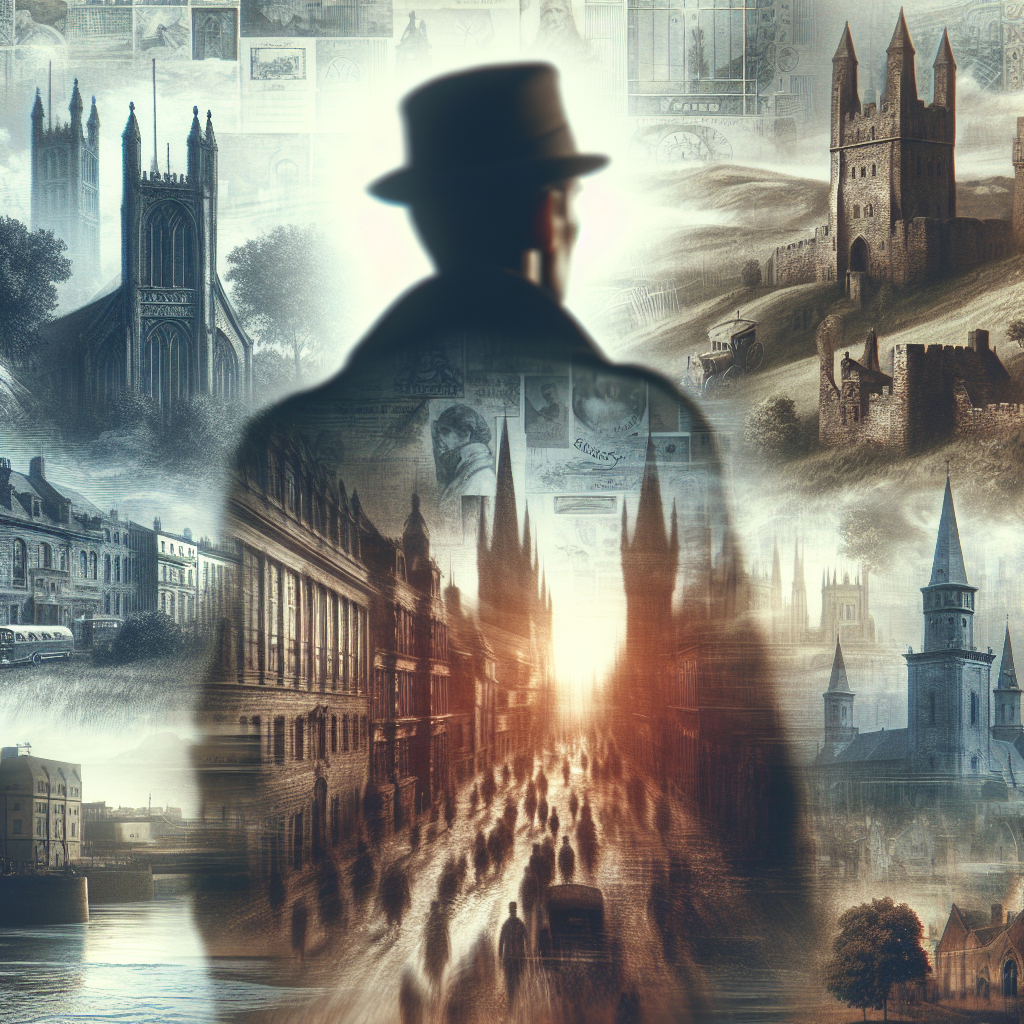

In the world of political discourse, the term "Forgotten Man" often floats around like an elusive ghost, evoking images of neglected figures in society's grand narrative. Originally coined by economist William Graham Sumner in the late 19th century, the "Forgotten Man" was meant to describe those burdened by policies designed to help others. It's a concept that has been repeatedly revived, reinterpreted, and adapted to various political contexts, from Franklin D. Roosevelt's 1930s America to Donald Trump's rallies in 2016. But how is it relevant today?
Sumner's initial idea of the "Forgotten Man" focused on the average, working person who quietly bears the cost of government interventions aimed at providing support elsewhere. This person wasn't the direct recipient of aid but rather the taxpayer funding it. Over time, however, the term has broadened. During the Great Depression, FDR used it as a rallying cry for policies aimed at uplifting those hit hardest by economic hardship. More recently, it resurfaced in the United States as a representation of disenfranchised voters who felt sidelined by globalization and economic shifts.
Today, the "Forgotten Man" could represent any group feeling marginalized by fast-paced changes. He or she might be found in the communities affected by industrial decline, young people burdened by student debt, or even digital workers facing unstable gig economies. The sense of being overlooked often transcends political lines, resonating with both blue-collar workers devastated by manufacturing job losses and millennials striving for stability in an unpredictable economy.
While traditionally seen through an economic lens, the "Forgotten Man" has cultural implications, too. Consider those who feel left behind by social progress yet unable to bridge to contemporary movements due to systemic barriers. They are skeptics of both change and status quo, not necessarily resistant to progress but wary of policies that appear to overlook their specific needs and struggles. Here lies the paradox, as empathy for their predicament doesn't always translate into consensus on solutions.
From a politically liberal standpoint, engaging with the "Forgotten Man" concept means recognizing the layered intersections of economics, culture, and identity politics. Policy-making should aim to bridge these gaps, balancing support for vulnerable groups without ignoring the broader socio-economic dynamics that affect them all. Liberals could advocate for holistic, inclusive policies that address root inequality while also considering the psychological underpinnings for change-resistant attitudes.
Opposing viewpoints often emphasize fiscal conservatism, arguing that extensive government intervention only exacerbates dependence and inefficiency. While there is merit in advocating for personal responsibility, the potential blind spot lies in underestimating systemic factors. Structural inequalities, such as access to quality education and healthcare, must be addressed before equitable personal responsibility can genuinely thrive.
To dismiss the "Forgotten Man" phenomenon as merely a political tactic is to overlook its genuine implications. Often, it is a bellwether for rising undercurrents of social unrest and dissatisfaction. Ignoring these signals can widen polarizations, making social cohesion more difficult to achieve. Recognizing this, political leaders across the spectrum should strive to craft narratives and solutions with inclusive, cross-sectional appeal.
In crafting policy or grassroots initiatives, dialogues can focus on uniting common aspirations such as security, job opportunities, and affordable quality of life, tackling practicality rather than polarizations. Collaboration is crucial. Any approach depends on humility and openness to the varying lived experiences that individuals, especially the "Forgotten", endure every day.
For Gen Z, inheriting a world poised on this complex juncture, the task is both challenging and invigorating. Their affinity for technology, social justice, and sustainability primes them uniquely to transform history's lessons into meaningful actions. The notion of the "Forgotten Man" thus becomes not just a historical footnote but a chance to redefine what inclusivity and progress look like in the 21st century. Harnessing digital platforms and grassroots movements to amplify marginal voices could indeed turn today's "Forgotten" into tomorrow's change-makers. The world they shape could be more interconnected and empathetic, but it's going to need all hands on board to fashion it so.