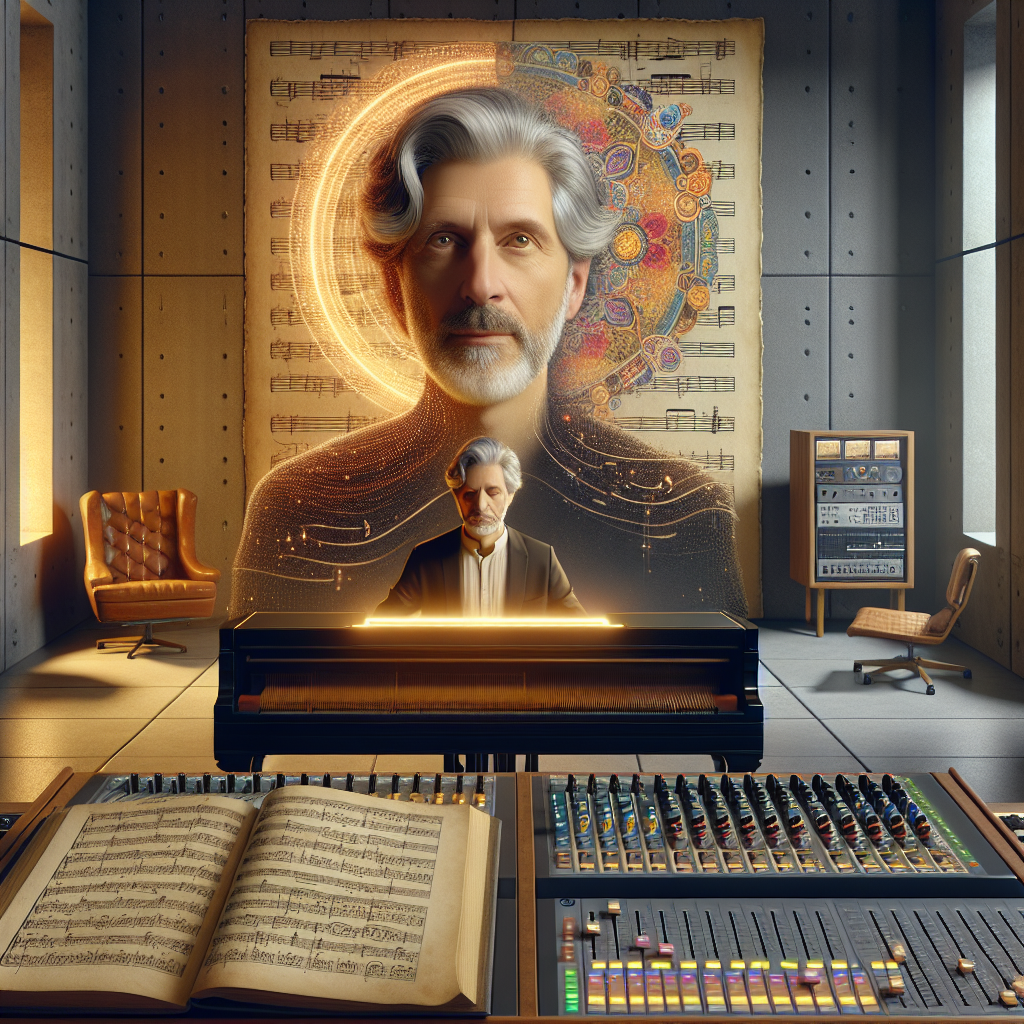

If music is a universal language, then Faraj Garayev speaks it fluently and weaves his narrative with exquisite creativity. Faraj Garayev, an Azerbaijani composer, born on December 19, 1943, in Baku, has created a legacy as dynamic and evocative as the cultural crossroads of his homeland. Baptized in the rich musical tradition of the Soviet era, Garayev's compositions reflect a diverse influence, bearing witness to his exposure to both Eastern melodies and Western modernism.
Though his father, Gara Garayev, was a renowned composer, Faraj carved his own niche by pushing musical and rhythmic boundaries, amalgamating contrapuntal techniques with minimalist ideas. His works have been performed globally, resonating with audiences from Moscow to New York, challenging traditional perceptions of classical music composition. Beyond his compositions, Garayev's role as an educator speaks volumes about his commitment to nurturing the next wave of musicians.
As a prominent figure in the 20th and 21st-century music landscape, Garayev’s works illustrate more than mere notes and scales; they are a narrative of his surroundings, echoing the societal changes unfolding around him. His compositions illustrate his engagement with social and political themes, cleverly interwoven with national identity influences that echo motifs from Azerbaijani folklore. Such a blend reflects a soul who is not just passive to his environment but actively interprets and comments upon it through his music.
Some may argue that Garayev's mixture of avant-garde styles with nationalism creates a form of music that is at odds with his environment, particularly in a country traditionally bound by its history. This is where Garayev’s liberal mindset shines through. He demonstrates that music is not static; it evolves. It can and should embrace modernity without forsaking its roots. Critics of his style may assert that such amalgamations dilute cultural purity, yet Garayev’s work presents a compelling argument for cultural harmony through artistic innovation.
The complexity of Garayev’s compositions has not deterred their power to enchant; rather, it has magnified their impact. His pieces often juxtapose serene passages with tumultuous ones, a reflection perhaps of the dialogues between tradition and contemporary in society. His compositions such as his piano piece, "Mugham", highlight his ability to intertwine complex structures with the emotive depth of traditional Azerbaijani music, elevating his works from mere arrangements to cultural narratives.
In today's globalized world, where cultures frequently blend, Garayev’s music stands as a testament to the beauty of multicultural symphonies. Through his works, he evokes questions about identity, belonging, and the future direction of musical heritage in an era of rapid change. While some may view keeping traditional music untouched as a form of preservation, Garayev offers an alternative perspective: innovate the tradition while honoring it.
The legacy of Faraj Garayev is one that transcends notes on a page. His deep-seated commitment to both preserving and renewing the essence of Azerbaijani music serves as an inspiration in an age where cultural monoliths face unprecedented challenges. Garayev has shown that respecting history doesn't mean it cannot be a canvas for new ideas.
For Gen Z, grappling with a world more interconnected than ever, Garayev’s approach towards artistic expression provides an insightful look into blending old with new. It emphasizes the importance of versatility and an open-minded embrace of the myriad cultural influences present in our modern landscape.
Faraj Garayev remains an inspiration for future generations of composers who are eager to break boundaries and redefine what music can represent. His legacy is a rich tapestry threaded with tradition, innovation, and an enduring human spirit that speaks volumes without uttering a single word. To listen to Garayev’s music is to embark on a journey across temporal and cultural dimensions, a testament to his indelible impact on the world of classical music.