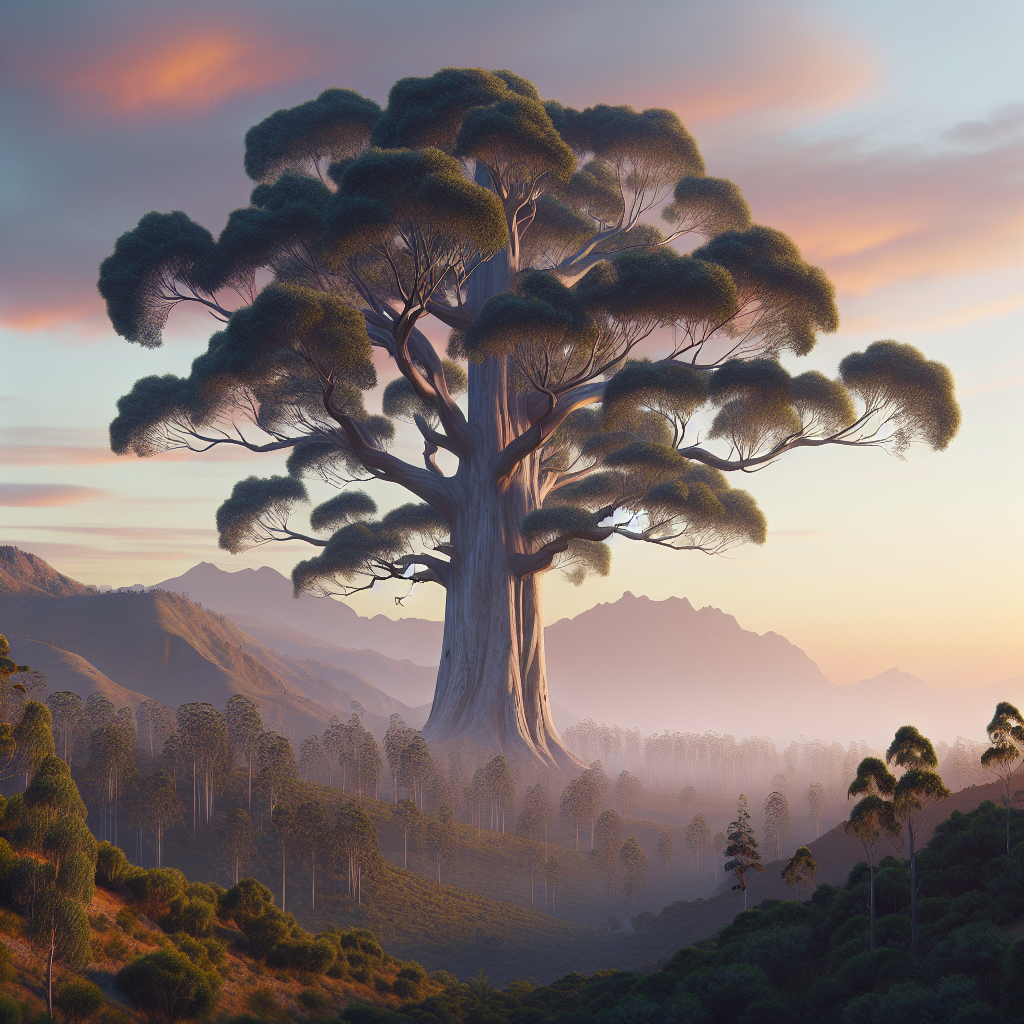

The Majestic Eucalyptus Jacksonii: A Giant Among Trees
Imagine a tree so grand that it towers over its forest companions, reaching heights that make you feel like a tiny ant in its shadow. This is the Eucalyptus jacksonii, commonly known as the Red Tingle tree. Found primarily in the Walpole-Nornalup National Park in Western Australia, this tree is a marvel of nature. It can grow up to 75 meters tall and live for over 400 years. The Red Tingle is not just a tree; it's a testament to the resilience and beauty of the natural world.
The Eucalyptus jacksonii is a species that thrives in the unique climate of southwestern Australia. This region is known for its wet winters and dry summers, which create the perfect conditions for these trees to flourish. The Red Tingle is part of the eucalyptus family, a group of trees that are iconic to Australia. What sets the Eucalyptus jacksonii apart is its massive trunk, which can have a circumference of up to 24 meters. This makes it one of the largest trees in the world by girth.
The Red Tingle's size and age make it an important part of the ecosystem. Its hollow trunk provides a habitat for various animals, including possums and bats. The tree's leaves are a food source for insects and birds, while its bark offers protection and shelter. The Eucalyptus jacksonii plays a crucial role in maintaining the biodiversity of its environment. It is a keystone species, meaning its presence supports the entire ecosystem.
However, the Eucalyptus jacksonii faces threats from human activity and climate change. Logging and land clearing have reduced its natural habitat, while rising temperatures and changing rainfall patterns pose a risk to its survival. Conservation efforts are underway to protect these magnificent trees. The Australian government has designated areas like the Walpole-Nornalup National Park as protected zones to ensure the Red Tingle's future.
Some people argue that economic development should take precedence over conservation. They believe that the land could be used for agriculture or urban expansion, providing jobs and boosting the economy. While these points are valid, it's essential to consider the long-term impact of losing such an iconic species. The Eucalyptus jacksonii is not just a tree; it's a symbol of Australia's natural heritage. Preserving it is crucial for future generations to experience and appreciate.
The Eucalyptus jacksonii also holds cultural significance for the Indigenous Noongar people of southwestern Australia. They have lived in harmony with these trees for thousands of years, using them for shelter, tools, and medicine. The Red Tingle is a part of their cultural identity and spiritual beliefs. Protecting these trees is not just about conservation; it's about respecting and preserving Indigenous culture and history.
The Eucalyptus jacksonii is a reminder of the beauty and complexity of the natural world. It stands as a giant among trees, a symbol of resilience and strength. As we face the challenges of climate change and environmental degradation, the Red Tingle serves as a beacon of hope. It reminds us of the importance of preserving our planet's biodiversity and the need to balance economic development with environmental conservation.
In a world where nature is often taken for granted, the Eucalyptus jacksonii is a testament to the wonders of the natural world. It challenges us to think about our impact on the environment and the legacy we want to leave for future generations. The Red Tingle is more than just a tree; it's a call to action to protect and cherish the natural world around us.