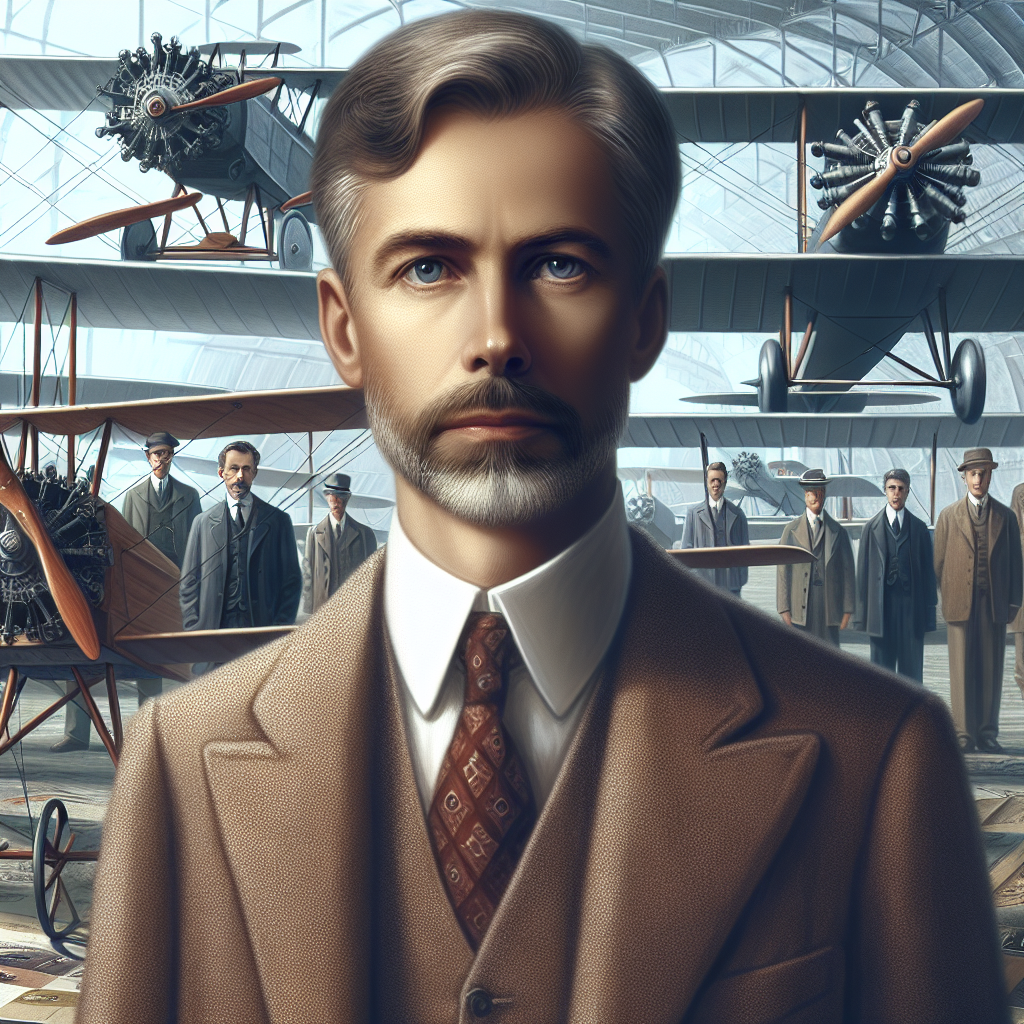

If you've never heard of Edo Fimmen, you're about to discover a character from history straight out of a comic book, fighting for justice in a world torn by inequality. Edo Fimmen, born in 1881 in the Netherlands, played a transformative role in the labor movement throughout the early to mid-20th century. He was a revolutionary who dedicated his life to battling for the rights of workers worldwide. Fimmen's passion for equality took him across continents during the tumultuous years between the two World Wars, striving to unify labor organizations and champion social justice.
Fimmen carried a fierce belief that the power of organized labor could reshape society for the better. His early years in the Netherlands saw him working with the Social Democratic Workers' Party and cut his teeth on the gritty streets of early organized labor. But it was his leap to the international stage with the International Transport Workers' Federation (ITF) that truly marked his impact. Under his leadership, from 1919 to 1942, the ITF became a beacon of hope for dockworkers, seamen, and railway employees worldwide, preaching the gospel of solidarity at a time when nationalist sentiments often drove divisive wedges.
His efforts were nothing short of visionary. Fimmen was not just railing against poor working conditions; he envisioned a transnational labor alliance that would challenge the very pillars of capitalism and imperialism. He understood that oppression wasn't confined to national boundaries. As fascism reared its ugly head in Europe, Fimmen's rhetoric and actions aimed to draw a line in the sand, fiercely opposing an ideological shift that threatened to suppress the collective voice of the common worker.
But what made Fimmen's efforts unique was also what made them intensely challenging. Rallying people under one cause is never easy, particularly when the cause is against entrenched systems of power. There were always two sides to the story. The rise of fascism in Europe, alongside the economic depression of the 1930s, made many wary of lofty ideals. Some argued that Fimmen's internationalism was naïve or overly ambitious in a reality that preferred pragmatic approaches. It was a period where local industries felt the squeeze and governments struggled to maintain stability.
Despite these challenges, Fimmen pushed forward, never swaying from his core beliefs. He penned 'Labour's Alternative', a stirring manifesto arguing for a united labor front that could redirect the course of an embattled world economy. Fimmen was as much a dreamer as he was a fighter, painting a picture of a global workforce that contributed fairly and benefited equitably from the fruits of their labor. Gen Z might liken his vision to a collaborative powerhouse that refuses to be deterred by borders or cultural divides.
The world Fimmen envisioned was one where the common good surpassed individual gain, a notion that resonates today in an age of globalization. Fimmen's foresight into the power of networks and collaboration bears similarities to the human connections reinforcing social movements driven by a connected world. He urged for mutual aid and support among workers of all nations, a concept that surges through today’s economies where global supply chains signify shared destinies.
Yet, opposition to Fimmen wasn’t solely driven by fascism or corporations worried about losing their bottom line. Some within the labor movement itself were hesitant to embrace his broader vision. They fretted over potential loss of control and local priorities being overshadowed. This reflects an ongoing tension within movements advocating for sweeping changes: balancing urgency and vision against on-the-ground realities.
As Fimmen continued to orchestrate his grand design, World War II broke out, shifting global priorities even further. It was a tumultuous time for any idealist to maintain momentum. Yet, even in his last years, Fimmen saw the significance of unity. While he passed away in 1942, his work laid the groundwork for more integrated international labor efforts in later years.
What Fimmen stood for is more than just an historical footnote; it’s a reflection of a continuous struggle for fair labor practices and social justice. For young activists today, Fimmen embodies the potential power wielded by collective action and the importance of international solidarity. His life's work offers a reminder that progress often comes slowly, and the work of one era lays the path for change in the next.
Edo Fimmen may not have reshaped the world in his lifetime, but the courage and ideals he championed continue to inspire and challenge us to think deeply about the kind of world we want to build. His lessons on solidarity and justice remind us that while the battle may be uphill, every step forward contributes to the collective journey toward a fairer, more equitable society.