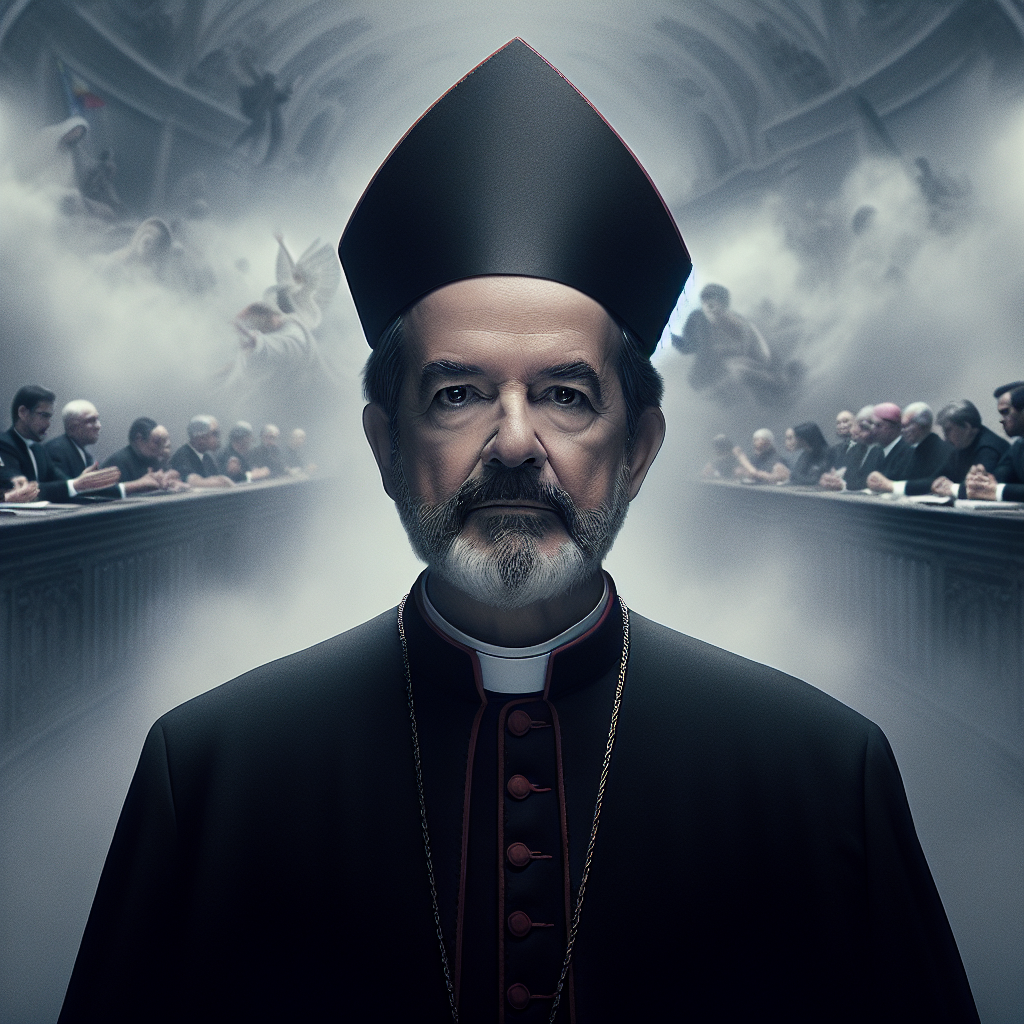

The Enigmatic Rise of Edgar Peña Parra
In the intricate world of Vatican politics, few figures have captured attention quite like Edgar Peña Parra. Born in Venezuela in 1960, Peña Parra has steadily climbed the ranks of the Catholic Church, culminating in his appointment as the Substitute for General Affairs of the Secretariat of State in 2018. This position, often likened to a chief of staff role, places him at the heart of the Vatican's administrative machinery. His rise is not just a testament to his diplomatic acumen but also a reflection of the Church's evolving priorities in a rapidly changing world.
Peña Parra's journey began in Maracaibo, Venezuela, where he was ordained as a priest in 1985. His early years were marked by a commitment to pastoral work, but it wasn't long before his talents were recognized by the Vatican. By 1993, he had entered the Holy See's diplomatic service, a move that would set the stage for his future influence. Over the years, he served in various capacities across the globe, from Kenya to the United Nations in Geneva, honing his skills in diplomacy and administration.
His appointment as the Substitute for General Affairs was a significant moment, not just for Peña Parra but for the Vatican itself. The role is crucial, involving the day-to-day operations of the Vatican and acting as a key advisor to the Pope. For many, his appointment signaled a shift towards a more global perspective within the Church, reflecting Pope Francis's vision of a more inclusive and outward-looking institution.
However, Peña Parra's rise has not been without controversy. In recent years, the Vatican has faced numerous challenges, from financial scandals to allegations of misconduct. As a high-ranking official, Peña Parra has found himself at the center of these storms, tasked with navigating the Church through turbulent waters. Critics argue that his close ties to the Pope and his rapid ascent raise questions about transparency and accountability within the Vatican hierarchy.
Supporters, on the other hand, view Peña Parra as a reformer, someone capable of steering the Church towards greater openness and engagement with the world. They point to his extensive diplomatic experience and his commitment to addressing issues such as poverty and social justice as evidence of his suitability for the role. For many, he represents a new generation of Church leaders, one that is more attuned to the needs and challenges of the modern world.
The debate surrounding Peña Parra's role is emblematic of broader tensions within the Catholic Church. As the institution grapples with its place in a rapidly changing society, figures like Peña Parra are at the forefront of efforts to redefine its mission and priorities. This is no easy task, given the Church's deep-rooted traditions and the diverse views of its global congregation.
For Gen Z, a generation that values transparency and social justice, the actions and decisions of leaders like Peña Parra are of particular interest. They are watching closely to see how the Church addresses issues such as climate change, inequality, and human rights. Peña Parra's ability to navigate these complex issues will likely shape perceptions of the Church for years to come.
In the end, Edgar Peña Parra's story is one of ambition, controversy, and potential. As he continues to play a pivotal role in the Vatican, his actions will be closely scrutinized by both supporters and critics alike. Whether he emerges as a transformative figure or a symbol of the status quo remains to be seen, but one thing is certain: his journey is far from over.