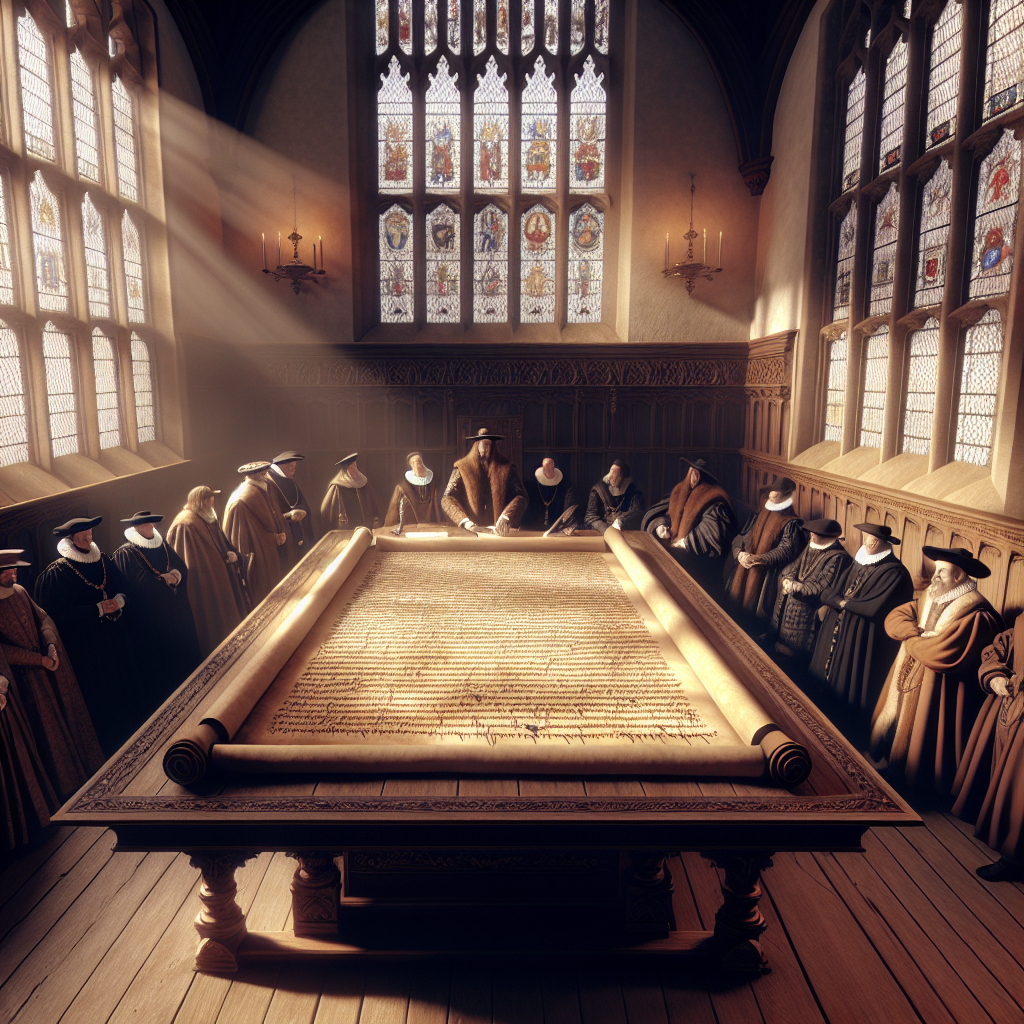

Imagine a time when religion and politics were more tangled than your earbuds after a run. This is where the Ecclesiastical Jurisdiction Act 1531 steps in, an intriguing slice of history that shows how power was once wrestled from religious authorities by the English Crown. It centers around the reign of Henry VIII in 16th-century England, a period infamous for its religious upheaval and political maneuvering.
The Act was essentially a series of Parliamentary statutes that curbed the power of the church courts in England. So, who were the key players here? Obviously, Henry VIII, who was not only known for his multiple marriages and somewhat tyrannical nature but also his desire to reform ecclesiastical law to fit his needs. This was to secure his agenda of an annulment from Catherine of Aragon when the Pope wouldn’t budge. But let’s not forget the Catholic Church, who were left trying to maintain authority amidst the shifting political sands.
Why did this happen? It’s a tale as old as time—power and politics. In the 1530s, ecclesiastical courts had significant power invoking religious doctrines to govern secular life. This felt like a chokehold to Henry, who was itching for control. Furthermore, his envisaged annulment from Catherine was simply unattainable under the church's jurisdiction. In a bold move, Henry took the monumental decision to break away from the Roman Catholic Church, starting the English Reformation and setting a precedent for future reforms. By sidelining religious courts, Henry made it possible for the monarchy to align the nation’s laws with his own desires, pushing England towards Protestantism.
To truly understand the significance of this Act, we need to understand its aftermath. The Ecclesiastical Jurisdiction Act 1531 officially started to shift power from church to state, a shift that rippled across Europe in various forms. Church authorities, once the keystone in moral and judicial matters, found their influence waning as Henry strengthened the state's clutches on governance. Bills like these moderated the bishops' capability to exercise extreme influence over legal matters, putting them on par with secular judgments.
Not everyone was on board, though. This Act, among others, set Christians against each other, creating a divide that has left its mark even today. Many traditionalists and Catholics were against this shift, leading to a cultural and religious partition that resonates through history. It's a poignant reminder of how the intersection of government control and religious liberty can drench a society in chaos while reshaping cultures.
Now, jumping to Gen Z ears, this might sound like ancient history that doesn't really impact today's TikTok-trending world. But think of it this way: it’s a real-life Game of Thrones chess match with Henry VIII positioning himself as the King in a board filled with bishops. The concept, though dated, shows the perennial tug-of-war between ecclesiastical and royal powers—a dynamic that echoes into modern conversations about the separation of church and state.
The situation serves up a conversation about the balance of power between governmental and religious institutions, a topic still relevant today. We witness similar conversations about religious influence on political legislation and civil rights issues. Now equipped with social media, the public discourse is widespread, diverse, and instantly connected, a significant leap from the corridors of 16th-century Parliaments.
Let’s look at different perspectives. On one side, you have those who applaud Henry's audacity to reclaim state power from religious courts, potential heroes of state authority who consider it a win for secular judicial progression. On the other hand, those who cherish religious autonomy may view this shift as suppressive to spiritual governance, an overreach into domains that ought to maintain independence in thought and action.
What the Ecclesiastical Jurisdiction Act 1531 essentially shows us is an intriguing case of evolving power dynamics. It was a foundational moment in establishing the authority of the state over religious law, a concept some might take for granted today but was revolutionary and, perhaps, unsettling back then.
Upon reflection, ask yourselves: in what other ways do we see these power struggles playing out today? Whether in lawmaking processes related to religious laws in secular nations or global debates on the extent of church authority, recognizing these past shifts fosters a clearer understanding of how such historical moments have shaped contemporary society.
In our world teeming with influencers, movements, and ideologies constantly jostling for a piece of the spotlight, remembering historical power shifts like those encapsulated by the Ecclesiastical Jurisdiction Act 1531 can teach us vital lessons. They show us the importance of balancing power, recognizing the significant roles both secular and religious domains play in articulating policy and cultural expressions. And amidst all the modern chaos, there’s a weird sort of comfort in realizing that these conversations aren't new.